If you’ve ever walked through a chemical plant, you know the environment is unforgiving. Thick, pungent fumes cling to every surface, industrial spills are an unavoidable part of daily operations, and equipment has to hold up 24/7 to temperatures that swing wildly and pressures that test even the sturdiest metal. For years, steel, concrete, and aluminum were the go-to materials here—they felt like the only things tough enough to survive. But as a pultruded FRP profiles supplier, I’ve spent years talking to plant engineers, maintenance managers, and safety teams, and one question keeps popping up: Can pultruded FRP really hold its own in a space that’s so corrosive, so demanding, and so high-stakes? Pultruded FRP Profiles
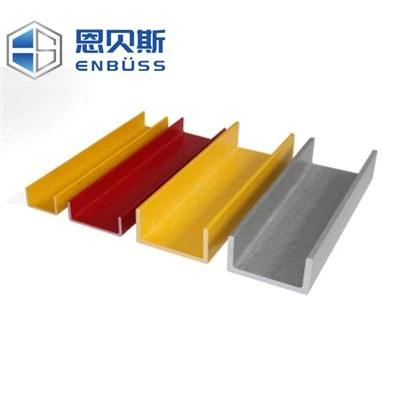
Let me start with what pultruded FRP (Fiber Reinforced Polymer) profiles actually are, because that’s where a lot of confusion starts. Pultrusion is a manufacturing process that pulls continuous fibers—usually glass, carbon, or aramid—through a resin bath, then cures them into a solid, uniform shape. The result is a profile that’s strong, lightweight, and tailored to specific needs: I-beams, channels, pipes, gratings, the list goes on. Unlike raw FRP parts, pultruded profiles are consistent, scalable, and made for structural use, not just decorative or secondary applications. That consistency is key for chemical plants, where every part has to work as intended without surprises.
Now, the biggest concern: corrosion. Chemical plants deal with everything from weak acids to strong alkalis, solvents, and even brines that eat through traditional materials like nothing. Steel rusts, aluminum corrodes, concrete cracks and leaches over time—all of that means constant maintenance, replacement costs, and downtime, which is the enemy in an industry where every minute of production lost hits the bottom line hard. Pultruded FRP, on the other hand, is inherently corrosion-resistant because the polymer matrix wraps around the fibers, creating a barrier that doesn’t react with most chemicals. I’ve seen this firsthand with a water treatment chemical plant in the Midwest we worked with last year. They had been using carbon steel walkways and support structures for their acid storage area, and every two years they were replacing them due to pitting and structural degradation. After switching to our pultruded FRP gratings and channel supports, three years later they still haven’t had to touch those structures. The only maintenance they did was a quick pressure wash to remove chemical residue. That’s a huge win—no more scheduled shutdowns for structural replacements, no more unexpected failures that could lead to spills or safety incidents.
But corrosion resistance isn’t the only benefit. Chemical plants also deal with extreme temperatures. Some processes require materials to handle 200°F+ for hours at a time, while others are in cooler, more humid areas that promote corrosion. Our pultruded FRP profiles are formulated with resins that can handle temperature ranges from -40°F up to 350°F, depending on the resin type. For high-temperature areas, we use vinyl ester resins instead of standard polyester, which have better heat resistance and chemical stability. For colder, brine-heavy areas like saltwater chemical processing, we adjust the fiber content to improve impact resistance, so they don’t crack under sudden loads—like when a forklift drops a container of chemicals or a worker steps hard on a grating in icy conditions.
Weight is another game-changer here. Traditional structural materials like steel are heavy—one cubic foot of steel weighs about 490 pounds, while pultruded FRP is only 120 pounds. That might not sound like a big deal, but when you’re building a support structure that spans 20 feet, it means you don’t need as much structural support to hold the profile itself. Chemical plants have limited space, especially in tight areas around reactors, pipes, and storage tanks. Lighter profiles mean easier installation—our teams can often install pultruded FRP structures in half the time of steel, because you don’t need heavy cranes or extra crew to maneuver 500-pound steel beams. That cuts down on installation time, which again reduces downtime, and also means you can optimize space for more production, not just extra support structures.
Safety is non-negotiable in chemical plants, and pultruded FRP checks a lot of boxes here. First, a lot of our profiles are non-conductive and non-sparking. That’s huge in areas where flammable solvents are present—static electricity or a spark from a metal tool can ignite a vapor cloud, causing a catastrophic explosion. I remember a refinery client we worked with a few years back; they had a metal platform above their naphtha storage tanks, and after a near-miss where a spark from a wrench caused a small flash fire, they switched all their platforms and handrails to our non-conductive pultruded FRP. No more spark risks, no more extra grounding systems you have to install with metal. Second, many of our gratings and stair treads have a non-slip surface molded right into them, which stays effective even when covered in oil, water, or chemical residue. Slip-and-fall accidents are one of the leading causes of lost time incidents in chemical plants, and that molded-in slip resistance reduces that risk a lot. Plus, FRP doesn’t rust like steel, so you don’t have flaking rust that gets on tools, products, or workers’ clothes, which is another safety and cleanliness bonus.
Wait, but let’s address the elephant in the room: is pultruded FRP strong enough for the heavy loads in a chemical plant? I know engineers have raised this question with me—how does it hold up when you have heavy equipment parked on a grating, or when a process load shifts on a support beam? The short answer is: when engineered correctly, it’s more than strong enough. Our pultruded profiles use high-strength continuous glass fibers (or carbon for extra-heavy loads) aligned in the direction of the load, so the strength is tailored exactly to what the application needs. For example, a pultruded FRP I-beam has a tensile strength comparable to mild steel, but with a much lower weight, and it doesn’t have the weak points that come with welding—steel structures can fail at weld joints, which are often the first place corrosion starts. Pultruded profiles are a single, solid piece, so there are no weld seams to corrode or break. We also work with every client to run load calculations specific to their application, their process loads, and the chemicals they’re working with. I never sell a one-size-fits-all solution, because a grating for a dilute acid area isn’t the same as a beam for a heavy solvent storage structure. We test each profile against their specific conditions to make sure it meets or exceeds industry standards—like ASTM D3916 for pultruded FRP structural shapes, which is the benchmark we follow strictly.
Of course, it’s not all perfect. No material is, and I’m honest with clients about that. Pultruded FRP can be damaged by strong oxidizing chemicals, like concentrated nitric acid at high temperatures, if it’s not formulated for that. That’s why we don’t just send a generic profile—we ask for details on the exact chemicals, their concentrations, temperatures, and the loads the structure will carry. We also advise on maintenance: unlike steel that needs regular painting and rust checks, pultruded FRP just needs occasional cleaning to remove chemical buildup, and we can inspect it every few years to check for any signs of fiber degradation, though in our experience that’s rare when it’s installed correctly. Another point: pultruded FRP is UV-sensitive if it’s exposed to sunlight long-term. But that’s an easy fix—we add a UV-stabilized layer to the resin during manufacturing, so it can sit outside for 10+ years without fading or breaking down from sun exposure, which is perfect for outdoor chemical plant structures like pipe racks and storage platform supports.
Let me give another real example to back this up. A specialty chemical manufacturing plant in Texas was dealing with a problem with their secondary containment structures. Containment areas are designed to hold spills, so they have to resist the exact chemicals the plant handles, often for years. Their original concrete containment walls were cracking, which meant leaks were seeping into the ground, and steel barriers were corroding from constant exposure to spill residue. They switched to our pultruded FRP containment liners and support rails 5 years ago. Last year, they had a 500-gallon spill of a corrosive organic solvent, and after cleaning, the containment walls showed no signs of damage—no cracking, no corrosion, just a quick wipe down. They estimated they would have spent over $200,000 in the 5 years before that on repairing concrete and replacing steel, and so far with FRP, they’ve spent less than $20,000 on maintenance. That’s a ROI that’s hard to ignore, especially for plants operating on tight margins.
I think a lot of people still see FRP as a lightweight, maybe flimsy material for small projects, but pultruded profiles have come a long way. The manufacturing process has improved a lot in the last 20 years, so we can make profiles in almost any shape, any strength, tailored to specific industrial needs. Chemical plants, in particular, are starting to catch on—more and more are using pultruded FRP for walkways, handrails, pipe supports, grating, structural beams, and even small skid structures. It solves so many of the problems that have plagued traditional materials in this industry: corrosion that leads to downtime, safety risks from sparks or slipping, heavy installation that takes too much time, and ongoing maintenance costs that add up year after year.
But here’s the thing: it’s not a replacement for every single part in a chemical plant. If you have a process vessel that’s under extreme pressure and needs to hold specific temperatures, we work with clients to pair pultruded FRP support structures with the right vessel materials. It’s a complementary material, not a one-stop solution, but for the structural and secondary components that make up a large part of a plant’s infrastructure, it’s often the best choice.
If you’re a chemical plant engineer, maintenance manager, or operations leader, and you’re tired of dealing with corrosion, unexpected downtime, and high replacement costs for your structural components, pultruded FRP profiles are absolutely worth considering. I’ve seen too many plants make the switch and wonder why they didn’t do it sooner. At the end of the day, the goal for any chemical plant is to run safely, efficiently, and with as little disruption as possible. Pultruded FRP delivers on all three, because it’s built to survive the harsh chemical environment, reduce the need for constant upkeep, and keep your operations moving.
If you’d like to talk through your specific application, what structures you’re looking to replace or upgrade, and how pultruded FRP could work for your facility, I’m here to help. We can send you sample profiles, run custom load and chemical resistance tests, or walk you through case studies from similar plants that have made the switch.
Fiberglass Sliding Windows References
ASTM D3916, Standard Specification for Pultruded FRP Structural Shapes
Corrosion Resistance of Fiber-Reinforced Polymer Composites for Industrial Applications, Journal of Composites for Construction, 2018
Maintenance Cost Analysis of Structural Materials in Corrosive Industrial Environments, Industrial Engineering Chemistry Research, 2020
Henan Enbuess Composite Materials Co., Ltd.
Henan Enbuess Composite Materials Co., Ltd. is one of the most professional pultruded frp profiles manufacturers and suppliers in China, also supports customized service. Please feel free to buy bulk durable pultruded frp profiles made in China here from our factory. Welcome to contact us for free sample.
Address: No.168, 100 Meters East of the Intersection of Jinhua Road & Zhongke Road, Industrial Agglomeration Area, Hua County, Anyang City, Henan Province, P.R. China
E-mail: leila.salesdir@enbuess.com
WebSite: https://www.enbuessfrp.com/
