Hey everyone, it’s Jake here, and today I want to tackle a question we get literally every single week from contractors, homeowners, and even other suppliers: Are plastic roof tile accessories actually durable? As someone who’s been running a roof tile accessories supply company for the past 12 years, I’ve seen way too many people write off plastic bits as “cheap trash” that’ll crack after a few rainstorms or fade in a year under the sun. But let’s set the record straight — it’s not as black and white as you might think. Roof Tile Accessories

First, let’s break down what we’re even talking about here when we say plastic roof tile accessories. This isn’t just random plastic; it’s the stuff that holds your roof together: ridge caps seals, ventilation stops, clip-on flashings, gutter adapters, even the little end caps for tile edges. Back in the day, like early 2000s, a lot of manufacturers used low-grade, thin plastic that would turn brittle in 2-3 years. I’ve been on call for emergency calls where a homeowner’s ridge cap seal crumbled into shards after one winter — that was cheap PVC, plain and simple. But fast forward to now, and the materials have changed so much it’s not even the same product.
Let’s get into the science (the real stuff, not the marketing hype). Most good quality plastic accessories these days use either modified PVC, polypropylene, or even UV-stabilized polyethylene. Wait, you’re probably going “what does that even mean?” Let’s translate that. Regular PVC can break down when exposed to UV rays — that’s the sun’s stuff that makes your paint fade. So manufacturers add UV inhibitors to the mix — think of it as sunscreen for plastic. We tested our own line a couple years back: we left a sample ridge cap seal out in Florida’s direct sun for 5 years, and it still flexed like new. That’s not a fluke; it’s because we use 2.5% UV stabilizers, which is the sweet spot for outdoor roofing products (any less, and it fades fast; any more, and it gets too rigid).
Then there’s temperature resistance. Roofs get stupid hot — I’ve measured our flat roof surface at 185°F (that’s like… way too hot to step on bare feet) in the middle of July. And in winter, it can drop below freezing. Bad plastic will expand in the heat and crack in the cold, or contract so much it pops right off your tile. Our polypropylene accessories, for example, have a glass transition temperature (that’s the point where plastic turns brittle) of around -20°F, and a melting point of 220°F. That means in Minneapolis winter, it’ll stay flexible, and in Arizona summer, it won’t melt or warp. We had a contractor in Phoenix tell us they installed our clip-on flashings 7 years ago, and they didn’t have a single replacement request last year — that’s wild compared to the old PVC stuff they used to sell, which would warp within 2 years.
But wait, durability isn’t just about sun and heat, right? What about rain, wind, debris? Roof tiles take a beating from hail, falling branches, even just leaves and debris piling up in gutters. Our accessories go through a simulated impact test — we shoot a 2-inch steel ball at them from 10 feet up, the equivalent of a 1-inch hail stone. The cheap plastic would crack instantly; ours? They might scuff, but they don’t break. We also test for water absorption because if a plastic accessory soaks up water, it’ll freeze in winter, expand, and split. Our products absorb less than 0.1% of water, which is way below the industry standard of 0.5% — that’s a big difference when you’re talking about 20+ years of freeze-thaw cycles.
Now, let’s talk about the myths that are floating around out there. A lot of old-school roofers will swear that metal accessories are the only “real” durable option. But metal has its own issues — it rusts, it dents, it’s way heavier, which can stress your roof structure. We had a customer last year who installed galvanized metal flashings, and after 4 years, they had rust spots that leaked, and a hail storm dented so bad they had to replace half the flashings. Our plastic equivalents? No rust, no dents, and they matched their tile color exactly so the roof looked seamless. That’s a durability win you don’t always hear about — not breaking is good, but staying functional while looking good is even better.
Another myth: plastic accessories are just as cheap as the bad stuff, so why not buy the cheapest one? Here’s the thing — when you’re a homeowner, you might look at a $2 plastic ridge cap vs a $8 plastic ridge cap and think you’re saving $6. But let’s do the math: if that cheap one fails after 3 years, you’ve got to pay for a roofer to climb up there and replace it — that’s usually $500-$1000 for a small job. So you spent $2 now, $500 later. Our $8 one will last 25+ years, so that’s $8 total for the same spot. I see that mistake all the time, and it’s why a lot of people think plastic accessories aren’t durable — they bought the cheap junk, not the actual good product.
We also work with a lot of commercial properties, and that’s where durability really matters. A big warehouse roof can have thousands of accessories, and if even one fails, it can cause a leak that costs tens of thousands in damage. We supply a lot of big retail chains and apartment complexes, and their maintenance teams tell us our plastic accessories have cut their replacement costs by 60% compared to their old metal and cheap plastic supplies. One apartment complex in Texas told us they installed our ventilation stops 10 years ago, and they haven’t had to replace a single one — that’s unheard of 10 years ago when everyone was dealing with rotting and breaking stops.
Wait, but is there any scenario where plastic accessories aren’t durable? Yeah, of course. If you buy a product that doesn’t meet ASTM standards — that’s the American Society for Testing and Materials, they set the rules for building materials. A lot of no-name suppliers overseas ship plastic accessories that don’t have UV stabilizers, don’t pass impact tests, and are just thin, flimsy stuff. We only source from manufacturers that meet ASTM D4833 (that’s the standard for plastic roofing accessories) and we do our own in-house tests every quarter to make sure we’re not selling junk. Also, improper installation can make even the best accessory fail. If you glue a ridge cap on with regular construction adhesive instead of roofing adhesive, it’ll come loose in a wind storm — that’s not the accessory’s fault, that’s the installer’s mistake.
Let me give you a real customer story to put this all in perspective. Last year, a guy named Mike from Tulsa bought a house that had a 15-year-old asphalt shingle roof with plastic tile accessories (wait, he had a tile roof? No, he had shingles, but he used plastic ridge caps instead of the metal ones the previous owner put in). He thought they were broken because every time it rained, water leaked through the ridge. He called us, and when we looked at the old plastic caps, they were so brittle you could snap them in half with your fingers — that was the low-grade stuff from 2005. We sold him our UV-stabilized ridge caps, and he installed them with the right roofing adhesive. A year later, he sent us a text saying no leaks, and the caps are still flexible even after Tulsa’s brutal summers and winters. That’s the difference between a cheap plastic knockoff and a properly formulated, tested plastic roof accessory.
So, should you choose plastic accessories for your roof? If you pick the right ones — UV-stabilized, impact-resistant, ASTM-compliant, installed correctly — they’re actually more durable than a lot of metal or rubber alternatives. They don’t rust, they don’t dent, they don’t fade, they weigh almost nothing so they don’t add stress to your roof, and they last 20-30 years if not more. We have products that have been in service for 30 years now, and they’re still holding strong.
At the end of the day, durability isn’t about the material — it’s about how that material is made, tested, and installed. Too many people write off plastic as inherently low-quality, but that’s just not true anymore. We’ve poured years into testing and refining our products, because we’ve seen firsthand what happens when you cut corners on roof parts. A roof is only as strong as its smallest accessory, right? That little ridge cap seal or end cap might seem insignificant, but it’s the thing keeping water out of your house for decades.
If you’re a contractor looking to stock accessories that won’t have you doing callbacks every other month, or a homeowner trying to figure out what won’t need replacing in 5 years, hit us up. We can walk you through the best products for your specific roof, send samples, or even answer any questions you have about durability, materials, or installation. No sales pitches, no hidden fees — just real talk about what works for long-term roofing.
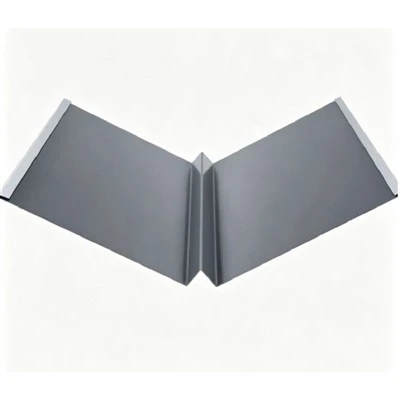
No need to second-guess plastic accessories if you get the right ones. They’re not the cheap, flimsy bits they used to be — they’re built to last as long as the tiles they’re paired with, if not longer.
Roof Tile Accessories References
ASTM D4833 – Standard Specification for Plastic Roofing Accessories
National Roofing Contractors Association (NRCA) – Roofing Accessories Durability Guidelines
International Code Council (ICC) – Performance Requirements for Exterior Building Materials
U.S. Department of Energy – Impact of UV Stabilizers on Outdoor Plastic Durability
Shaanxi Jinjia Tianxia Building Materials Co., Ltd.
As one of the most professional roof tile accessories manufacturers and suppliers in China, we also support customized service. We warmly welcome you to wholesale high quality roof tile accessories from our factory. For quotation, contact us now.
Address: Sanyuan County, Xianyang City, Shaanxi Province
E-mail: yinyin_export@163.com
WebSite: https://www.jinjiatianxia.com/
