If you’ve ever sourced valves for industrial pipelines, chemical processing, or marine applications, you’ve probably wondered: are ball valves corrosion resistant? As a ball valve supplier who’s talked to dozens of plant engineers, maintenance managers, and fabrication foremen over the last 12 years, I’ve seen firsthand how the right valve can extend equipment life, cut downtime, and save thousands in replacement costs. The short answer is: it depends—on the material the ball valve is made of, how it’s finished, and the environment it’s operating in. Let’s break this down with the kind of real-world context you won’t find in generic product sheets. Ball Valve
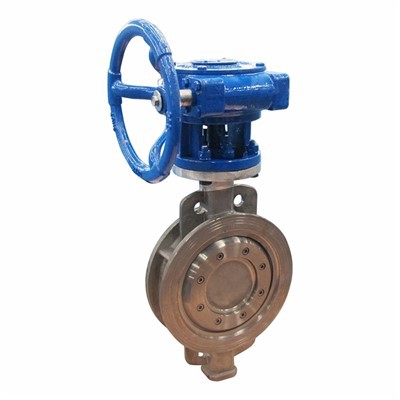
First, let’s get one thing straight: not all ball valves are built the same. When I started in this industry, a customer once told me their old carbon steel ball valves lasted only 18 months in a saltwater offshore line before seizing and corroding through. They’d reached out to us thinking we had a “magic” corrosion-resistant valve, but the problem wasn’t just the valve—it was the material. Carbon steel, while strong and cheap for low-stress, non-corrosive environments, has no inherent corrosion protection. If you’re moving brine, acidic wastewater, or even just humid air, that steel will rust, pit, and fail over time. That’s why choosing the right base material is the first and most important step in building a corrosion-resistant ball valve.
Let’s talk about the most common materials we offer, and their real-world corrosion performance. First, 316 stainless steel. This is the workhorse for corrosive applications, and for good reason. Unlike 304 stainless, which only has around 18% chromium (enough to resist rust in mild environments like food and beverage processing or fresh water), 316 adds 2-3% molybdenum. That molybdenum is the game-changer here—it creates a protective chromium-molybdenum oxide layer that repels chloride ions, which are the biggest cause of pitting corrosion in marine, chemical, and desalination settings. I recently supplied a batch of 316 ball valves to a municipal water treatment plant that handles wastewater with a pH as low as 4.5. Those valves have been in operation for 5 years now, and our customer’s maintenance team reports zero corrosion-related issues compared to their old 304 valves, which needed replacement every 2-3 years. That’s a tangible cost savings right there.
But 316 stainless isn’t invincible. It can still corrode in extremely harsh environments, like concentrated sulfuric acid at high temperatures, or hydrofluoric acid. For those cases, we turn to alloy materials: duplex stainless steel, Hastelloy, or titanium. Duplex, which is a mix of austenitic and ferritic stainless steel, has higher strength and better corrosion resistance than 316 for stress-corrosion cracking—super common in pipelines that are under pressure or subject to cyclic loading. Last year, a petrochemical customer needed valves for a pipeline carrying wet hydrogen sulfide, which causes rapid sulfide stress cracking in standard steels. We recommended duplex 2205 ball valves, and they told us recently that after 18 months of operation, the valves show no signs of cracking or pitting. For even more aggressive chemicals, like nitric acid at high temperatures, Hastelloy C-276 is the go-to. We supplied Hastelloy ball valves to a pharmaceutical manufacturer that processes strong acids for API production, and those valves have lasted 7 years with no degradation—something 316 or duplex simply can’t do. Titanium is another heavy hitter: it’s incredibly light, extremely resistant to chloride corrosion, and we use it for offshore oil and gas applications where saltwater exposure is constant. A rig operator I work with has had titanium ball valves on their riser lines for over a decade, and they say they’ve never had to replace one due to corrosion.
It’s not just the base material, though—surface finishing and secondary treatments make a huge difference in corrosion resistance. Even a high-quality 316 valve can fail prematurely if the surface is rough, has machining burrs, or is improperly passivated. Passivation is a chemical process that removes free iron from the surface of stainless steel, allowing that protective oxide layer to form properly. Early in my career, I worked with a manufacturer that skipped passivation to cut costs, and their valves would rust within 6 months in coastal applications. Now, all of our ball valves undergo a strict passivation process per ASTM A967, which is the industry standard. We also offer electropolishing as an optional finish. Electropolishing smooths out microscopic rough spots on the valve’s interior and exterior, which prevents corrosion from starting in those tiny crevices. For industries like food and beverage or pharmaceuticals, where cleanliness is critical, electropolishing also makes it easier to clean the valve, reducing the risk of microbial growth that can lead to product contamination. We recently did a batch of electropolished 316 ball valves for a craft brewery, and their quality control team said the valves have held up perfectly to daily CIP (clean-in-place) cycles with caustic and acidic cleaners—no staining, no pitting.
Another factor to consider is the design of the ball valve itself. Corrosion often starts at gaps, crevices, or areas where fluid can get trapped. That’s why we focus on full-bore or reduced-bore designs with smooth interior paths, and tight seals that minimize dead space where corrosive fluids can accumulate. We also offer trunnion-mounted ball valves for high-pressure applications, which have a lower likelihood of seat leakage than floating ball valves, and less chance of fluid seeping into areas that are hard to reach, which can corrode over time. One common mistake customers make is choosing a ball valve with a soft seat (like PTFE) without checking if the seat material is compatible with their process fluid. PTFE is resistant to many chemicals, but some acids and solvents can break it down, leading to leaks that expose the valve body to corrosion. That’s why we always ask customers to share their process details—fluid type, temperature, pressure, pH—before we recommend a valve, because even the best material won’t work if the seat or seal is mismatched.
Now, let’s talk about when even the most corrosion-resistant ball valves might not be the best fit. If your application is for low-pressure, non-corrosive environments like a residential water line or a pneumatic system for dry air, a standard carbon steel or even brass ball valve will work just fine—you don’t need to pay extra for a specialty alloy that’s overkill. But if you’re dealing with any of the following, you need to prioritize corrosion resistance: exposure to chlorides (saltwater, road de-icing salts, wastewater), acidic or alkaline fluids, high-temperature chemicals, or cyclic pressure/temperature loads that accelerate corrosion. I’ve seen too many customers try to cut costs by buying a cheaper, less corrosion-resistant valve, only to end up paying more in downtime, emergency repairs, and replacement parts. A ball valve that lasts 10 years costs far less over its lifecycle than one that needs replacing every 2 years.
I should also address a common misconception: many people think all metal valves are corrosion-resistant, but that’s just not true. Even stainless steel can corrode if it’s not matched to the environment. For example, a 304 stainless steel valve will rust quickly if you use it in a saltwater application, because molybdenum is missing. And some alloys, like Hastelloy, are so specialized that they’re unnecessary for mild conditions—they cost 3-5 times more than 316, with no performance benefit. That’s why a good ball valve supplier doesn’t just push the most expensive option; they match the valve to the customer’s specific needs.
Over the years, we’ve also learned a lot from customer feedback about real-world corrosion challenges. One offshore customer told us their previous valves would corrode on the exterior, not just the interior, because of salt spray blowing across the rig. That’s why we offer optional powder-coating or epoxy coating for valves that are exposed to atmospheric corrosion, even if the interior is 316 stainless. Another customer in the chemical industry had issues with crevice corrosion between the valve body and the pipe flanges, so we started offering flange gaskets made from corrosion-resistant materials like EPDM or Viton to prevent that gap from corroding. These small, customer-driven changes have made our valves more reliable in the field, and they’re a big part of why we’ve built long-term relationships with so many clients.
If you’re still unsure whether a ball valve is right for your corrosion needs, or if you’re replacing failed valves and want to avoid the same issues, don’t rely on generic product specs. A lot of manufacturers list “corrosion-resistant” on their materials, but they don’t specify the grade or the testing they’ve done. As someone who works with these valves every day, I always recommend asking for corrosion test data: how did the valve perform in a salt spray test (ASTM B117), for example? How does it hold up to your specific process fluid? We provide that data for every valve we sell, because we know transparency builds trust.
At the end of the day, the question “are ball valves corrosion resistant” doesn’t have a one-size-fits-all answer. The right ball valve can be extremely corrosion resistant if you choose the right material, finish, and design for your application. It’s not just about buying a valve—it’s about investing in a component that will hold up to the conditions your system faces, reduce costly downtime, and keep your operations running smoothly.

If you’re working on a project and need a ball valve that can stand up to corrosive conditions, reach out to us to discuss your requirements. We’ll help you find the right solution, whether that’s a 316 stainless valve for mild chemical exposure or a specialty alloy for extreme environments. We’re here to make sure you don’t end up with a valve that fails prematurely.
Threaded Valve References:
ASTM A967, Standard Specification for Chemical Passivation Treatments for Stainless Steel Parts
ASTM B117, Standard Practice for Operating Salt Spray (Fog) Apparatus
NACE MR0175/ISO 15156, Petroleum and Natural Gas Industries — Materials for Use in H2S-Containing Environments in Oil and Gas Production
Xiongxiang Valve Group Co., Ltd.
As one of the most professional ball valve manufacturers and suppliers in China, we’re featured by quality products and good price. Please rest assured to wholesale cheap ball valve for sale here from our factory. Contact us for more details.
Address: Building 1, No.306, 12th Binhai Road, Jinkai District, Wenzhou City, Zhejiang Province, China
E-mail: info@xiongxiangvalve.com.cn
WebSite: https://www.steelvalvegroup.com/
