If you’ve ever stood beside a railway line as a freight train rumbles past, you’ve probably noticed the faint, almost imperceptible haze of dust and debris that kicks up from the rail head— the flat, top surface of the rail that makes contact with train wheels. What you might not realize is that that grime is one of the biggest quiet threats to the safety, efficiency, and lifespan of the entire rail network. Every day, rail heads collect oil residue from locomotive bearings, rubber deposits from train wheels, metal shavings from wheel-rail friction, fallen leaves and their waxy coating in autumn, and even fine road dust that’s tracked onto right-of-ways. Left unattended, this build-up causes wheel slip during acceleration and braking, increases wear on both wheels and rails, and even raises the risk of derailment in extreme cases. Railway Tools

As a railway tools supplier, I get asked all the time: “What tools actually clean those rail heads properly? It’s not just a broom and a pressure washer, right?” The short answer is no— cleaning rail heads is a precision task that requires tools tailored to the type of debris, the volume of traffic on the line, and whether work is done during scheduled maintenance windows or while trains are still running. Over my 12 years in this industry, I’ve watched cleaning tools evolve from clunky, one-size-fits-all machines to specialized, data-driven equipment that cuts downtime and gets the job done right, without damaging the rail. Let’s break down the most common tools used today, how they work, and when to reach for each one.
First up, and still the workhorse for many regional and secondary lines, are manual rail head cleaners. These are tools that small maintenance crews can handle without shutting down an entire line, making them perfect for low-traffic routes or spot cleaning between scheduled overhauls. The two most common types of manual cleaners are the wire wheel scraper and the hand-held chemical applicator. The wire wheel scraper is exactly what it sounds like: a rigid, motorized or hand-cranked circular brush with heavy-duty steel bristles, mounted to a long, adjustable handle that lets you lean it against the rail head without bending down or getting too close to moving trains. I always tell my clients who rely on these that not all wire wheels are created equal— soft steel bristles will barely scratch off old leaf residue, while extra-hard bristles can leave tiny scratches on the rail head that speed up metal fatigue. For that reason, I recommend modular wire heads that let crews swap out bristle strength depending on the debris: soft nylon for light dust and rubber residue, medium steel for general grime, and hard tungsten carbide bristles for caked-on metal shavings or old leaf wax. The hand-held chemical applicator works in tandem with the scraper for stubborn deposits. These are lightweight, pump-action sprayers loaded with a biodegradable rail head cleaner designed to dissolve rubber and leaf wax without corroding steel. You spray the cleaner onto the rail head, let it sit for two to three minutes to break down the build-up, then follow up with the wire scraper to lift it all away. I’ve seen some maintenance crews skip the cleaner and just scrape dry, but that creates a fine metal dust that blows into track beds and gets in the way of signal equipment— not ideal.
For lines with medium to high traffic volumes, or where maintenance windows are limited to overnight or weekend shut-downs, you’ll find self-propelled rail head cleaning machines. These are purpose-built vehicles that ride along the rail line, much like a small locomotive, and come with integrated cleaning systems that can strip a mile of rail head in under an hour— way faster than any manual crew. The most versatile of these is the rotary rail head cleaner, which I’ve sold to clients from commuter lines in the Northeast U.S. to freight routes crossing the Australian outback. Rotary cleaners have a set of large, rotating brush heads positioned directly above the rail head, usually three or four per side, spinning at up to 1,500 RPM to scrub debris loose. Many modern rotary cleaners also have built-in vacuum systems that suck up the scraped debris immediately, so it doesn’t fall onto the track bed or get dragged back into the path of oncoming trains. This is a huge upgrade from older models that just swept debris aside, which would often get caught between the rails or blow into nearby ecosystems during cross-country runs. Another type of self-propelled machine that’s growing in popularity for high-traffic commuter lines is the high-pressure water jet rail head cleaner. These machines use a series of high-pressure nozzles (usually operating at 20,000 to 40,000 PSI) to blast debris off the rail head without any scrubbing brushes. The key advantage here is that water jet cleaners are gentler on rail welds, which are some of the most wear-prone parts of a rail line— brushes can catch on weld seams and cause small dents or cracks over time. They’re also great for lines that carry hazardous materials, because the water can be treated on-board to remove oil and metal shavings before it’s collected for disposal, rather than leaving behind chemical residue from manual sprays. That said, I always warn clients with tight track clearances that water jet machines are bulkier than rotary cleaners, so you have to make sure there’s enough space between the rail and overhead catenary wires before renting or buying one.
One tool that’s become a game-changer in the last five years, especially for lines that deal with heavy autumn leaf fall, is the laser rail head cleaner. This is not some futuristic, untested gadget— I’ve supplied three of these to a major European rail network, and they’ve cut their leaf-related service delays by 70% since they rolled them out. Laser cleaners are mounted on self-propelled rail vehicles and use a high-powered, focused laser beam to heat the waxy leaf residue on the rail head to over 200 degrees Celsius, turning the wax into a fine ash that’s immediately blown away by a side-mounted air nozzle. The best part? The laser only targets the rail head surface, so it doesn’t damage the rail steel, the track ties, or any signal equipment along the line. Unlike chemical cleaners, which can be washed away by rain or diluted by dew, laser cleaning works 24/7, even in damp conditions, which is critical for lines that get weeks of steady rain during leaf season. The only downside is the upfront cost— laser cleaners are 2 to 3 times more expensive than rotary or water jet machines— but for high-traffic lines that lose thousands of dollars every hour when they have to delay trains due to leaf slip, the ROI is almost immediate. I’ve had clients argue that lasers are overkill for secondary lines, but I always point to the rail network in the UK, which was one of the first to test laser cleaners and now uses them on over 200 miles of high-speed line to prevent winter ice build-up too— same technology, just adjusted for lower temperatures.
Let’s talk about when and why you’d use each of these tools, because that’s the mistake I see a lot of new maintenance teams make: reaching for the most expensive machine instead of the right one. For example, if you have a 10-mile secondary line with a small number of weekly freight trains, a manual wire wheel scraper and a pump sprayer will cost you a fraction of a self-propelled machine, and it’s just as effective for small, targeted cleaning. But if you’re in charge of a 50-mile commuter line that runs 20 hours a day, you can’t shut down the whole line for a full day to clean it— you need a self-propelled rotary cleaner that can clean a mile in 45 minutes while the line is only shut down for 4 hours overnight. High-pressure water jet cleaners are perfect for lines with a lot of old welds or for crews that want to reduce the amount of physical labor they put in, but they’re not great for lines with loose ballast, because the high water pressure can dislodge small rocks from the track bed and send them flying. Lasers? They’re for high-value lines where downtime costs a fortune— high-speed rail, freight routes carrying perishable goods, or lines through urban areas where service delays anger thousands of commuters every day.
I also want to address a common misconception I hear: “Once I clean the rail head, that’s it, right?” Wrong. The best tools in the world won’t keep a rail head clean if you don’t combine them with regular inspections. Most of the modern cleaning machines come with built-in sensors that measure how much debris is on the rail head as they go, so you can track where build-up happens most often and schedule cleaning before it becomes a problem. For example, I had a client in Germany who noticed that rubber residue from freight wheels built up heavily at curves, so they adjusted their rotary cleaner route to hit those curves every three days, instead of every seven days for straight track. That small adjustment cut wheel slip incidents at curves by 80% and extended the life of their rail wheels by 15%.
At the end of the day, the right rail head cleaning tool depends on your line’s traffic volume, track conditions, budget, and how much downtime you can afford. If you’re a small regional crew with limited funds and only a few trains a week, manual tools are your best bet. If you run a major commuter or freight network that needs to stay on schedule, you’ll want to invest in at least one self-propelled machine, and for high-speed lines, lasers are worth every penny.
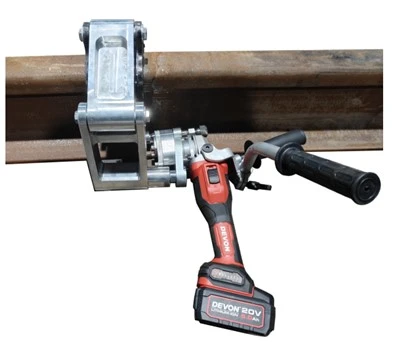
As a railway tools supplier, I don’t just sell equipment— I work with maintenance teams to figure out what will work best for their specific line. I’ve helped crews switch from harsh wire brushes to modular heads that save them money on replacement parts, and I’ve assisted small town networks in securing funding for smaller, more affordable tools instead of overbuying expensive machinery they’ll never use. If you’re tired of rail head build-up causing delays, wear and tear, or safety issues on your line, reach out to discuss what tools fit your needs. We’ll walk through your track, your traffic, and your budget, no pressure, to help you find the solution that works for you.
Internal Combustion Rail Grinding Machine References:
- American Railway Engineering and Maintenance-of-Way Association. (2021). Rail Head Surface Preparation and Maintenance Guidelines. AREMA Press.
- International Union of Railways. (2022). Advances in Rail Head Cleaning Technologies for High-Traffic Lines. UIC Monograph Series.
- Federal Railroad Administration. (2020). Manual for Railway Track Maintenance Practices, Volume 3: Track Surface Care. U.S. Department of Transportation.
- European Railway Agency. (2021). Leaf and Debris Management for Railway Operations. ERA Technical Report.
- Railway Engineering Association of Australia. (2022). Self-Propelled Rail Cleaning Machinery: Operational Best Practices. REAA Publication.
Jinzhou Tiegong Railway Maintenance Machinery Co., Ltd.
With abundant experience, we are one of the most professional railway tools manufacturers and suppliers in China. Please rest assured to buy durable railway tools made in China here from our factory. Good service and quality products are available.
Address: No.837, Xingshan Street, ETDZ, Jinzhou City, Liaoning Province, China
E-mail: jztg02@vip.163.com
WebSite: https://www.tiegong-cns.com/
