If you’ve ever knelt in a hardware store aisle staring at rows of LED drivers, wondering why there are so many options and how not to pick the wrong one that’ll fry your new fixture before it even launches, you’re not alone. I’ve been in the LED driver supply game for 12 years, and I still get calls from electricians, fixture manufacturers, and even residential handymen who’ve burned out three fixtures because they grabbed the first driver that fit the socket size. Today, I’m breaking down the real, practical steps to choosing the right LED driver—no jargon, no overcomplicating, just the stuff I’ve learned solving drivers for warehouse lights, café pendant fixtures, and even backyard string lights that kept flickering at my sister’s coffee shop. LED Drivers
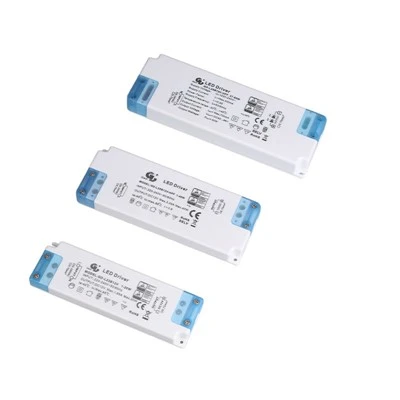
First, let’s get one myth out of the way: an LED isn’t a “plug-and-play” lightbulb. The little chip inside that glows doesn’t run on the standard AC wall power (120V or 240V, depending on where you are) the way an incandescent bulb does. LEDs are diodes, which means they only let electricity flow one way, and they’re super sensitive to voltage spikes, surges, and even tiny changes in current. If you hook them up directly to wall power, they’ll either dim for a week then die, or blow out instantly. That’s where the LED driver comes in—it’s the translator that takes the messy, variable AC from your wall and turns it into the steady, regulated DC power your LED chips need to run safely and last as long as they’re supposed to (we’re talking 50,000+ hours, not the 1,000 hours of an incandescent).
Step one: Know your LED fixture’s power requirements. This is non-negotiable, and it’s the number one mistake I see people make. Every LED chip, module, or strip has a “forward voltage” (Vf) and “forward current” (If) rating, usually listed on the packaging or product spec sheet. Let’s make this simple: if you have a 10W LED strip that draws 0.5A at 20V, your driver needs to deliver at least that total power. Wait, no—actually, the driver’s output power has to match or slightly exceed, not fall short. I once had a client who tried to save $5 on a driver that only put out 8W for his 10W retail shelf strips. Six months later, half the strips were dead, because the underpowered driver was forcing the LEDs to pull more current than they could handle, overheating them. The rule here is: Driver Output Power (W) = Total LED Power (W) + 10-20% headroom. That headroom isn’t overkill—it protects against small voltage drops in the wiring, and it lets the driver run cooler, which extends its own life too.
Next, output type: constant current vs. constant voltage. This is where I see people get confused, and it’s the second biggest cause of driver-related failures. Let’s define both clearly, with real examples, not textbook stuff. Constant Voltage (CV) drivers put out a fixed voltage, like 12V or 24V DC, no matter how many LEDs you’re powering. They’re great for simple, low-voltage setups: under-cabinet strips, backyard path lights, small café pendant strings, or any fixture that uses low-voltage LED strips or modules. If your fixture is labeled “12V DC input,” you need a CV driver. But here’s the catch: if you’re using multiple LEDs, you can’t just daisy-chain them beyond what the driver can handle. A 12V CV driver rated for 5A can power up to 60W total (12V x 5A = 60W), so don’t hook up a 70W strip to it—same problem as underpowering.
Constant Current (CC) drivers are the other type, and these are for high-power fixtures: warehouse high bays, street lights, large commercial floodlights, or any LED that’s built as a single module (not strips). CC drivers put out a fixed current, like 350mA, 700mA, or 1050mA, and the voltage adjusts to match how many LEDs are in series. So if you have a high-bay module that needs 700mA, the CC driver will put out exactly that current, and adjust the voltage between 20V and 48V to power however many LEDs are in the string. The big thing here: your LED module’s current rating has to exactly match the CC driver’s output current. If you use a 350mA driver for a 700mA module, the light will be dim and run hot, leading to early failure. If you use 1050mA, you’ll blow the module immediately. I tell my commercial clients to tape a copy of their LED module’s Vf and If specs to their driver order sheet—no exceptions.
Third, input voltage matching. This sounds simple, but it trips people up all the time, especially for cross-border projects or fixtures used in commercial spaces. Most drivers are rated for universal input, meaning they work between 100V and 277V AC, which covers standard residential (120V) and most commercial (240V) outlets in North America, and even many international voltages. But if you’re installing in a space with 208V three-phase power, or a country that uses 230V single-phase, you need to double-check the driver’s input range. I once had a client in Australia who ordered drivers rated for 120V input, not the standard 230V they use down under, and 80% of his first shipment was useless. Always confirm the input voltage of the space where the fixture will be installed, and cross-reference it with the driver’s input spec—don’t assume a driver sold in the U.S. works everywhere, or that universal input is a guarantee for every model.
Fourth, dimming capability—this is make-or-break for residential and hospitality fixtures, because no one wants a light that flickers or goes from full brightness to dim in a harsh, strobing way. First, not all drivers are dimmable, and not all dimmers work with LED drivers. Old incandescent dimmers are usually incompatible—they don’t operate on the low load of LEDs, so they’ll cause flicker or even damage the driver. So first: if your fixture needs dimming, you need a dimmable driver, and it has to be compatible with the dimmer you’re using. There are three main dimming protocols, and mixing them is a quick way to get headaches: 0-10V dimming (most common for commercial, uses two low-voltage wires to send a signal), TRIAC dimming (the standard residential wall dimmer, works with most dimmable CV/CC drivers), and PWM dimming (used for high-frequency dimming, great for displays or applications needing very smooth dimming). My tip: if you’re not sure which dimmer you have, send me a photo of the dimmer wall plate or label, and I can match it to the right driver. For example, I recently helped a hotel chain fix flickering lobby pendants by swapping their standard TRIAC drivers for dimmable 0-10V drivers that paired with their existing building management system—no more flicker, and they got consistent dimming across 200 rooms.
Fifth, environment and mounting conditions. This is the part most people skip until their drivers start dying in 6 months, not 5 years. LED drivers, like all electronics, don’t like extreme temperatures, moisture, dust, or vibration. If you’re installing a fixture outdoors, in a parking lot, under a deck, or in a warehouse with high humidity, you need an IP-rated driver. IP (Ingress Protection) ratings: IP65 means dust-tight and protected against low-pressure water jets (perfect for outdoor use), IP54 is dust-resistant and protected against splashing water (good for covered patios or bathrooms), IP20 is only protected against solid objects over 12mm, no water protection (only for indoor, dry locations like closets or interior living rooms). Then there’s vibration: if you’re mounting fixtures on a moving truck, a dance floor, or a construction site, you need drivers with reinforced internal components, usually labeled for “high vibration” or “industrial use.” I once had a client install standard IP20 drivers in a marine application—100 saltwater spots, all died in 3 months because of corrosion. Swapping them for IP67 waterproof drivers fixed that, and they’ve been running for 2 years now.
Sixth, safety and longevity ratings. This isn’t just red tape—it’s what separates cheap no-name drivers from ones that will last. Look for drivers that are UL-listed (in North America), CE-marked (in Europe), or ETL-listed—these mean they’ve been tested for fire safety, electrical shock resistance, and surge protection. Surge protection is huge for commercial spaces, or areas prone to lightning storms: a 2kV or 4kV surge rating means the driver will survive small power spikes, which is way better than a driver with no surge protection that’ll blow during a storm. Also, check the rated lifespan—most good drivers have a MTBF (Mean Time Between Failures) of 50,000 hours or more. Cheap drivers often have a MTBF of 20,000 hours, which means half of them will fail within 2 years, not 5. I tell my clients: paying $2 more for a UL-listed driver is way better than replacing 10 fixtures because of a $5 cheap driver.
Wait, let’s test this with a real example, so it all clicks. Let’s say you’re a café owner installing 12 under-cabinet LED strips, each 5W, designed for 12V DC input, in a kitchen with standard 120V AC power, and you want to dim them with the existing wall dimmer in the kitchen. First: total LED power is 12 x 5W = 60W. Driver power needs to be 60W + 10% = 66W, so a 12V CV driver rated for 60-70W. Next, output type: strips are 12V DC, so CV is right. Input voltage: standard 120V AC, so confirm the driver’s input is 100-120V AC. Dimming: you have a standard TRIAC wall dimmer, so get a dimmable TRIAC CV driver, not non-dimmable. Environment: indoor kitchen, so IP20 is fine. Safety: get UL-listed, MTBF 50,000 hours. That’s it—no guesswork, no wrong parts, and those strips will last 5+ years without flicker.
I know this sounds like a lot, but it’s really just about matching specs, not overcomplicating. The biggest mistake I see is people picking a driver based on size or price, not specs. Last quarter, I had a fixture designer come to me with a prototype for a grocery store freezer case LED display. He’d grabbed a standard CV driver, but the freezer case was at 0°F, and the driver wasn’t rated for cold temperatures—so it kept dropping power, making the display dim. We swapped it for an industrial CV driver rated for -40°F to 105°F, and it’s been running perfectly for 8 months. The original driver cost $8, the replacement cost $12, but he avoided $10,000 in returned inventory from dim displays.
If you’re still stuck, here’s my go-to advice: gather all your fixture specs before talking to a driver supplier. Write down: total LED power, Vf and If of your LEDs, input voltage of the space, dimming needs, and where the fixture will be installed (indoor/outdoor, temperature, etc.). Don’t be shy to ask the supplier questions—if a supplier can’t answer your questions about dimming compatibility or IP ratings, that’s a red flag. I’ve spent 15 minutes on the phone with a handyman walking him through his 4 backyard string lights, and 2 hours with a commercial electrician mapping out a 100-high-bay warehouse project—good suppliers don’t just send boxes, they help you get it right.

Now, if you’re working on a project, big or small, and don’t want to spend weeks troubleshooting driver choices, reach out to our team. We’ve supported fixture manufacturers, electricians, and residential DIYers with custom driver solutions, and we’ll make sure you get the right driver on the first order, no extra costs or delays.
Dimmable LED Drivers References
- LED Lighting Facts: Driver Selection Guidelines, Department of Energy, 2022
- Ingress Protection (IP) Ratings Standard, IEC 60529, 2013
- TRIAC and 0-10V Dimming Compatibility, National Electrical Manufacturers Association (NEMA), 2021
- Mean Time Between Failure (MTBF) for Power Supplies, Reliability Analysis Center, 2020
Foshan Gedi Electrnoic Co., Ltd.
As one of the most professional LED drivers manufacturers in China, we’re featured by quality products and good price. Please rest assured to buy advanced LED drivers for sale here from our factory. If you have any enquiry about cooperation, please feel free to email us.
Address: 4th Floor, Building 8, South District, Huayi Decoration City, No.10, Laixiang Road, Shiwan Sub-district, Chancheng District, Foshan City, Guangdong Province, China.
E-mail: market@gedi-lighting.com
WebSite: https://www.gedi-lighting.com/
