When you’re in the market for valve components for industrial pipelines, HVAC systems, or water treatment facilities, you’ve probably stared at two common types on spec sheets: ball valves and gate valves. As someone who’s spent the last decade supplying ball valves to engineers, plant managers, and construction crews, I’ve fielded the same question a hundred times: What’s the actual difference, and which one do I need for my application? It’s not just about part numbers or price tags—choosing the wrong valve can lead to costly downtime, leaks, or even safety hazards. Let’s break this down the way I explain it to my customers, no overly technical jargon, just straight talk that’s stood the test of on-site projects. Ball Valve
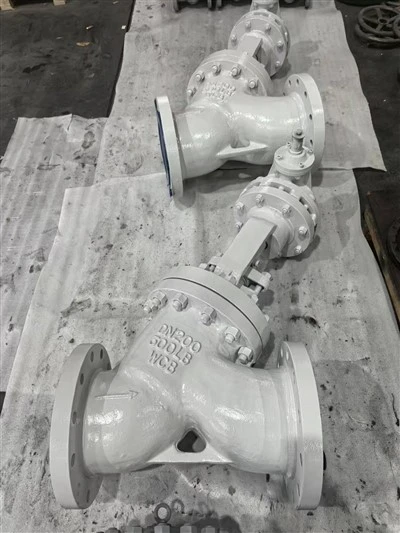
First, let’s start with the core design, because that’s where every other difference stems from. A ball valve gets its name from its central operation: a hollow, perforated ball that swivels 90 degrees to open or close flow. When the hole in the ball lines up with the pipe’s path, fluid moves through unobstructed. Turn the valve handle a quarter turn (or actuate it with a motor or pneumatic drive), and the ball rotates so its solid side blocks the pipe entirely, stopping flow dead. It’s a simple, direct design that’s been refined for decades. Gate valves, on the other hand, use a flat or wedge-shaped metal gate that slides up and down perpendicular to the direction of flow. When the gate is fully lifted, flow passes around it freely; when it’s lowered, the gate presses against two seat rings inside the valve body to create a seal. That vertical slide is why gate valves are often called “sluice valves” in some industries.
Now, let’s talk about flow control and operation, because that’s where the real practical divides show up. Ball valves are all about quick, on/off control. That quarter-turn motion is perfect for applications where you don’t need to adjust flow rate—you just need to open it fully or shut it tight. They’re also far more reliable when you need a bubble-tight seal: because the ball only touches the seats when it’s in the open or closed position, there’s very little wear on the sealing surfaces, even after thousands of cycles. I’ve had customers use ball valves for compressed air lines, chemical processing skids, and even fire suppression systems because they never leak when closed, even under high pressure. The flip side? If you try to use a ball valve to throttle flow (like keeping it partially open to slow water through a pipe), you’ll damage the seat and ball over time. The partial opening causes turbulence that erodes the sealing surfaces, leading to leaks long before you should expect them to fail. That’s a mistake I see new plant engineers make all the time, and it’s why I always warn them: ball valves are on/off only, not regulators.
Gate valves do excel at flow control, but not in the way you’d think. Because the gate can be partially lowered, you can adjust flow rate—but that’s where their flaws kick in. When the gate is partially open, it’s exposed to constant fluid flow, which creates turbulence and cavitation (those tiny, damaging bubbles that form when pressure drops and collapses) that eat away at both the gate and the valve body over time. Most industrial standards actually warn against using gate valves for frequent throttling for exactly that reason. Where gate valves shine is when you need a valve that can handle full, unobstructed flow when open—think large water mains, sewage lines, or bulk product pipelines. When fully open, there’s no tight constriction like a ball valve’s ball creates, so pressure loss (that’s the drop in force the fluid has to overcome to move through the valve) is minimal. That’s a big deal for long pipelines where you don’t want to waste energy pumping fluid against extra pressure. The downside? Gate valves take much longer to operate: it’s a quarter-turn? No, gate valves can take 10, 15, even 20 full turns of the handle to open or close completely. In an emergency, that delay can be disastrous. I’ve had a customer in the oil and gas industry tell me once that a stuck gate valve delayed a shutdown by 20 minutes, costing them over $100,000 in lost production—something that never would’ve happened with a ball valve.
Next up, durability and maintenance, two factors that turn a $50 valve into a $5,000 headache if you get it wrong. Ball valves have far fewer moving parts than gate valves. You’ve got the ball, the stem, two seats, and a handle or actuator—no sliding gate, no guide rails, no complex packing to seal the stem. That simplicity means they’re easier to service, too: if a seat wears out, you can usually replace it without removing the entire valve from the pipe, a job that takes 15 minutes versus hours of pipe disassembly for a gate valve. And because the sealing surfaces only make contact when the valve is fully open or closed, wear is slow. I’ve supplied ball valves that are still running after 15 years of daily operation, while gate valves in the same rough environment often need replacement every 5 to 7 years. That said, ball valves aren’t invincible. If you work with thick, abrasive fluids like slurry or sand-laden water, the hollow ball can trap debris, scratching the seats and leading to leaks. Gate valves, because their gate slides against the seats, actually self-clean a bit as they move, which is why they’re still preferred for those abrasive fluids—though that gate wear is still a problem.
Then there’s pressure and temperature tolerance, a critical detail for industrial and commercial applications. Ball valves work great across a wide range of pressures, from low-pressure residential water lines to high-pressure oil and gas pipelines (some of my heavy-duty ball valves are rated for over 10,000 PSI). They also handle high temperatures well, with models rated for 1,000 degrees Fahrenheit or more, depending on the materials (stainless steel, brass, or carbon steel). Gate valves, while also rated for high pressure, tend to be heavier and bulkier for the same pressure rating, because the gate design requires thicker body walls to handle the force of the fluid pressing on the gate when closed. They’re also a bit more limited on temperature, though modern alloy gate valves have closed that gap a lot in recent years. Where they differ more is in low-temperature applications: ball valves can sometimes develop seal issues at extreme cold (below -40 degrees Fahrenheit), though specialized low-temperature ball valves fix that, while gate valves typically hold up better in icy conditions because their sealing design doesn’t rely on soft rubber seats that can harden.
Let’s also talk about size and installation, because that’s a big factor for pipefitters and project managers. Ball valves come in sizes from ¼ inch (for small plumbing or instrumentation) up to 12 inches, though anything larger than that gets unwieldy—you’re looking at large, heavy actuators that cost more and take up more space. Gate valves, on the other hand, are made in much larger sizes, up to 72 inches or more, which is why they’re the standard for municipal water mains and large industrial pipelines. For small to medium applications, though, ball valves are easier to install: their compact design fits into tighter spaces, and their quarter-turn actuators are simpler to mount. I’ve had so many contractors tell me they love ball valves for retrofitting old pipe runs where there’s barely enough space to fit a new valve, while gate valves require more pipe clearance.
Now, when do you pick which one? Let’s cut to practical use cases, because that’s what customers actually need to know. Choose a ball valve when: you need quick on/off operation (emergency shutoff, automated systems), bubble-tight sealing, minimal maintenance, or compact size. That’s 9 times out of 10 for my customers: process skids, compressed air, fire lines, plumbing in commercial buildings, small water supply lines, and chemical processing. I recently supplied a set of 2-inch stainless steel ball valves to a pharmaceutical plant that needed to shut off sterile water lines instantly during a routine filter change—gate valves would’ve been too slow, and they would’ve risked contamination if they’d leaked.
Choose a gate valve when: you need full, unobstructed flow (minimal pressure loss for long pipelines), you’re dealing with large pipe sizes (10 inches or more), or you’re working with thick, abrasive fluids that would damage a ball valve. Municipal water departments still use gate valves for their main transmission lines, and mining operations rely on them for slurry lines where the gate can move debris without trapping it like a ball would. But even there, I’ve started seeing more customers add ball valves as isolation points near treatment plants, because they need fast shutoffs when a line needs repair.
Wait, let’s address a common misconception I hear all the time: people think gate valves are cheaper, but that’s not always true. For small sizes (under 4 inches), ball valves are often comparable in price, and their longer lifespan actually saves money over time. For large sizes, gate valves are a bit cheaper, but you have to factor in the cost of the extra space they need and the maintenance work required to keep them running. That’s a conversation I always have with customers early on: don’t just look at the upfront price, look at the total cost of ownership.
As a ball valve supplier, I’ll be honest: I don’t push ball valves for every job. I’ve sent customers to get gate valves when their application calls for it, because bad advice is how you end up with an unhappy customer. But I also see so many engineers overspecify gate valves for jobs where a ball valve would work better, just because they’re more familiar with them. That’s why breaking down these differences is so important—It’s not about brand loyalty or what I sell, it’s about getting the right valve for the job.

At the end of the day, the core difference boils down to this: ball valves are fast, compact, and perfect for on/off control and tight seals, while gate valves are built for large flows and bulk handling, even if they’re slower to operate. Neither is better than the other—they’re designed for different jobs. If you’re not sure which one fits your pipeline, system, or project, that’s what I’m here for. Whether you’re working on a small residential plumbing job or a large industrial plant, I can help you pick the right valve, answer questions about materials, pressure ratings, and installation, and make sure you get a product that works for your needs. If you have questions or want to talk through your specific application, don’t hesitate to reach out and get in touch for a purchasing consultation.
Cryogenic Valve References
Valve Manufacturers Association of America. (2021). Industrial Valve Standards for Ball and Gate Valves.
Mashore, R. (2019). Fluid Flow Control: A Practical Guide to Valve Selection. Industrial Press.
American Society of Mechanical Engineers. (2020). ASME B16.34: Valves – Flanged, Threaded, and Welded End.
Zhejiang Poro Valve Manufacturing Co., Ltd.
With abundant experience, we are one of the most professional ball valve manufacturers and suppliers in China. We warmly welcome you to buy customized ball valve made in China here from our factory. If you have any enquiry about cooperation, please feel free to email us.
Address: PORO Ind. Park, Oubei Dongou Ind. Zone, Wenzhou, Zhejiang, China
E-mail: poro@cnporo.com
WebSite: https://www.cn-poro.com/
