Hey there, if you’ve ever found yourself Googling “screen basket cost” at 2 a.m. (guilty), you know how frustrating it is when the first results are either generic pricing that’s 5 years old or vague lines like “depends on variables.” As a screen basket supplier who’s been in the thick of industrial filtration and separation for over a decade, I’m here to break this down like we’re chatting over a coffee—no stuffy jargon, no hidden fine print, just the real deal on what you’re actually paying for when you pick a screen basket. Screen Basket
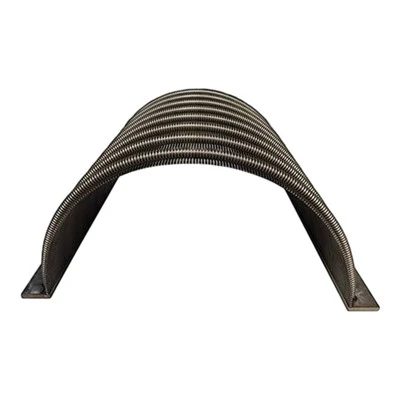
First off, let’s get one thing straight: a screen basket isn’t a one-size-fits-all part you can grab off a shelf. I’ve had folks message me asking, “How much for a 10-inch screen basket?” and I can’t just spit out a number. Why? Because the core of your order is shaped by what it’s doing, where it’s going, and how long you need it to last. Let’s walk through the big factors that swing the cost, starting with the most obvious one: material. Most people don’t realize this is the single biggest driver of price. We use three main materials for standard baskets, and the gap between them is huge. Carbon steel? It’s the budget king—great for light, non-corrosive jobs like separating solids from water in a simple process line. It’s cheap to source, easy to shape, so a 12-inch carbon steel basket might land you around $150–$300. But if your basket’s hanging out in a slurry with acid, or exposed to saltwater? Carbon steel will rust out fast, and replacing it every 6 months is way more expensive than paying up front for something that lasts. That’s where stainless steel comes in—304 stainless, the workhorse. It handles mild corrosion, food-grade stuff (perfect for beer or pharmaceutical filtration), and stands up to regular wear. A comparable 12-inch 304 basket is $350–$700. Then there’s 316 stainless, the heavy hitter. It’s for super corrosive environments: brine, chemical processing, even offshore rigs. That same 12-inch 316 basket? It’s $700–$1,500. But here’s the math we run internally: replacing a 304 basket once a year vs. a 316 basket every 3 years? The 316 is almost always cheaper in the long run. I’ve had customers who tried to save $200 on carbon steel for a chemical line and ended up replacing 4 times in a year—total loss of $600, way more than the extra $150 for 316 upfront.
Next, size and custom work. Let’s say you need a screen basket for a centrifuge in a textile plant, and it’s not a standard 10 or 12-inch. Maybe it’s 24 inches in diameter, or shaped oddly because your equipment’s a custom build. Larger baskets use way more material, so that 24-inch 316 one jumps to $2,500–$5,000 easy. But custom work isn’t just size. If you need a specific opening size for the screen cloth—like 20 micron for separating tiny polymer particles, or 500 micron for food pulp—we have to weave or punch the cloth to that exact spec, which adds labor and material costs. Even small touches, like reinforced edges to stop the cloth from tearing during high-speed spinning, or special coatings for friction reduction, add 10–30% to the base price. I remember a customer last year who brought us a blueprint for a basket with a tapered shape (not round, not square—tapered!) and a slot opening of 150 microns. We quoted them $1,800, and they later told us that was 20% cheaper than the competitor who said they “could make it” but refused to break down the extra costs for the custom slots. That’s the thing: reputable suppliers will tell you exactly what each extra feature costs, not lump it into a vague “custom fee.”
Then there’s the “hidden” cost we see all the time: quality control and compatibility. A lot of cheap screen baskets on the market skip the QC steps—they’ll punch holes in the cloth and call it a day, no testing if the openings are consistent, no checking if the basket fits tight in your centrifuge so it doesn’t wobble during operation. We spend extra here because bad fit means downtime. If your basket is off by even an eighth of an inch, it can throw your centrifuge out of balance, leading to expensive repairs, or worse, a full shutdown. On top of that, some jobs need certification—food-grade 3-A certification, pharmaceutical GMP compliance, or material testing reports. Those aren’t free, but they’re non-negotiable for regulated industries. A food plant can’t use a basket without 3-A certification, no matter how cheap it is; they’ll get flagged in inspections. That adds $50–$200 to the total cost, depending on the type of cert. I’ve turned down jobs where customers tried to skip certs because they wanted a $100 discount—they’d end up paying way more in fines if they got caught.
Wait, also, volume matters. If you need one basket for a single repair, that’s a small order, so labor costs are spread over fewer units, hence higher per-piece price. But if you’re a plant needing 50 baskets for a full equipment overhaul, we can negotiate bulk pricing because we’re buying materials in larger quantities and setting up a production run that’s more efficient. I’ve had a customer who ordered 100 baskets last month; their per-piece cost was 25% lower than a one-off order of 10. It’s simple: more volume = lower per-unit cost, as long as the order’s for standard or semi-custom work. If it’s all fully custom, volume still helps a little, but not as much.
Now, let’s talk about what a lot of customers miss: the cost of failure. A screen basket isn’t a decorative part—it’s critical to your process. If it breaks, you’ve got raw material contamination, equipment damage, and downtime. I once had a food manufacturer come to us after they bought a $200 carbon steel basket from a random online supplier. It rusted after 3 weeks, and the rust got into their fruit puree. They had to dump 10,000 gallons of product, pay $5,000 in cleanup, and their line was down for 2 days. Their total loss? Over $10,000. The difference between our $400 304 basket and that $200 one? They would have saved $200, but lost $10k. That’s the cost people don’t Google—they only realize it after it hits them.
So what’s the takeaway here? Let’s pull together real numbers to make it concrete. A standard, non-custom basket for a light, low-corrosive job: $150–$500. Standard for medium-corrosive, food/pharma: $350–$1,200. Standard for heavy-corrosive, offshore/chemical: $700–$2,500. Add 15–50% if it’s custom size or features, and another $50–$200 for certification if you need it. Bulk orders cut 10–30% off that.
But here’s the big secret: the cheapest quote isn’t always the best. If a supplier’s price is way lower than everyone else, ask why. Are they using thinner material? Skimping on screen cloth quality? Skipping QC? We’ve seen that a lot—suppliers buy low-grade materials to undercut, and the customer ends up with a basket that dies in 2 months. At the end of the day, a screen basket is an investment in your process, not just a part to replace. It’s better to pay a little more now to avoid shutdowns, product loss, and extra replacements later.
If you’re reading this and wondering exactly what your basket would cost, don’t rely on generic online numbers. Send over your equipment specs, the environment it’s working in, and how many you need, and we can give you a no-pressure, itemized quote that breaks down every cost so you know exactly what you’re paying for. No hidden fees, no vague lines, just clear pricing. If you’ve had bad experiences with suppliers before who ghosted you after asking for details, hit us up—we’re here to answer questions, walk through your needs, and make sure you get a basket that works for your budget, not against it.

If you want to talk through your specific needs, reach out and let’s start a conversation. No sales pitches, just honest answers. That’s how we do things around here.
Wedge Wire Screen References
Industrial Filtration and Separation Society. (2022). Guide to Material Selection for Screen Baskets.
Centrifuge Technology Association. (2021). Cost-Benefit Analysis of Centrifuge Basket Materials.
Food and Drug Administration. (2020). 3-A Sanitary Standards for Food Equipment Components.
Anping County Yan Zhao Mining Sieve Mesh Co., Ltd.
As one of the most professional screen basket manufacturers and suppliers in China, we have world-leading production equipment and strong manufacturing capabilities. Please feel free to buy advanced screen basket made in China here from our factory.
Address: South of Datong New Village, Southern-Suburb Anping Industrial Park, Anping County, Hebei, P.R.China
E-mail: 17303289182@163.com
WebSite: https://www.yanzhaowedgewire.com/
