Hey everyone, Palletizing Robot
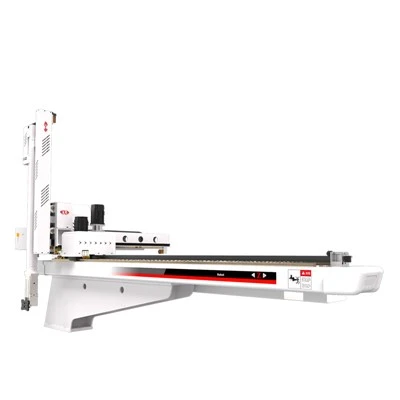
If you’re here reading this, you probably already know how game-changing palletizing robots are for a warehouse, manufacturing line, or e-commerce fulfillment center. But let’s be real—no machine runs 100% smooth 24/7 without a hiccup here and there. As a palletizing robot supplier, I get asked all the time: “What happens when my robot messes up mid-cycle?” That’s where error-handling mechanisms come in—they’re not just “fixes” for problems, they’re what keep your operation from grinding to a halt when something goes sideways.
I’ve worked with all kinds of clients, from small snack factories that palletize cases of chips to big 3PLs moving pallets of consumer electronics. One of my favorite early stories is with a mid-sized grocery distributor. They ran their first robot 3 years ago, and they thought it was “unbreakable.” First week, a case of canned beans got tilted on the in-feed conveyor, and the robot tried to grab it like normal. The robot just froze, beeped, and had to wait for a technician to reset it—cost them 2 hours of downtime. We later upgraded its error-handling, and now that same thing takes 30 seconds to fix, no tech needed. That’s the stuff I want to break down for you today.
First, let’s start with the stuff that catches issues before the robot even moves a finger. I call this “pre-error prevention” because it’s way better to stop a problem before it happens than to clean up a mess after. Most palletizing robots have built-in sensor checks that run every time they start a cycle, or even mid-cycle if something feels off. For example, there’s proximity sensors on the end effector (that’s the gripper thing that grabs products) that check if there’s actually a case or bag there before clamping down. If it doesn’t detect an object, it immediately triggers a “no product detected” error, stops moving, and flashes a code on the teach pendant—no wasted movement trying to grab thin air.
Another big one is the weight sensor on the gripper. If you’re palletizing heavy cases of something like concrete blocks or water bottles, the robot checks the weight of whatever it just picked up. Last month, a client had a palletizing run where a case of 24 water bottles was accidentally replaced with a case of 12. The sensor picked up the lighter weight, flagged an error, and the robot set that case aside in a dedicated “error bin” instead of stacking it on a pallet where it would have fallen over later. That saved them from having to re-stack an entire pallet 20 minutes later—huge for throughput.
Then there’s the in-feed conveyor check. If the conveyor that feeds products to the robot is backed up, or a product is stuck sideways blocking the path, the robot doesn’t just keep going like a bull in a china shop. It has photoeyes (those little light-beam sensors) along the conveyor that count products and check their spacing. If there’s a gap that’s too big or too small, it pauses the cycle, logs the error, and waits for a warehouse associate to clear the jam—no damage to the robot’s arm or the products.
Okay, so what if a problem actually slips through and the robot is mid-move? That’s where active in-cycle error handling kicks in, and it’s way more dynamic than the startup checks. Palletizing robots have joint torque sensors built into every axis of their arm. Think of these like the robot’s version of a sense of touch. If the arm bumps into something unexpectedly—like a misaligned pallet, a stray product on the floor, or even a human who wandered too close (yes, we have safety sensors for that too)—the torque sensor picks up the sudden change in force way faster than a human could react. The robot doesn’t just stop; it instantly reverses the last move, backs away, and locks itself out until someone checks the area.
I had a client a while back who had a part-time associate helping load pallets at the end of the line. He once set a new pallet in the wrong spot, and the robot’s torque sensor felt the arm hit the edge of the pallet mid-stack. The robot stopped immediately, and when the associate came over, the teach pendant showed a “pallet misalignment” error code—no guesswork, no time wasted figuring out what went wrong. That saved the robot’s gripper from getting damaged, and the product on the pallet didn’t get crushed either.
Another in-cycle error I see a lot is gripper failure. Maybe a pneumatic gripper loses air pressure, or an electric gripper’s motor stalls when it tries to clamp too tight. Again, the robot has feedback from the gripper’s control system. If the gripper doesn’t reach the “closed” position within a set time, it triggers a “gripper stall” error, releases whatever it’s holding (into that error bin I mentioned earlier), and moves back to its home position. You don’t want a robot holding a half-gripped case of cereal that’s dripping all over the floor, right?
Now, let’s talk about the part that doesn’t always get talked about: autonomous recovery. Because even with all the sensors, sometimes you need the robot to fix a small problem on its own without calling a tech or an associate. I’ve seen so many robots that used to just freeze and wait for someone, but modern palletizing robots have pretty solid autonomous recovery modes for common errors.
For example, if the robot picks up a product that’s tilted or slightly misaligned, some models have a “product reorient” feature. The gripper will slightly adjust the angle of the product while holding it, check the alignment with a vision sensor (more on that in a sec), and if it can fix it, it proceeds with stacking. If not, it drops it into the error bin. That’s been a game-changer for clients that handle a lot of flexible products, like bags of flour or potato chips, which can be tricky to grab straight.
Another common autonomous fix is jam recovery on the conveyor. If the photoeyes detect two products overlapping, the robot can trigger a small reverse pulse on the conveyor to nudge the products apart, then check the spacing again—all without anyone touching the line. I had a snack client that was dealing with a lot of crumbs getting stuck between conveyor belts, causing minor jams. Their robot’s autonomous recovery fixed 90% of those jams on its own, cutting their downtime by almost half.
Vision systems are a big part of advanced error handling too, and we’ve integrated these into almost all of our higher-tier palletizing robots. A 2D or 3D camera mounted above the palletizing area scans each product and the pallet before the robot stacks. If it detects that a product is damaged (like a torn bag or a dented case), it flags that as an error and skips that product. If the pallet is uneven or has a broken layer, it adjusts the stack height so the next layer is straight, instead of stacking on top of a wobbly spot.
Last year, a client that palletizes medical supplies started using our vision-equipped robots. They told me that before, they were having to reject about 5% of pallets because of uneven stacking, which meant extra work for their quality control team. Now, the vision system catches misaligned products mid-stack, and the robot either fixes it or pulls the bad product—so less waste, less QC time, and happier managers.
Wait, I can’t forget safety-related error handling, because this isn’t just about keeping the robot working—it’s about keeping people safe. All modern palletizing robots work with safety scanners that create a virtual fence around the work area. If someone steps into that fence, the robot slows down first, then stops completely. That’s a “safety stop” error, and it’s logged so you can see when and where someone entered the area. I always say this: the best error handling is the kind that doesn’t hurt anyone or break anything, even when someone makes a mistake.
I once had a new hire at a client’s warehouse who was in a hurry to grab a water bottle from the palletizing area while the robot was running. The safety scanner picked him up, the robot stopped before it even got close to him, and the error log showed exactly who was in the area and when. No accident, no damage—just a quick reminder to slow down, which is way better than the alternative.
Now, let’s get real for a second. Error handling isn’t perfect. Every once in a while, you get an error that the sensors can’t catch, or a glitch in the software that makes the robot act weird. That’s why we do training with every client—we teach their team how to read the error codes on the teach pendant, how to reset common errors, and when to call us for help. As a supplier, our support team is on call for anything from a quick reset to troubleshooting a weird gripper issue. I’ve had clients call me at 7 PM on a Friday because their robot threw an “axis overheating” error, and we walked them through letting the robot cool down and checking the vent—no tech needed, just a quick fix.
I also want to mention that when we design error handling into our palletizing robots, we build them with scalability in mind. A small bakery that only runs 8 hours a day doesn’t need the same level of autonomous recovery as a 24/7 3PL, so we can adjust the error handling settings to fit their needs. That means you’re not paying for features you don’t need, but you also have the ability to turn them on as your business grows.
If you’re still with me, you’re probably wondering: how do I know which error-handling features I actually need? I’ve seen clients waste money on fancy sensors they never use, or cut corners on basic error handling that ends up costing them downtime. My advice? Start with the basics: gripper feedback, torque sensors, and photoeyes for conveyor checks. If you’re handling flexible products or need to reduce QC work, add vision. If you run 24/7, invest in autonomous recovery to cut down on manual resets.
At the end of the day, error-handling mechanisms aren’t just a set of rules for your robot—they’re a safety net for your entire operation. They turn a scary “the robot is broken” moment into a manageable “we fixed it in 5 minutes” moment. And as a palletizing robot supplier, that’s what I care about most: making sure your robot works for you, not against you, even when things go wrong.
If you’re looking to upgrade your current palletizing setup or invest in a new robot, feel free to reach out and chat about what your operation needs. We can walk through your current pain points, break down which error-handling features will save you the most time and money, and get you set up with a solution that fits. No sales pitch, no jargon—just real talk about what works for warehouses like yours.
Welding Robot References
- Robotic Industries Association. (2022). Palletizing Robot Safety and Error Handling Best Practices. RIA Foundation.
- VDMA Robotics + Automation. (2023). Error Detection and Recovery in Industrial Manipulators. German Engineering Federation.
- International Society of Automation. (2021). Sensory Feedback for Industrial Robot Error Mitigation. ISA Publications.
- Johnson, A. (2020). Modern Palletizing Systems: Minimizing Downtime Through Intelligent Error Handling. Industrial Automation Magazine.
- Smith, L. (2022). The Role of End-Effector Sensors in Preventing Palletizing Errors. Robotics World Journal.
Robotic Technology (GD) Co., Ltd.
Robotic Technology (GD) Co., Ltd. is one of the most experienced palletizing robot manufacturers and suppliers in China, also supports custom service and one year warranty. Please feel free to wholesale CE approved palletizing robot for sale here from our factory. Contact us for quotation.
Address: Room 102, No. 30,Hengfeng 2nd Road,Daguo, Changping Town, Dongguan City,Guangdong,China
E-mail: admin@iroboticplus.com
WebSite: https://www.rb-tic.com/
