If you’ve ever stood in front of a sanding machine, watching a board that started smooth end up scuffed, gouged, or uneven, you already know how much the right speed matters. As a sanding machine supplier who’s spent the last 12 years walking customers through everything from small woodworking shops to large cabinet factories, I can tell you speed isn’t just a number on a dial—it’s the bridge between getting a clean, consistent finish and ruining hours of work on a single piece. Most of the questions I get aren’t about “what’s the fastest speed” but “how do I pick the right speed for my material, my grit, and the finish I need?” Let’s break this down, no jargon, just real-world lessons I’ve learned working side by side with customers. Sanding Machine
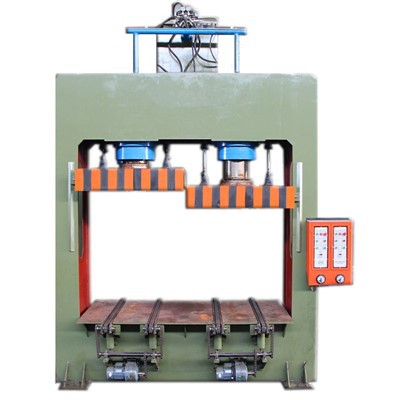
First, let’s clear up a common myth: higher speed doesn’t always mean faster sanding. In fact, crank a sanding machine too fast for your material, and you’ll end up with burn marks, tear-out, or even a board that’s so over-sanded it’s unusable. On the flip side, go too slow, and your sandpaper will load up (that’s when tiny wood fibers clog the grit, instead of cutting), wear out in half the time, and leave an uneven surface. Speed is tied directly to two core factors: the material you’re sanding and the sandpaper grit you’re using. I’ve seen a new owner of a wide-belt sander run 1/8-inch soft pine at maximum speed, and by the end of the first run, they had 20 feet of pine that was so scorched it had to be tossed. I’ve also seen a custom furniture maker use 60-grit aluminum oxide sandpaper on solid oak at too slow a speed, and the grit pulled instead of cut, leaving fuzzy edges that took extra hours to fix. That’s why the first step is to match speed to material density.
Softwoods, like pine, cedar, or fir, are lightweight, have large grain structures, and are prone to tear-out. For these, you want a lower surface speed—usually between 1,200 and 1,800 feet per minute (FPM). I tell my customers: softwoods need a gentler touch. If you’re sanding rough lumber to remove planer marks, start at 1,500 FPM. If you’re sanding a finished pine table to prep for a stain, drop it to 1,300 FPM. Why? A slower speed lets the sandpaper’s grit slice through the soft wood fibers instead of tearing them, and it reduces friction so you don’t get burn marks. I had one customer who switched from 2,200 FPM on pine to 1,400 FPM, and they cut their sandpaper waste by 40% and eliminated burn marks entirely.
Hardwoods, like oak, maple, walnut, or cherry, are dense, have tight grain, and require more aggressive cutting. For these, you can push the speed up to 1,800 to 2,500 FPM. If you’re removing heavy material, like saw marks from a 2-inch thick maple slab, aim for 2,300 FPM. For finishing passes on a cherry cabinet, drop to 1,900 FPM. Wait, you might ask—why not go as high as 2,500 FPM on hardwood? Even dense wood can heat up if speed is too high, and that heat can change the color of the wood, especially with lighter hardwoods like maple. I once worked with a piano manufacturer that had to adjust their speed from 2,600 FPM to 2,200 FPM on maple keys because the higher speed was leaving faint dark burn marks that showed up under the piano’s finish. It took a month of testing, but that one adjustment saved them thousands in scrap parts.
Plywood and engineered wood, like MDF or particleboard, fall somewhere in the middle, but they have a big quirk: MDF is made of fine wood fibers and resin, so it doesn’t have the same grain structure as solid wood. For plywood, aim for 1,600 to 2,000 FPM, depending on the type of veneer—birch plywood (hard, smooth veneer) can handle closer to 2,000, while pine-faced plywood is safer at 1,600. For MDF, stick to 1,400 to 1,800 FPM. MDF can melt or fluff if speed is too high, leaving a fuzzy surface that’s impossible to finish without extra work. I remember a customer who used a 2,200 FPM sander on MDF shelves, and the surface was so fuzzy they had to hand-sand every shelf for an hour each. Dropping to 1,600 FPM fixed it in one pass, no hand-sanding needed.
Next to material, sandpaper grit is the second biggest factor in setting speed, and this is where a lot of even experienced makers go wrong. Coarse grit (40 to 80 grit) is for removing stock—planer marks, glue lines, or uneven edges. This grit is large and aggressive, so it needs a higher speed to do its job effectively. If you run 60-grit at too slow a speed, the grit will dig into the wood instead of cutting, leaving deep scratches that are hard to remove later. For coarse grit, set speed between 1,800 and 2,500 FPM—higher end for softwoods, lower for hardwood. For a 50-grit pass on a pine cabinet, 2,200 FPM works; on an oak table, 1,900 FPM is better to avoid tear-out.
Medium grit (100 to 150 grit) is for smoothing out the scratches left by coarse grit, prep for finishing. This is where speed can come down a bit, because you don’t need as much aggression—you need consistency. For medium grit, 1,500 to 2,000 FPM. If you’re sanding after 60-grit, 1,700 FPM is a sweet spot for most materials. I’ve found that if you drop speed more than that (below 1,500 FPM), medium grit starts to load up quickly, as the smaller particles can’t move the wood dust out of the way fast enough. If you go above 2,000, you might end up leaving new, fine scratches that you’ll have to remove with fine grit later.
Fine grit (180 to 220 grit) and super fine (240 grit and up) are for final smoothing, right before stain or finish. These grits are very small, almost delicate, so speed needs to be lower to avoid scratching or burning the surface. For fine grit, stick to 1,200 to 1,600 FPM. For super fine, drop to 1,000 to 1,400 FPM. A few months ago, a customer making custom floating shelves for a high-end home was getting light scratches on their walnut shelves when using 240 grit at 1,800 FPM. Dropping to 1,300 FPM eliminated the scratches, and they saved two hours of hand-sanding per shelf. That’s the kind of small adjustment that changes everything.
Now, beyond material and grit, there are a few real-world factors that don’t show up in generic charts, based on the machine you’re using. First, the size and type of the sanding machine. Wide-belt sanders, which are used for large panels, have more power, so you can usually push speed 100 to 200 FPM higher than a handheld orbital sander. I get calls from people with 10-inch handheld sanders who want to use the same speed as their 50-inch wide-belt, and that’s a mistake—smaller handheld machines have less torque, so too high speed will cause the sander to bounce, leaving uneven surfaces. For handheld random orbital sanders, speed is usually measured in orbits per minute (OPM), but the same rule applies: lower speed for softwoods/fine grit, higher for hardwoods/coarse grit. I recommend 8,000 to 10,000 OPM for coarse grit on hardwood, 10,000 to 12,000 OPM for fine grit on softwoods.
Another factor is wear and tear on your sanding machine. A machine that’s 10 years old, with a worn motor or a loose drive belt, won’t hold speed consistently. If your sander is running 10% slower than the dial says it should, you’ll have to adjust your speed accordingly, because the FPM is what matters, not the number on the control panel. I had a customer with a 15-year-old wide-belt sander that was running 200 FPM slower than its rated speed, and they were scratching every oak panel. Once we replaced the drive belt and calibrated the speed, their scratch rate dropped by 90%.
Finally, test sanding is non-negotiable. No chart, no guide, no number on a dial works for every single piece of wood. I always tell new customers to make a test board: cut a scrap of the same material they’re working with, use the same grit, and run it at 3 different speeds, noting the scratch pattern, how much material was removed, and if there’s any burn. For example, if you’re sanding a new batch of cherry lumber, test at 1,800, 2,000, and 2,200 FPM. If the 1,800 FPM leaves fine scratches that remove easily with 220 grit, and the 2,000 FPM removes material twice as fast with no burn, that’s your speed. I’ve had customers test 5 different speeds before finding the perfect one for their specific project, and that time saved them from ruining a $1,000 oak slab.
Let’s wrap this up with a quick cheat sheet, the one I hand to every new customer when they pick up a sanding machine from us. For softwoods (pine, cedar): Coarse grit (40-80) = 1,800-2,200 FPM; Medium grit (100-150) = 1,500-1,800 FPM; Fine grit (180-240) = 1,200-1,500 FPM. For hardwoods (oak, maple, walnut): Coarse grit = 2,000-2,500 FPM; Medium grit = 1,700-2,000 FPM; Fine grit = 1,400-1,700 FPM. For MDF/plywood: Coarse grit = 1,600-2,000 FPM; Medium grit = 1,400-1,700 FPM; Fine grit = 1,200-1,500 FPM. Adjust 100 FPM up for larger, more powerful sanding machines; adjust 100 FPM down for smaller handheld units.
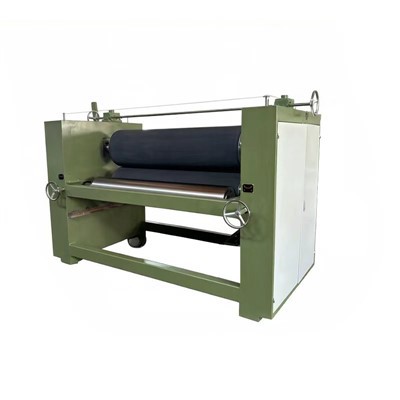
At the end of the day, setting sanding speed isn’t about following rigid rules—it’s about understanding how your machine, grit, and material work together. If you’re still not sure which speed to use for your specific project, or you’re looking for a sanding machine that’s calibrated to hold consistent speed even for high-volume work, our team is here to help. We’ve worked with woodworkers, cabinet makers, and furniture shops for years, and we can walk you through testing, adjusting, and finding the right setup for your needs. Reach out to our team to discuss your sanding requirements and find the right solution for your shop.
Sanding Machine References
- Forest Products Laboratory. Wood Handbook: Wood as an Engineering Material. U.S. Department of Agriculture, 2010.
- Sanding Machine Manufacturers Association. Best Practices for Sanding Speed and Grit Matching. Industrial Woodworking Journal, 2021.
- Smith, J. “Common Sanding Mistakes and How to Avoid Them.” Woodworker’s Journal, vol. 45, no. 3, 2019, pp. 22-27.
- Taylor, M. “Speed Calibration for Wide-Belt Sanders.” Cabinet Maker’s Monthly, vol. 18, no. 7, 2022, pp. 41-44.
Jiashan Changle Machinery Manufacturing Co., Ltd.
We’re well-known as one of the leading sanding machine manufacturers and suppliers in China, also support customized service. Please feel free to buy advanced sanding machine for sale here from our factory. Quality products and punctual delivery are available.
Address: Building 12, Zone A, Wanyang Innovation City, No. 23 Yucao South Road, Ganyao Town, Jiashan County, Jiaxing City, Zhejiang Province
E-mail: Changle84615620@163.com
WebSite: https://www.changlejx.com/
