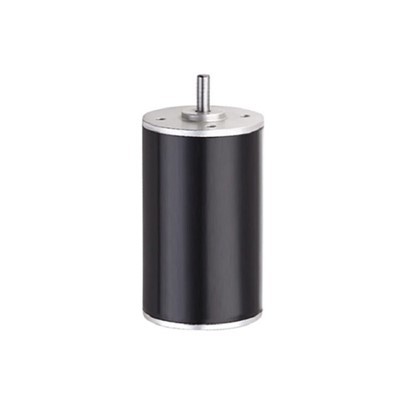
As a supplier of DC motors, I often encounter customers who are curious about the reduction ratio of a DC motor gearbox. This parameter is crucial in determining the performance and suitability of a DC motor for various applications. In this blog, I’ll delve into what the reduction ratio of a DC motor gearbox is, why it matters, and how it impacts the overall operation of a DC motor system. DC Motor
Understanding the Basics of a DC Motor Gearbox
Before we discuss the reduction ratio, let’s briefly understand what a DC motor gearbox is. A DC motor gearbox is a mechanical device that is connected to a DC motor. Its primary function is to change the speed and torque output of the motor. A DC motor typically operates at a high speed but may not produce enough torque for certain applications. The gearbox steps in to address this issue.
What is the Reduction Ratio?
The reduction ratio of a DC motor gearbox is defined as the ratio of the input speed (the speed of the motor shaft) to the output speed (the speed of the gearbox output shaft). Mathematically, it can be expressed as:
Reduction Ratio = Input Speed / Output Speed
For example, if a DC motor has an input speed of 3000 revolutions per minute (RPM) and the gearbox output speed is 300 RPM, the reduction ratio is 3000 / 300 = 10:1. This means that for every 10 revolutions of the motor shaft, the output shaft of the gearbox makes 1 revolution.
Why is the Reduction Ratio Important?
Torque Enhancement
One of the most significant reasons for using a gearbox with a specific reduction ratio is to increase the torque output. Torque is the rotational force that a motor can generate. According to the principle of conservation of energy, power (which is the product of torque and speed) remains constant in an ideal system. When the speed is reduced by the gearbox, the torque is proportionally increased.
For instance, in a robotic arm application, a high – torque output is required to lift and manipulate objects. By using a gearbox with an appropriate reduction ratio, the relatively low – torque output of the DC motor can be transformed into a high – torque output at the gearbox shaft, enabling the robotic arm to perform its tasks effectively.
Speed Control
The reduction ratio also allows for precise speed control. Different applications require different operating speeds. A DC motor may run at a very high speed, which is not suitable for some applications such as conveyor belts or slow – moving machinery. By choosing a gearbox with the right reduction ratio, the speed of the motor can be adjusted to the desired level.
How to Select the Right Reduction Ratio
Selecting the appropriate reduction ratio for a DC motor gearbox depends on several factors:
Application Requirements
The nature of the application is the primary factor. For example, in a printing press, a high – speed but low – torque operation may be required. In this case, a gearbox with a relatively low reduction ratio might be sufficient. On the other hand, in a winch system used for lifting heavy loads, a high reduction ratio is needed to generate the necessary torque.
Load Characteristics
The type of load that the motor – gearbox system will drive is also important. If the load is inertial, such as a large flywheel, a higher reduction ratio may be required to overcome the inertia and start the load moving. For a constant – torque load, the reduction ratio can be selected based on the desired speed and torque requirements.
Motor Specifications
The specifications of the DC motor, such as its rated speed and torque, play a role in determining the reduction ratio. The gearbox should be selected in such a way that it can work within the motor’s capabilities. If the reduction ratio is too high, the motor may be overloaded, leading to premature failure.
Impact of Reduction Ratio on Efficiency
The reduction ratio can have an impact on the efficiency of the DC motor – gearbox system. In general, as the reduction ratio increases, the efficiency of the gearbox tends to decrease. This is because there are more gear meshes and mechanical losses in a gearbox with a higher reduction ratio.
However, modern gearbox designs are constantly improving to minimize these losses. For example, the use of high – quality materials, precision manufacturing techniques, and advanced lubrication systems can help to improve the efficiency of gearboxes even at high reduction ratios.
Real – World Examples
Let’s look at some real – world examples of how the reduction ratio of a DC motor gearbox is applied:
Automotive Window Lifts
In automotive window lifts, a DC motor is used to drive the window up and down. The motor operates at a relatively high speed, but the window needs to move at a slow and controlled pace. A gearbox with a specific reduction ratio is used to reduce the motor speed and increase the torque, allowing the window to be lifted and lowered smoothly.
Electric Wheelchairs
Electric wheelchairs require a combination of speed and torque to move effectively. The DC motor in an electric wheelchair is connected to a gearbox with an appropriate reduction ratio. This allows the wheelchair to move at a comfortable speed while providing enough torque to climb slopes and navigate different terrains.
Our Role as a DC Motor Supplier
As a DC motor supplier, we understand the importance of the reduction ratio in different applications. We offer a wide range of DC motors and gearboxes with various reduction ratios to meet the diverse needs of our customers. Our technical team is always ready to assist customers in selecting the right motor – gearbox combination based on their specific requirements.
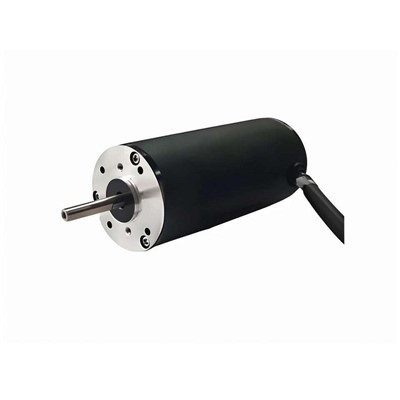
Whether you are working on a small – scale DIY project or a large – scale industrial application, we can provide you with the expertise and products you need. We ensure that our products are of high quality, reliable, and cost – effective.
Contact Us for Procurement
Permanent Magnet DC Moto If you are interested in purchasing DC motors or gearboxes, or if you have any questions about the reduction ratio or other technical aspects, we invite you to contact us. Our sales team will be happy to discuss your requirements and provide you with detailed information and quotes. We look forward to the opportunity to work with you and help you find the perfect solution for your DC motor needs.
References
- "Electric Motors and Drives: Fundamentals, Types and Applications" by Austin Hughes and Bill Drury.
- "Mechanical Design of Machine Elements and Machines: A Failure – Prevention Perspective" by Robert L. Norton.
Zibo Auric Mechanical and Electrical Technology Co., Ltd.
As one of the leading dc motor manufacturers and suppliers in China, we warmly welcome you to buy advanced dc motor for sale here from our factory. All customized motors are with high quality and competitive price.
Address: B419, High-tech Entrepreneurship Park, High-tech Zone, Zibo City
E-mail: cui@auricmotor.com
WebSite: https://www.auricmotor.com/
