Hey there! If you’ve ever used a U drill (you know, those single-index insert drills that cut through metal like butter, way faster than standard twist drills), you’ve probably stared at a feed rate and cutting speed chart at some point, scratched your head, and wondered, “Wait, is this actually right for my setup?” U Drills
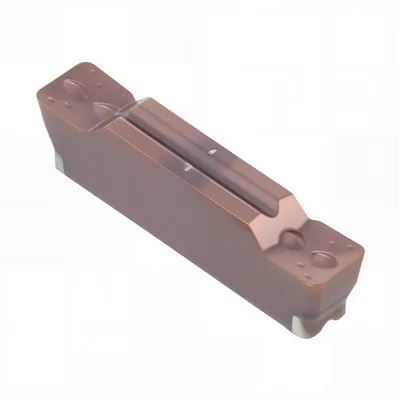
I get it. When I first started selling U drills years ago, I’d get so many calls from folks—small shop owners, CNC operators, even new machinists at big factories—asking the same question: “How do I calculate the proper cutting speed for my U drill?” And honestly? A lot of the online guides out there are either too vague, full of jargon, or just copy-pasted garbage that doesn’t take real-world stuff into account (like what kind of machine you’re using, or if you’re cutting stainless vs. mild steel).
As a U drill supplier, I don’t just sell drills and ghost you. I’ve been in your shoes too. I’ve seen a guy blow out 3 U drill inserts in a day because he used a generic cutting speed number that wasn’t right for his mild steel part and his old CNC mill. I’ve helped a startup shop nail their first production run by tweaking their speed just a little. So today, I’m breaking this down for you—no fancy formulas that’ll make your brain hurt, no useless charts that don’t apply to your material. Let’s keep it real.
First, let’s get one super important thing out of the way: what even is cutting speed (or Vc, if you wanna use the industry shorthand, but I’ll stick to both so you’re not lost)? Cutting speed is basically the speed at which the outer edge of your U drill’s insert is moving against the material you’re cutting. It’s measured in surface feet per minute (SFM, for imperial folks) or meters per minute (m/min) if you’re in metric. This isn’t how fast your spindle is turning, though— that’s spindle speed (RPM), which we’ll get to later.
Here’s the big rule: if your cutting speed is too low, your U drill will rub instead of cut, which will make the insert wear out super fast, heat up the part, and maybe even jam. Too high, and the insert will chip or break, or worse—you’ll damage your machine. Finding that sweet spot? That’s where the magic happens, and it all starts with the material you’re drilling.
This is the part most guides skip: cutting speed isn’t a one-size-fits-all number. It totally depends on the material you’re working with. Let’s run through the most common stuff I see, straight from the data we use with every U drill we sell:
- Mild steel (like 1018, A36): This is the easiest one. We recommend 100-150 SFM (or 30-45 m/min). If you’re using carbide inserts (which 99% of U drill users do), that’s the baseline.
- Stainless steel (304, 316): Tricker stuff. It’s sticky, so it generates more heat. Lower cutting speed here—70-100 SFM (20-30 m/min). If it’s a super high-alloy stainless, maybe even 60-80, but don’t quote that without checking.
- Aluminum: Oh, aluminum can go way higher. We suggest 300-500 SFM (90-150 m/min). Just make sure you’re using a sharp insert—aluminum will gum up a dull insert faster than anything.
- Cast iron: 150-250 SFM (45-75 m/min). Brittle stuff, so don’t push too hard on speed, or the insert might chip.
- Exotics (like titanium, Inconel): These are for pros only. Titanium is 50-80 SFM, Inconel is even lower—20-40. You gotta have the right coolant and rigid machine too.
Wait, but why is this different from other drills? Because U drills are built different. They have that single index insert that’s harder, more stable than a twist drill’s whole flute. So their cutting speed is higher, which is why they’re faster. If you try to use a twist drill’s speed for a U drill, you’re leaving speed and money on the table. I see that all the time. Folks new to U drills come in still using their old twist drill numbers, and they’re like “your drill is great but it’s not faster than my old one” — no, you’re just not turning the speed up!
Okay, so you have your cutting speed (Vc) for your material. Now how do you get to spindle speed (RPM), which is what you actually punch into your CNC? That’s the easy math part—no calculator degree needed. Let’s do both imperial and metric, so no excuses.
Imperial formula (SFM):
RPM = (4 * Vc) / drill diameter (in inches)
Wait, why 4? Because that’s the constant for converting SFM to RPM. Don’t overcomplicate it. Let’s test with an example to make this real. Let’s say you’re drilling a 1-inch hole in mild steel (100 SFM). Plug in the numbers: RPM = (4 * 100) / 1 = 400 RPM. That’s it.
Metric formula (m/min):
RPM = (1000 * Vc) / (π * drill diameter in mm)
π is ~3.14, you can Google that if you forget, but you don’t need to memorize it. Example: drilling a 25mm hole in aluminum (400 m/min). RPM = (1000 * 400) / (3.14 * 25) = 400000 / 78.5 ≈ 5100 RPM. That sounds high, but aluminum handles that no problem with a sharp U drill.
But hold up—don’t plug these numbers into your machine immediately. There are real-world factors that will mess with this, and if you ignore them, you’ll still ruin an insert. I’ve learned this the hard way, so let’s call out the caveats that every U drill user needs to know:
First, machine rigidity. If you’re running a old, rickety manual mill, not a CNC, your speed and feed can’t be as high as what the formula says. Why? Because a wobbly machine will vibrate, and vibration = bad for U drill inserts. I once had a guy with a beat-up 1980s Bridgeport try to run a U drill at the same speed as a new Haas, and he broke 3 inserts in an hour. For old machines, drop the cutting speed by 10-15% to keep things stable.
Second, coolant is non-negotiable. I can’t stress this enough. U drills generate a lot of heat—more than twist drills, because they’re cutting faster. If you’re running dry, the insert will glow red, wear out in minutes, or crack. If you’re using oil-based coolant, you can bump speed by 5%; if you’re using high-pressure coolant (like through-spindle, 1000 PSI or more), you can bump speed by 15-20%. That’s a game-changer. We sell U drills with coolant through holes specifically for this reason—helps flush chips too, so no more pecking cycles for deep holes.
Third, hole depth. U drills are great for deep holes, but if you’re drilling a hole that’s 5x the diameter or deeper (like a 1-inch drill, 5-inch deep hole), you gotta slow down a little. The formula assumes you’re not clearing chips easily, so cutting speed drops 10% for deeper holes. No need for extra pecking if you have good coolant, but speed adjustment still applies.
Fourth, insert grade. Wait a second—we talked about carbide, but not all carbide is the same. If you’re using a general-purpose carbide insert, you’re good with the numbers we listed. But if you’re using a coated carbide (TiCN, TiAlN) for harder materials, you can bump speed by 10-15%. If you’re using a super-hard insert for exotics, maybe even 20%. Always check the insert package or the spec sheet for your U drill—we include that with every drill we ship, no exceptions.
Let’s do a full real-life example to tie this all together, okay? Let’s say you’re a fabricator using a CNC mill, new U drill, drilling a 0.75-inch hole in 304 stainless steel, 3-inch deep (so 4x diameter), using through-spindle coolant with a TiAlN coated carbide insert.
- Material is stainless, so base Vc is 80 SFM.
- Hole depth is 4x diameter, so drop speed by 10%: 80 * 0.9 = 72 SFM.
- Coated insert and good coolant, so add 10%: 72 * 1.1 = 79.2 SFM. Let’s round to 80 SFM to keep it simple.
- Imperial formula: RPM = (4 * 80) / 0.75 = 320 / 0.75 ≈ 427 RPM. That’s your spindle speed.
See how that works? It’s not just plug and play, but it’s not rocket science either.
Wait, another thing I get asked all the time: can I use the same speed for every diameter hole with the same U drill? No! Because the drill diameter changes—remember, the formula uses diameter to calculate RPM. A 0.5-inch U drill will have a higher RPM than a 1-inch U drill for the same cutting speed. That makes sense, right? A smaller circle needs to spin faster to get the same surface speed. I’ve had guys try to keep RPM the same for different size holes, and they either slow down the small drill way too much or over-speed the big one and break it. Don’t do that.
What if you don’t have a spec sheet, or you’re using a cheap U drill and forgot what material it’s for? The rule of thumb I give every new customer is: start at 70% of the base Vc for your material, then test it. Run a small test hole, check the insert after—if it’s wearing evenly, no chipping, great. If it looks dull or like it’s burning the material, bump speed by 10%. If it’s chipping the insert, slow it down by 10%. Once you find that sweet spot, stick with it for that material and machine. That’s how you build a setup that works every time.
And hey, if you’re working with a material I didn’t mention here, or a custom job, don’t guess. Hit us up. We sell U drills for all kinds of materials, and we have a team that can help you with the exact cutting speed, no runaround. We don’t want you wasting money on broken inserts or bad parts—we want you to be happy with your U drill, so you’ll come back when you need more.
Let me wrap this up quick to make sure you’re not missing anything. The process is:
- Know your material, get base Vc from your U drill’s spec sheet (or use the rough numbers I listed here).
- Adjust Vc for machine rigidity, coolant, hole depth, and insert grade.
- Plug adjusted Vc into the SFM or metric formula to get RPM.
- Test, tweak, and lock in your speed for that job.
That’s it. No confusing tables, no jargon. Just real steps that work, from someone who’s been selling U drills long enough to know what actually works in a shop, not just what’s written in a textbook.
If you’ve got a specific project, or you’re tired of your current drills wearing out too fast, don’t hesitate to reach out. We can help you pick the right U drill, dial in the perfect cutting speed, and make your drilling process way smoother and faster.
Happy drilling!
External Turning Cutters References:
- Machining Data Handbook, 4th Edition, Society of Manufacturing Engineers
- Sandvik Coromant U Drill Technical Guide, 2022
- Haas Automation CNC Operations Manual, 2021
- Guide to High-Performance Drilling with Indexable Inserts, Kennametal, 2020
Small Craftsman (Shandong) Machine & Tools Co., Ltd.
Small Craftsman (Shandong) Machine & Tools Co., Ltd. is one of the most experienced u drills manufacturers and suppliers in China, also supports customized service with low price. Please feel free to buy bulk high quality u drills in stock here from our factory. Contact us for pricelist.
Address: No.9 Quanxin Rd., Sishui Economic Developing Zone, Jining, Shandong, China.
E-mail: 6196@ocutchina.com
WebSite: https://www.ocutooling.com/
