If you’ve ever stared under a car, a truck, or even a heavy-duty utility vehicle, you’ve probably heard the words “strut” and “shock absorber” thrown around in auto shops, parts stores, or online forums. For someone like me, who’s spent 12 years as a shock absorber parts supplier, I get asked this question at least a dozen times a week: “What’s the difference between a strut assembly and a shock absorber?” It’s not just a terminology mix-up—many drivers and even some small mechanics mix these two up, but they’re fundamentally different parts with separate jobs, components, and roles in a vehicle’s suspension. Let’s break this down clearly, because if you’re in the market for replacement parts, getting this right saves you money, time, and a lot of frustration down the line. Shock Absorber Parts
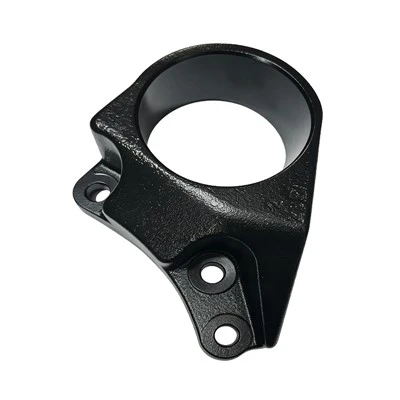
First, let’s start with the shock absorber, because it’s the simpler, more foundational part, and it’s what I’ve supplied for decades. A shock absorber (often just called a “shock”) is a hydraulic or pneumatic part designed to do one main job: control vertical motion. When your car hits a pothole, a speed bump, or even a small ripple in the road, your suspension spring compresses, which would make your vehicle bounce like a pogo stick if there was nothing to stop it. The shock absorber does that stopping. But a shock isn’t just a single cylinder you swap out—its assembly has a few key parts that make it work, and I’ve seen time and again how each part matters for performance and durability.
Inside a typical modern shock, you’ll find a pressure chamber filled with hydraulic fluid, usually a special blend that doesn’t foam even when it’s hot from constant use. That fluid isn’t just there to transfer force—it’s what creates the dampening effect. Attached to a piston that moves up and down inside the cylinder are small orifices, tiny holes that let the fluid flow from one side of the piston to the other as the spring compresses and extends. The size of those orifices determines how stiff the shock is: smaller holes mean more resistance, so the shock is firmer, which is good for performance driving or heavy loads. Larger holes let fluid flow faster, making the shock softer, which is better for a smooth ride on city streets.
Then there’s the piston rod, a long, sturdy metal rod that connects the piston to the top mount of the shock. It’s usually chrome-plated to resist rust and wear, because if it gets scratched or corroded, fluid can leak out, and the shock won’t work right. Most shocks also have a seal at the top where the piston rod exits the cylinder—this seal keeps hydraulic fluid in and prevents dirt, dust, and water from getting inside, which would damage the piston and orifices over time. On some heavy-duty shocks for trucks or off-road vehicles, you’ll also have a dust boot, a flexible rubber cover that slips over the exposed part of the piston rod, adding an extra layer of protection. At the very top and bottom of the shock, there are mounting points—usually metal eyelets or studs with rubber bushings inside to absorb small vibrations and reduce noise transmitted to the vehicle’s frame. That’s the shock, in a nutshell: a standalone part, designed to dampen motion, with a core of fluid, piston, rod, and seals.
Now, a strut assembly is a totally different animal, and this is where the confusion starts. A strut isn’t just a shock with a different name—it’s a complete suspension unit that replaces several parts at once. On most front-wheel-drive cars, many small SUVs, and even some rear-wheel-drive vehicles, the front suspension relies on struts instead of separate shocks and coil springs. Why? Because it’s more compact, easier to manufacture, and takes up less space under the hood. But that compact design means a strut integrates multiple parts that are separate in a traditional suspension, and that’s why it’s not a shock.
Let’s list the parts that make up a strut assembly, because each of these plays a role that a standalone shock doesn’t. First, the core of the strut is actually a type of shock absorber, called a strut cartridge, that does the same dampening job I talked about earlier. But that cartridge is housed inside a larger assembly that includes a coil spring—yes, the spring that works with the shock to support the vehicle’s weight and absorb big bumps. Attached to the top of the coil spring is a spring seat, a metal ring that keeps the spring aligned and transfers the vehicle’s weight from the spring to the top mount. That top mount is another key part: it’s a bearing assembly that lets the strut pivot when you turn the steering wheel. In a separate shock and spring setup, that pivot function is handled by different parts (like control arms and ball joints), but in a strut, it’s built right in.
Then there’s the strut’s housing, which acts as a structural part of the suspension. Unlike a standalone shock, which just dampens motion, the strut’s outer housing connects the suspension to the vehicle’s steering knuckle—this is the part that holds your wheel and lets it turn. That means the strut isn’t just a dampener; it’s a structural component that supports the wheel’s alignment and steering geometry. A lot of drivers don’t realize this, but if a strut’s housing is bent or damaged in a pothole, it can throw your wheel alignment way off, something a standalone shock never does. Another part unique to many strut assemblies is the strut rod (or the lower control arm attachment point) and sometimes a sway bar link mount, which connects the strut to the vehicle’s anti-sway bar to reduce body roll when you turn.
Wait, let’s make sure I’m not mixing anything up here. Let’s summarize the key differences in parts: a standalone shock has a hydraulic cylinder, piston, rod, seals, and mounting points, with no structural role in the suspension beyond dampening. A strut assembly has all of that (the strut cartridge is essentially a shock) plus a coil spring, spring seats, a top mount with a steering bearing, a structural housing that connects to the steering knuckle, and often a sway bar link mount. That’s why swapping a strut is a bigger job than swapping a shock—when you replace a strut, you’re replacing all those parts at once, whereas a shock swap is usually just removing the old cylinder and bolting in the new one.
I’ve seen so many customers come to my shop (and to my website, since I work with both retail and wholesale buyers) thinking they just need a new shock, only to find out they need a full strut assembly. A lot of that confusion comes from auto parts stores labeling both as “suspension parts” with similar part numbers, but the cost difference is huge. A standalone shock might cost $50 to $150, while a front strut assembly can be $200 to $400, because of all the extra parts included. Getting the wrong part leads to returns, installation delays, and even safety issues—if you put a shock where a strut should be, your steering will be loose, your alignment will be off, and you’ll have way more body roll, which is dangerous at high speeds.
Another common question I get: can you replace just the shock inside a strut, instead of the whole assembly? The answer is yes, in most cases, that’s called a strut cartridge, and it’s a cheaper alternative. But not every strut is designed to have the cartridge replaced—some manufacturers weld the cartridge into the housing, so you have to swap the whole unit. That’s something I always advise checking before you buy: if your strut has a removable cartridge, that’s a great way to save money without sacrificing performance, especially if your coil spring and top mount are still in good shape. If the cartridge is welded in, a full assembly is the only option, and you should make sure to replace struts in pairs (both front or both rear) to keep your suspension balanced.
Let me also touch on heavy-duty applications, because that’s a big part of my business too—we supply parts for trucks, RVs, and construction vehicles, not just passenger cars. Heavy-duty shocks and struts have the same core parts, but they’re built to handle way more weight. A 10,000-pound truck shock might have a larger piston, thicker piston rod, and higher-capacity hydraulic fluid than a car shock, because it has to control the motion of a much heavier vehicle. A heavy-duty strut assembly for a work truck will have a stiffer coil spring and a more robust top mount, since the truck is carrying heavy cargo regularly. That’s why it’s important to match the part to your vehicle’s weight and use—using a car shock on a work truck will fail quickly, and vice versa.
Now, why does this matter for you, the buyer? Whether you’re a do-it-yourself mechanic or a fleet manager ordering parts, understanding the parts of each suspension component means you can make smarter choices. If your ride is bouncy after hitting a pothole, it’s probably a shock issue—check for leaking fluid around the piston rod, that’s a dead giveaway. If your steering feels loose, your front end is making clunking noises when you go over bumps, or your alignment keeps going off, that’s likely a strut issue, and you’ll need to inspect the housing, top mount, and coil spring, not just the dampening part.
I’ve been in this business long enough to know that cheap, low-quality parts are a waste of money. A lot of customers try to buy the cheapest shocks or struts online, only to have them fail in 6 months instead of 5 years. That’s why at our company, we focus on supplying parts that use high-chrome piston rods, heavy-duty seals, and precision-orifice pistons, so they last. But even with good parts, knowing what you’re buying is the first step. If you need a standalone shock, look for parts labeled as “hydraulic shock absorber” with no coil spring or top mount included. If you need a strut, make sure it includes all the parts we talked about: strut cartridge, coil spring, top mount, and steering bearing, depending on your vehicle.
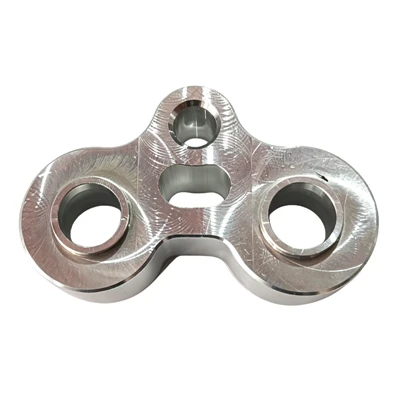
At the end of the day, the biggest takeaway is this: a shock absorber is a standalone dampening device, made up of a hydraulic cylinder, piston, rod, seals, and mounting points. A strut assembly is a complete suspension unit that includes a shock cartridge plus a coil spring, structural housing, steering mount, and other suspension parts. They work together with other components like springs, control arms, and sway bars to keep your ride smooth, safe, and aligned. If you’re not sure which part you need, or if you’re looking for high-quality replacement parts for any vehicle, don’t hesitate to reach out to our team to discuss your specific needs. We work with individual drivers, small repair shops, and large fleets, and we’re here to help you get the right parts at a fair price.
Shock Absorber Parts References
- Automotive Suspension Systems: Design, Diagnosis, and Repair, 4th Edition, Tom Birch, 2021
- Shock Absorber Technology and Applications, Society of Automotive Engineers (SAE) International, 2019
- Light Vehicle Suspension Components: Part 5 – Strut Assembly Specifications, National Highway Traffic Safety Administration (NHTSA), 2020
- Heavy Duty Suspension Systems for Commercial Vehicles, International Bureau of Automotive Repair, 2022
Ninghai Zhengda Moulding Co., Ltd.
As one of the most professional shock absorber parts manufacturers and suppliers in China, we also support customized service. Please feel free to wholesale durable shock absorber parts in stock here from our factory. Welcome to contact us for pricelist.
Address: No.2088-3, Xuemian North Road, Taoyuan Subdistrict, Ninghai County
E-mail: xgs9425@outlook.com
WebSite: https://www.cn-zhengda.com/
