If you’ve ever stood in the skincare aisle at a drugstore, luxury department store, or even a big-box retailer, you’ve probably glanced at a half-dozen lotion bottles without giving their sizes a second thought. As a lotion bottle supplier who’s worked with small indie brands and global skincare giants over the past eight years, I can tell you that this sizing isn’t random—it’s rooted in consumer behavior, product formulation, and retail logistics. Let’s break down what the standard lotion bottle sizes actually are, why they matter, and how brands choose the right one for their products. Lotion Bottles

First, let’s define what “lotion bottle sizes” we’re talking about here. This excludes travel-sized containers (which fall under TSA’s 3.4-ounce rule) and industrial bulk jugs, and focuses on the single-serve and multi-serve bottles designed for consumer use. The core standard sizes fall into four main categories: mini/travel, everyday personal use, family-sized, and professional salon/body care. Each has a clear use case, and as a supplier, we’ve seen these numbers shift slightly with consumer trends, but they’ve stayed consistent for over a decade.
The smallest standard size, often called a “mini” or “sample” bottle, typically holds 1.7 to 2 ounces (50 to 60 milliliters). These aren’t just for free samples—brands use them for trial-sized products, travel essentials, and even small batch line extensions like hand lotion for purses or gym bags. What many people don’t realize is that this size was standardized by the TSA in 2006, when the agency set its 3.4-ounce liquid limit for carry-ons. Before that, travel lotion bottles came in all sorts of sizes, but retailers and brands quickly shifted to align with the new regulation to avoid wasting money on packaging that didn’t fit airport rules. That’s a key point: standard sizes often don’t come from arbitrary industry choices—they come from regulatory or consumer convenience guidelines.
Next is the most common standard for everyday personal lotion bottles: 8 ounces (236 milliliters). This is the size you’ll find on the shelves for facial moisturizers, hand lotions, and standard body lotions for single adults. Why 8 ounces? Let’s do the math: the average person uses about a quarter teaspoon of lotion per hand, and most adults use 2 to 4 ounces of body lotion per week, depending on skin type and climate. An 8-ounce bottle lasts about two to four weeks, which is the sweet spot for a personal care product. It’s not too small that you have to repurchase every week, and not so large that it feels heavy to hold or store in a bathroom cabinet. As a supplier, we see 8-ounce bottles make up nearly 60% of the lotion bottles we manufacture for everyday brands—they’re affordable for consumers, easy for retailers to stack on shelves, and convenient for shipping.
Another popular standard is the 12-ounce (355 milliliters) bottle. This falls into the mid-sized category, often used for body lotions that the whole family uses, or for specialty products like thick body creams that require a bit more product per use. For households, a 12-ounce bottle lasts about a month, which is perfect for reducing purchase frequency without being too bulky. Brands that sell eco-friendly refills also use 12-ounce bottles as a refill size, since it’s large enough to avoid waste from too many small refills, and small enough to be refilled from bulk jugs without heavy lifting. We’ve worked with a number of clean beauty brands that switched from 8 to 12 ounces for their body lines after customer surveys showed they wanted a bottle that didn’t run out mid-week.
The largest consumer-facing standard size is 16 ounces (473 milliliters), also known as a “pound” bottle, since water (and lotion, which is mostly water) weighs about a pound per 16 ounces. This is the size you’ll find in drugstore value packs, large body lotions, and salon-style products. Salons often use 16-ounce bottles for professional lotions that clients purchase to use at home, since they’re cost-effective for both the brand and the customer. For the household, a 16-ounce bottle lasts about six weeks, making it a go-to for people who don’t want to shop for lotion every month. It’s also become popular for DIY skincare blends and bulk refills, as it’s large enough to split into smaller travel-sized bottles without extra packaging steps.
Now, it’s important to note that there are regional variations in standard sizes, which is a detail every brand needs to consider when working with a supplier. In Europe, for example, the metric system dominates, so standard lotion bottle sizes are 50ml, 100ml, 200ml, and 500ml. The 100ml bottle is the European equivalent of the U.S. 8-ounce bottle, tailored for personal hand and body lotions, while 200ml is the mid-sized family option. In Asia, many brands use 250ml as a standard mid-sized bottle, due to smaller bathroom storage spaces in urban apartments, so we adjust our manufacturing to meet those regional specs for clients exporting products. That’s a big part of being a reliable supplier—understanding that “standard” isn’t a one-size-fits-all, and being able to adapt to regional consumer habits.
So why do these standard sizes matter for brands, and how does that translate to what I do as a lotion bottle supplier? Let’s talk about the business side. First, packaging cost is directly tied to size. A 8-ounce bottle costs roughly 30-40% less to manufacture, ship, and retail than a 16-ounce bottle, because it uses less plastic or glass, is lighter to transport, and fits more easily on retail shelves. For small brands launching their first lotion line, that cost savings can be the difference between breaking even and going over budget. But it’s not just about cost—consumer expectations play a huge role. If a brand launches a facial moisturizer in a 10-ounce bottle, it will look out of place next to every other facial moisturizer on the shelf that’s 8 ounces. Retailers won’t order it as much, because it breaks their shelf display uniformity, and consumers will be confused by the odd size.
That’s not to say there’s no room for innovation. Over the past five years, we’ve seen a rise in “dual-sized” or modular lotion bottles, where a small 2-ounce travel bottle clicks into a 10-ounce base for home use. These are popular with brands targeting millennials and Gen Z, who value portability and sustainability, and they fill a gap between the standard travel and personal sizes. But even these innovative designs build on existing standard sizes—so they’re familiar to consumers, which reduces the risk of new product adoption. As a supplier, I work with brands to balance innovation with familiarity: we’ll suggest a standard size first, then modify it with unique caps, shapes, or materials to make their product stand out, without straying from a size that’s proven to sell.
Another factor that shapes standard lotion bottle sizes is product formulation. Lotion is a water-based product, but some are thicker, like body creams, while others are lighter, like facial moisturizers or hand sanitizer lotions. Thicker products need a bottle that’s easy to dispense, and the size of the bottle affects that: a narrow 8-ounce bottle is easier to hold for dispensing thick hand lotion, while a wide-mouthed 16-ounce bottle works better for thicker body creams that you scoop out with a pump or spatula. We have to adjust bottle neck sizes, cap types, and even material thickness based on the product inside, but the base size still follows industry standards to ensure compatibility with existing packaging equipment. For example, if a brand is using a pump dispenser that’s designed for 24mm necks on 8-ounce bottles, switching to a non-standard 10-ounce bottle would require retooling the pump, which adds thousands of dollars in costs and delays product launches. That’s why sticking to standard sizes is a smart business move, especially for new brands.
Let’s also touch on sustainability, which has become a huge driver in lotion bottle sizing over the past decade. Consumers are increasingly looking for packaging that’s not oversized, and brands are trying to reduce plastic waste. The standard sizes I mentioned earlier are designed to minimize excess packaging: an 8-ounce bottle uses just enough material to hold the average amount of lotion a person uses, so there’s no empty space at the top that would be wasted plastic. For refill programs, brands often use the same bottle size for both the original and the refill, so consumers don’t have to discard a whole bottle when they’re done. We’ve seen brands that used to sell a 16-ounce single bottle switch to a 8-ounce original and a 16-ounce refill, which reduces waste by 50% per customer, and that’s only possible because those sizes are standard. As a supplier, we’ve invested in recyclable plastic and glass materials to align with these sustainability trends, while keeping the base sizes familiar so brands don’t have to start from scratch with their packaging.
Now, I get it—every brand wants to stand out, and sometimes breaking the “standard” rule makes sense. For luxury skincare lines, for example, a unique bottle shape or size can be a selling point, like a curved 6-ounce bottle for a high-end facial serum. But even luxury brands usually stick to a standard size for their more accessible lines, to keep costs down. I’ve had brands come to me asking for a custom size, and the first thing I do is explain the trade-offs: higher manufacturing costs, longer lead times, difficulty finding compatible pumps and labels, and lower retail placement because it doesn’t fit standard shelves. More often than not, they come back and choose a standard size, then add a custom label or cap to make their product unique.
At the end of the day, the standard lotion bottle sizes we have today aren’t just numbers on a spec sheet—they’re the result of decades of consumer research, regulatory rules, retail logistics, and brand needs. As a lotion bottle supplier, my job is to not just provide these standard sizes, but to help brands understand why they matter, and how to use them to build a successful product line. Whether you’re launching your first hand lotion brand, expanding a body care line, or looking to switch to more sustainable packaging, choosing the right bottle size is one of the most important decisions you’ll make for your product.
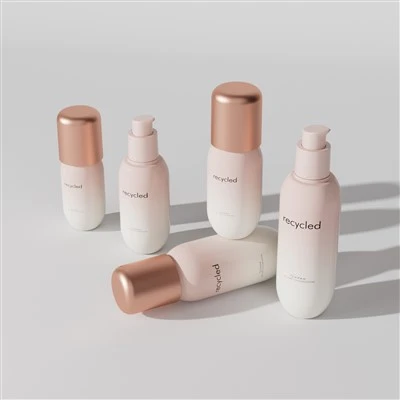
If you’re a brand owner looking for reliable, high-quality lotion bottles that fit standard sizes and can be customized to match your brand’s vision, we’d be happy to discuss your needs. Reach out to our team to talk through sizing options, material choices, and packaging solutions that work for your budget and product goals. We work with brands of all sizes, from startup indie lines to national retail brands, and we’re committed to delivering packaging that helps your products stand out on the shelves and connect with consumers.
Cosmetic Jars References
- Consumer Packaged Goods Association. (2022). Personal Care Packaging Trends and Standard Specifications.
- U.S. Transportation Security Administration. (2006). Carry-On Liquid and Gel Restrictions.
- European Cosmetic, Toiletry and Perfumery Association. (2021). Packaging Standard Sizes for EU Personal Care Products.
- National Retail Federation. (2023). In-Store Shelf Uniformity and Consumer Purchasing Decisions.
Gaocho Industrial (Guangdong) Co., Ltd.
Gaocho Industrial (Guangdong) Co., Ltd. is one of the most professional lotion bottles manufacturers and suppliers in China. We have world-leading production equipment and strong manufacturing capabilities. We warmly welcome you to wholesale customized lotion bottles at competitive price from our factory.
Address: Floor 1-4, Building 3, No. 19, Yonghuan Road, Jintian Industrial Zone, Huadong Town, Huadu District, Guangzhou City, Guangdong Province, China.
E-mail: sale03@gaopack.com
WebSite: https://www.gaobottle.com/
