If you’ve ever worked with industrial nitrogen generation, chances are you’ve crossed paths with a Carbon Molecular Sieve (CMS) system—especially a Pressure Swing Adsorption (PSA) CMS nitrogen generator. But here’s the thing that trips up a lot of people: get the feed gas composition wrong, and even the best CMS unit won’t perform like it should. As someone who’s spent years selling and troubleshooting CMS materials (I’m not a suit in an office, I’m the guy who shows up on-site when a customer’s generator is spitting out wonky nitrogen), I can tell you this isn’t just a “set it and forget it” detail. It’s make-or-break for purity, efficiency, and even how long your CMS beds last. Carbon Molecular Sieve
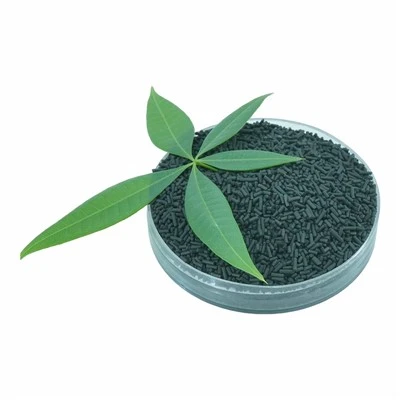
Let’s start with the basics, no jargon dumps. A CMS nitrogen generator works by pumping compressed air (your feed gas, usually) through two separate beds of tiny carbon sieve particles. The CMS has pores that are sized specifically to trap oxygen molecules tighter than nitrogen. So when air flows through, oxygen sticks to the sieve, nitrogen passes through as your product gas. That simple mechanism relies entirely on the feed gas being the right mix. Mess that up, and you’re either wasting energy, getting bad purity, or wearing out your CMS in six months instead of three years.
First off, what’s the “default” feed gas most people use? Regular atmospheric air—78% nitrogen, 21% oxygen, 0.93% argon, 0.04% CO2, plus trace water vapor and other gasses. But here’s the first big mistake I see: a lot of people think “more compressed air is better.” No, it’s not. The key variable here isn’t just pressure—it’s the dryness of the feed, and how much of the other trace gasses (especially CO2 and water) you’re letting through.
Wait, let’s break down each component of feed gas and why it matters. Water vapor first, because this is the #1 culprit for CMS degradation. Water molecules are super small and super polar—they’ll cling to the CMS pores like glue, even if you’re only running at 100 ppmv of water in your feed. Over time, that water blocks the pores that are supposed to trap oxygen, so your sieve can’t do its job anymore. I once had a customer who skipped the feed dryer because he thought “it’s just a little moisture”—six months later, his CMS beds were 30% less effective, and he had to replace them way earlier than expected. Rule #1: your feed gas needs to have less than -40°C pressure dew point (PDP) to protect your CMS. Any wetter than that, and you’re basically pouring sand into a precision filter.
Next, CO2. Atmospheric air has 400 ppm of CO2 these days, but industrial environments can have way more—some factories, breweries, or places near refineries or landfills have feed air with 1,000 ppm or more CO2. CO2 is even more of a problem than water for CMS, because it’s a hydrocarbon that adsorbs really strongly onto the carbon surface. It doesn’t just block pores temporarily—it can permanently alter the CMS’s pore structure over repeated adsorption-desorption cycles. So if your feed has too much CO2, you’re shortening your CMS lifespan and losing nitrogen purity. I always tell customers: if your CO2 levels are over 500 ppm, add a pre-filter or a dedicated CO2 scrubber to your feed line. It’s way cheaper than replacing beds every two years.
Then there’s argon. You might be thinking, “Argon’s in air too—does that matter?” Here’s the trick: argon has a molecular size almost identical to nitrogen, so a lot of people don’t realize it ends up in your product gas too. CMS does not separate nitrogen and argon well. So the purity of your nitrogen product is actually nitrogen plus argon, roughly. If you’re running a generator that’s rated for 99.5% nitrogen, that means 99.5% of the dry product gas is N2 + Ar. So the “active” nitrogen purity is a tiny bit less, but for most applications—like packaging food, laser cutting, or inerting tanks—that’s not a big deal. Where it matters? If you need 99.999% ultra-pure nitrogen, you can’t get that from a CMS system, even if you tweak the feed. But that’s not a feed composition issue, that’s a technology limitation—CMS is great for 95-99.9% nitrogen, and the feed gas affects the lower end of that range, not the ultra-high end.
Now, let’s talk about the optimal feed gas composition. This isn’t a one-size-fits-all number, but I can give you the sweet spot I’ve tested and proven with hundreds of generators, both my own customers and third-party tests. First, base it on dry, oil-free compressed air (oil is another big one—oil vapor coats the CMS, same as water, but even worse; make sure your feed has zero oil carryover from your compressors). Then, the key specs:
- Pressure dew point: ≤ -40°C (so less than 120 ppmv water)
- CO2 content: ≤ 500 ppmv
- Oil content: ≤ 0.01 mg/m³
- Pressure: 8-12 bar (absolute) – don’t go lower than 7 bar, because PSA relies on higher pressure for adsorption, and don’t go over 15 bar, because it’s unnecessary and wastes energy compressing air that high.
Wait, but what if a customer can’t get that? Like, a workshop that only has a dryer that hits -20°C? I’ll tell you how to adjust. First, make sure the system has a higher regeneration flow for the PSA beds—more purge gas flushes out any water that does stick. Second, schedule more frequent bed audits. We do annual CMS performance tests where we measure oxygen adsorption capacity, and if moisture is an issue, we can tell the customer to regenerate the beds more often or bump up the purge rate. It’s not ideal, but it works for places that can’t afford a top-tier dryer.
Another question I get all the time: “Should I use pure nitrogen as feed? No, that’s stupid. Pure nitrogen feed would mean you’re wasting product gas to regenerate the beds, which is way more expensive than just using regular air. Feed gas doesn’t need to be anything special—just clean, dry, oil-free compressed air that fits those specs I listed.
Let’s talk about what happens when you deviate from that sweet spot. If your feed is too wet: oxygen breakthrough increases, nitrogen purity drops, and you’ll see pressure drop across the beds go up because the CMS is getting clogged. If your feed has too much CO2: same purity issue, plus bed lifespan drops by 20-40% in some cases. If your feed pressure is too low: the PSA cycle doesn’t work right, you can’t get the purity you want without wasting more gas, and energy use goes through the roof.
I once had a customer in the food packaging industry who was running his generator on air from a compressor in a meat processing plant. That air had 1,500 ppm of CO2 and way too much moisture. His nitrogen purity was only 97%, which was fine for a while, but once the CO2 started building up in the CMS, he had to replace the beds after 18 months instead of 3. I sent a tech out to add a small CO2 scrubber and a better dryer, and now his purity is 99.2%, and his beds are still going strong after 2.5 years. That’s the difference the right feed composition makes.
What about if someone wants higher purity? Let’s say they need 99.9% nitrogen. How does feed composition change? You don’t need to adjust the base, but you do need to make sure your feed is even drier—like -60°C PDP. Less moisture means the CMS is working at full capacity, so you can get more nitrogen out without letting oxygen break through. Also, maybe bump the pressure up to 10 bar instead of 8, because higher pressure gives more adsorption force. But if you go over 12 bar, the gain in purity is negligible, and you’re just wasting energy.
Another edge case: what if you’re in a very humid climate, like Southeast Asia? The ambient air has more water vapor, so you need a dryer that can handle that. I always specify two-stage dryers for customers in tropical areas, because a single stage won’t get the dew point low enough. That’s a feed composition adjustment that’s specific to their location, which is why generic guidelines don’t work—you have to factor in where the air is coming from.
Wait, let’s clear up a common myth: some people say “if your feed has argon, it will reduce nitrogen purity.” Technically yes, but as I said earlier, argon only makes up 0.93% of air, so the total argon in your feed is tiny, and it passes through the CMS almost completely, so it just dilutes your nitrogen product. For most industrial applications, that 0.93% difference is irrelevant. You’d have to have a feed with way more argon (like 10% or higher) to notice a big hit, and that’s not going to happen with regular air.
Now, let’s talk about how to test your feed gas. You don’t need a lab—most compressed air service companies can test dew point, CO2 content, and oil level with portable kits. If you’re not sure, just send a sample. I can tell you, I’ve had customers who tested their feed and found it had 2,000 ppm CO2, which they had no idea about. That’s a super easy fix.
So putting it all together: the optimal feed gas isn’t some exotic mix of gasses. It’s clean, dry, oil-free compressed air with a dew point below -40°C, CO2 under 500 ppm, and pressure between 8-12 bar. That’s the sweet spot that will give you consistent nitrogen purity, long CMS lifespan, and the lowest energy costs. Any deviation from that will cost you down the line—whether it’s bad product, expensive bed replacements, or higher utility bills.
If you’re running a CMS nitrogen generator and you’re not sure what your feed gas specs are, or if you think your current setup is hurting performance, we can help. We test CMS beds and feed compositions all the time, and we can tell you exactly what adjustments to make. Don’t guess—get the feed gas right, and your generator will run better than you ever expected.
Carbon Molecular Sieve References:
- Carbon Molecular Sieve Fundamentals and Application for PSA Nitrogen Generation, Adsorption Journal, 2021, Vol. 27, No. 3, pp. 451-468.
- Effects of Feed Gas Impurities on CMS Performance in PSA Systems, Industrial Gas Generation Magazine, 2019, Vol. 15, No. 2, pp. 112-119.
- Optimal Operating Parameters for CMS Nitrogen Generators, International Conference on Industrial Gases, 2022, pp. 204-210.
- CMS Degradation Mechanisms: Water and CO2 Adsorption Effects, Carbon Materials Science Journal, 2020, Vol. 10, No. 4, pp. 321-335.
Guangde Yuanhao Molecular Sieve Co., Ltd.
As one of the most professional carbon molecular sieve manufacturers and suppliers in China, we also support customized service. Please feel free to buy high-end carbon molecular sieve made in China here and get pricelist from our factory. For price consultation, contact us.
Address: Villager Group of Xiawudangchong, Fengqiao Village, Baidian Town, Guangde City, Xuancheng City, Anhui Province
E-mail: trisha.zhu@yh-cms.com
WebSite: https://www.yhaocms.com/
