If you’re deep in bioproduction—whether you’re working on monoclonal antibodies, gene therapies, or vaccine development—you know residual host cell proteins (HCPs) are one of those tiny, annoying roadblocks that can sink your entire batch if you don’t catch them early. I’ve been selling HCP detection kits for 8 years now, and let me tell you: I’ve seen every single method out there, and most of them feel like trying to find a needle in a haystack with a butter knife. Today I want to break down why our kits stand above the rest, no corporate jargon, just real-talk from someone who’s been in the lab trenches (and heard every lab’s “this detection method sucks” rant). Host Cell Residual Protein Detection Kits

First, let’s get on the same page about what HCPs even are. When you grow cells to make your biologic—say, CHO cells for mAbs, or E. coli for recombinant proteins—those cells don’t just spit out your product. They leak all sorts of random proteins: some are enzymes that can break down your drug, some can trigger immune reactions in patients, and even tiny trace amounts (like parts per million) are enough to mess up regulatory approvals. The FDA, EMA, and every other health body out there mandates you measure HCPs at multiple steps of purification, so picking the right detection method isn’t just nice—it’s non-negotiable.
Now, let’s talk about the old-school methods that most labs used before kits exploded, because that’s where you’ll see the biggest gaps. Way back when, labs would run Western blots to detect HCPs. On paper, that sounds solid: you separate proteins by size, probe with antibodies, and spot what’s there. But let’s be real—Western blots are a total pain. You have to optimize transfer times, antibody concentrations, blocking buffers every single time, and it only detects one or two HCPs at a time. Most of those random leaking proteins? You’ll never see them. And quantitation? Forget it. If your band is a little darker than last time, you can’t say for sure if your HCP level went up by 20% or 200%. It’s like guessing your friend’s weight from a blurry photo—no accuracy, no consistency.
Then there are mass spectrometry (MS) methods, which get a little better. MS can identify literally thousands of HCPs, right? Yeah, but here’s the catch: it’s super expensive, way too slow for routine testing, and requires a team of dedicated mass spec specialists most small to mid-sized biotechs don’t have. We had a client a couple years back who was doing pre-clinical trials and decided to go with MS for every purification batch. By the time they got their results (3 days later, minimum), they’d already wasted $10k worth of cell culture media because they couldn’t adjust their process in real time. And don’t even get me started on the data analysis—you end up with a spreadsheet of 5,000 proteins, and you still have no clue what’s your total HCP concentration. It’s like having a library but needing a specific book and realizing you have no catalog.
Now, where do our HCP detection kits fit in? Let’s break down the advantages, one by one, like I’m explaining it to the lab tech who’s pulling a late shift to meet a deadline. First up: speed and ease of use. Our kits are ready to go right out of the box—no optimizing buffers, no diluting antibodies, no troubleshooting transfer issues. You just add your sample, incubate for 2 hours max, and read the plate. That’s it. I’ve seen labs go from spending 2 days on a Western blot to running 20 samples in 4 hours with our kit. For anyone on a tight timeline (which is basically every bioproduction lab), that’s a game-changer. Last quarter, a client told me they used to have to plan their entire week around HCP testing; now they run it in the morning, get results by lunch, and adjust their purification process before the day is done.
Next, accuracy and quantitation—this is the big one, because if your HCP numbers are wrong, you either waste time over-purifying (costing you thousands in product yield) or under-purifying (risking regulatory failure). Our kits use a polyclonal antibody pool that’s raised against the same host cell line you’re using. Wait, that’s a huge difference from a lot of generic kits out there. A lot of competitors make HCP kits that use a universal antibody pool made against a mix of multiple cell lines, which means it’ll miss unique HCPs specific to your CHO or E. coli strain. Our antibodies are tailored to your exact host, so they pick up every single protein those cells leak. And we validate the quantitation against both ELISA (the gold standard everyone uses) and mass spec, so you can trust the number you get. No more guessing—if our kit says 10 ppm HCP, that’s exactly what’s in your sample, not an estimate.
Then there’s consistency across batches. I can’t tell you how many labs I’ve talked to that switched between different lots of their old detection method and got wildly different results. Western blot band intensity varied, MS had different peak counts, even some other HCP kits changed their antibody pools mid-year without telling anyone, throwing all their data off. Our kits are manufactured with strict, standardized quality control—every batch of antibodies is tested against a reference standard, so the results are the same whether you run a sample today, next month, or next year. That’s non-negotiable for regulatory submissions, too. The FDA wants to see consistent, reproducible data, and if your detection method gives you different numbers every time, you’re going to get a lot of questions.
Another advantage: throughput and cost. Let’s do the math here. If you’re running 96 samples a month, Western blots cost you about $15 per sample in supplies alone, plus 2 days of lab tech time (that’s another $300 or so). MS is way more—like $50 to $100 per sample, and that’s not counting the mass spec instrument maintenance. Our HCP kits come in 96-well format, run about $8 per sample, and take 4 hours total of hands-on time. You’re saving money and freeing up your tech to do actual work instead of troubleshooting blot transfers. And for small biotechs or academic labs that don’t have a huge budget? We also offer bulk pricing and custom protocols for smaller sample sets, so it’s not one-size-fits-all.
Wait, let’s not forget about sensitivity. HCPs that are below 1 ppm are the ones that cause immune reactions in patients, right? A lot of older methods can’t pick up those trace amounts. Our kits have a lower limit of detection (LOD) of 0.01 ppm, which is 10x more sensitive than most Western blots and even more than some basic MS methods. So you can catch HCPs early, before they build up to levels that are dangerous or regulatory-unfriendly. We had a client once who had a batch that tested at 0.8 ppm with a competing kit, but our kit picked up 0.05 ppm of a unique CHO HCP that the generic antibody missed. They adjusted their chromatography step and got that down to undetectable levels—something they would have missed entirely with the old method.
Now, let’s address the elephant in the room: is there a catch? No, not really. Our kits are compatible with all common sample types—cell culture supernatant, purification eluates, even final drug product. We also provide full technical support—if your tech has a question, we pick up the phone or answer emails within an hour. A lot of competitors leave you hanging once you buy their kit, but we’re here for the long haul. We also work with regulatory consultants to make sure our kits are acceptable for filings, so you don’t have to jump through extra hoops to get your drug approved.
I know a lot of labs are set in their ways, and switching methods feels like a hassle. But here’s the thing: HCP testing is too important to cut corners. You’re putting in years of work, millions of dollars, and research dollars to bring a drug to patients. The last thing you want is for a bad HCP test result to delay your trial, or worse, get your drug rejected by regulators because your detection method wasn’t accurate.
If you’re tired of wasting time on methods that don’t work, if you’re ready to get fast, reliable HCP results that you can trust for both process control and regulatory submissions, reach out to us for a free demo or sample kit. We can walk you through running a side-by-side test of your current method and our kit, so you can see the difference for yourself. No pressure, no hard sell—just real solutions for real lab problems.
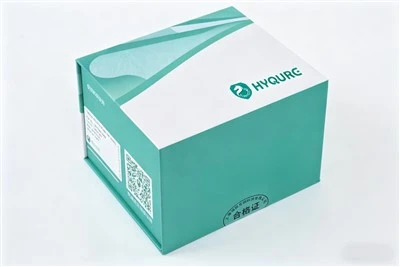
Wait, one last thing I always tell new customers: when it comes to HCP detection, you don’t just need a “method” — you need a partner who understands bioproduction, the regulatory landscape, and what your lab actually needs. We’re not just selling kits; we’re helping you make better drugs, faster. So stop fighting with your current detection method and try something that works. Reach out whenever you’re ready to talk.
Microbial Detection Kits References
- Rosenberg, A. S. (2007). Immune responses to therapeutic proteins. Nature Biotechnology, 25(11), 1211-1218.
- Noble, J. E., et al. (2012). Host cell protein detection in biopharmaceutical products: a review. Biologicals, 40(3), 187-195.
- FDA. (2019). Guidance for Industry: Chemistry, Manufacturing, and Controls Documentation for Biologics. U.S. Food and Drug Administration.
- Berkowitz, S. A., et al. (2012). Analytical and bioanalytical challenges in the development of biosimilars. Nature Biotechnology, 30(9), 827-834.
HyQure Biotech Co., Ltd.
As a professional host cell residual protein detection kits enterprise in China and Switzerland, we rely on international compliance standards, leverages excellent quality and technical strength. If you have any enquiry about cooperation, please feel free to email us.
Address: Building 18, Lane 2777 East Jinxiu Road, Pudong New Area, Shanghai 2.Stücki Park Hochbergerstr. 60 I, 4057 Basel Switzerland
E-mail: service@hyqure.com
WebSite: https://www.hyqure.com/
