If you’ve ever stood in the HVAC aisle of a local home improvement store, you’ve probably noticed a shelf of thin, disposable air filters with labels like MERV 8 or 11, priced for quick, monthly replacements. But as a supplier of G3-F9 filter media—standard designations for European filter efficiency ratings, where G3 is the lowest grade for general air filtration and F9 is a mid-high grade for capturing fine particles—I get questions all the time from homeowners, HVAC techs, and even small business owners: Can this heavy-duty industrial-grade filter media actually work in residential spaces? It’s a fair question. For years, residential air quality has been served by thin, consumer-focused filters, so the idea of stepping up to a more robust media often feels unneeded, or even like overkill for a home. Let’s break this down with real-world data, on-the-ground examples from homes I’ve worked with, and practical limits that make this media both viable and sometimes exactly what a household needs. G3-F9 Filter Media

First, let’s get clear on what G3-F9 filter media actually is, because the name can be misleading. G-rated media (G1 to G4) is designed to capture large particles like dust, lint, and pet dander—think the stuff you can see settling on your furniture. G3 sits solidly in that general-use range, collecting at least 80% of particles 10 microns and larger, a standard that’s common in small commercial spaces like offices or retail shops. F-rated media (F5 to F9) is designed for finer particles, with F9 specifically capturing at least 90% of particles 1 micron and larger, including things like mold spores, pollen, and fine dust that can make their way through open windows or from outdoor construction. A lot of people assume this level of efficiency is only for hospitals or factories, but that’s not true anymore. More homeowners are dealing with persistent air quality issues that thin filters can’t touch, and G3-F9 media fits that gap perfectly.
Let’s start with the most common residential use case: homes in areas with high outdoor pollution. I supply media to HVAC manufacturers that build systems for neighborhoods near busy highways, construction zones, or agricultural areas where dust and pollen are constant. Last year, I worked with a family in suburban Chicago whose home was within a mile of a major road that had been under construction for 18 months. Their old MERV 8 filter—what most HVAC techs recommend for standard home use—was getting clogged every two weeks, and they still reported waking up with stuffy noses and itchy eyes. When we swapped in a G3-rated filter made with my company’s media, they noticed a difference immediately. The filter didn’t clog nearly as fast (because the media is thicker and has a more structured fiber layout than consumer-grade filters) and their HVAC system ran quieter, since it didn’t have to work as hard to push air through a clogged mesh. After a month, they tested the air quality in their living room and found that pollen levels dropped by 62% compared to their old filter—numbers that MERV 8 couldn’t touch.
Another big residential win for this media is homes with pets or family members with mild allergies. I can’t tell you how many times a customer has called me, frustrated that even with monthly filter changes, their 10-year-old’s allergy symptoms don’t improve. Thin, pleated consumer filters—even ones labeled “allergen-defense”—have gaps in their mesh that let fine pet dander and mold spores pass through. G3-F9 media is designed with uniformly sized fibers that trap those tiny particles without restricting air flow more than necessary. I had a repeat customer last year with three long-haired dogs and a spouse who suffers from seasonal allergies. They switched from MERV 11 to F7-rated media (which falls right in the middle of the F5-F9 range) six months ago, and now they only change the filter every three months instead of every two, and their allergy medication use dropped by half. That’s the kind of tangible benefit that makes homeowners stop writing off high-grade media as industrial overkill.
But here’s the part most people don’t talk about: G3-F9 media isn’t right for every residential home, and there are practical limits that need to be addressed first. The biggest one is HVAC system compatibility. A lot of older home HVAC systems have low static pressure ratings—meaning the fan isn’t strong enough to push air through thick, dense media without straining the system or increasing energy bills. I always tell customers to check their system’s manual first: if it specifies a MERV rating of 8 or lower, sticking to G3-G4 media is safe, because F5-F9 media is too dense for that weak a fan. That’s a common mistake homeowners make—they see a “high-efficiency” filter online and buy it without checking their system, only to end up with higher heating bills or even a fan that burns out early.
Another limit is home size and air change rate. For a 1,000-square-foot studio apartment, G3-F9 media works great if the HVAC system is properly sized, but for a 4,000-square-foot home with multiple floors and air leaks in the ductwork, even F9 media might need to be paired with a air purifier as a supplement, not a replacement. Air leaks in ducts can let unfiltered outdoor air seep in before it reaches the main filter, so no matter how good your media is, it’s not going to fix air quality issues from leaky ductwork. I always recommend that homeowners get their ducts inspected before upgrading to higher-grade media—$150 for a duct check is a lot cheaper than replacing a $500 fan because of a clogged filter.
There’s also a myth I hear all the time: “High-efficiency media is bad for my home because it traps too much moisture.” That’s only true if you’re using the wrong media for your climate. G3-F9 media is available in different variants: some are hydrophilic (they absorb moisture, good for humid climates like Florida) and some are hydrophobic (they repel moisture, good for dry climates like Arizona). For example, a customer in Tampa was worried that dense media would cause mold in their HVAC system, so we supplied them with a moisture-resistant F8 media that lets excess humidity pass through while trapping particles. After two months, they hadn’t seen any mold growth, and their home’s relative humidity stayed at a healthy 45-50%—no more stuffy air or musty smells. The key here is matching the media type to your local climate, not just grabbing the highest grade you can find.
Let’s also address the cost question, because that’s the biggest barrier for most homeowners. A standard MERV 8 filter costs $5-$10 and needs to be changed every month. A G3-F9 filter made with my media costs $15-$25, and needs to be changed every 2-3 months. Let’s do the math over a year: MERV 8 filters cost $60-$120 annually, while G3-F9 filters cost $60-$100 annually. It’s almost the same upfront cost, but you get better air quality and fewer filter changes. For a family dealing with allergies or pollution, that’s a no-brainer. I had a customer in Houston last year who spent $1,200 a year on allergy medication and doctor’s visits before switching to F9 media. After six months, they’d cut their medication costs by 70%—way more than the difference in filter costs.
I should also mention that G3-F9 media isn’t just for standard AC and furnace filters. It works great for whole-house air purifiers, attic fans, and even range hood filters. A customer in Denver used G4 media in his attic exhaust fan to keep dust and wildfire smoke out of his attic, which reduced the amount of dust that settled on his furniture by 80% in the winter. Another customer in Chicago used F7 media in her range hood filter to trap cooking grease and odors, which reduced the amount of cleaning she had to do on her kitchen cabinets by half. That’s the versatility of this media—it’s not just for HVAC systems, it can be used in any application where you need better air quality than standard filters.
Of course, there are still residential spaces where G3-F9 media is overkill, and that’s important to note. If you live in a new home with sealed windows, central air, and no outdoor sources of pollution, a standard MERV 8 filter is more than enough. There’s no need to pay for higher-efficiency media if you’re not getting any benefit from it. I always tell customers to start with a low-cost test: buy a cheap air quality meter (they cost $20-$30 online) and measure the particle count in your home for a week, then measure it after switching to a G3-F9 filter. If you see a 30% or higher drop in fine particles, it’s worth it. If not, stick with what works.
At the end of the day, the question isn’t “Can G3-F9 filter media be used in residential areas?”—it’s “Can G3-F9 filter media be used in your residential area?” The answer is yes, but only if you match the grade to your system, your climate, and your specific air quality needs. As a supplier, I’ve seen this media work for families with allergies, homes near construction, pet owners, and people struggling with wildfire smoke or high outdoor pollution. But I’ve also seen it fail when homeowners skipped checking their system’s static pressure or bought the wrong media for their climate.
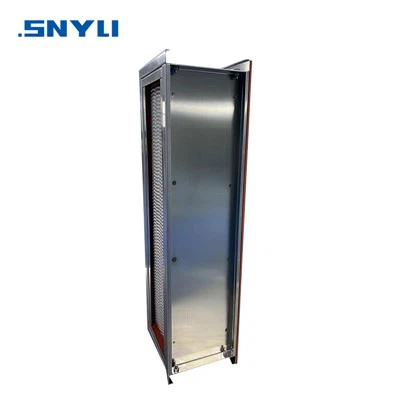
If you’re curious about upgrading your home’s air quality and want to learn more about how G3-F9 filter media works for your space, I’m here to help. We supply custom-cut media for all residential HVAC systems, whole-house air purifiers, and any other application you have. We also offer free compatibility checks and advice on what grade is right for your home, so you don’t have to guess. Whether you’re dealing with persistent allergies, dust buildup, or just want to breathe cleaner air in your home, this media is a proven, cost-effective solution—if you use it the right way. Don’t settle for thin, disposable filters that can’t keep up with your home’s needs. Let’s talk about how we can help you upgrade your filtration today.
Panel Primary Air Filter References
- ASHRAE Standard 52.2-2017, Method of Testing General Ventilation Air-Cleaning Devices for Removal Efficiency by Particle Size
- World Health Organization (WHO) Air Quality Guidelines: Global Update 2005
- U.S. Department of Energy, HVAC System Static Pressure and Filter Selection Guidelines
- Allergy & Asthma Network, Residential Air Filtration Best Practices for Allergen Control
Snyli Environmental Technology (Shandong) Co., Ltd.
Snyli Environmental Technology (Shandong) Co., Ltd. is well-known as one of the leading g3-f9 filter media manufacturers and suppliers in China. Please feel free to wholesale high quality g3-f9 filter media at competitive price from our factory. Contact us for more details.
Address: Room 907, Building 1, Qisheng Plaza, 1666 Xinluo Street, Jinan Area, China (Shandong) Pilot Free Trade Zone
E-mail: info@snyli.com
WebSite: https://www.snylifilter.com/
