If you’ve ever stood on a commercial fishing trawler bobbing in the North Sea, or walked through the engine room of a container ship passing through the Panama Canal, you know the marine industry doesn’t cut corners. Every piece of equipment—from a hatch seal on a cargo hold to a shaft seal on a main engine—has to work when conditions are brutal: saltwater, extreme temperature swings, constant vibration, and pressure that would make a land-based seal fail in hours. As someone who’s worked in the rubber seals supply space for 12 years, I’ve sat through more pre-deployment meetings with marine engineers than I can count, and one question always comes up: “What exactly do marine rubber seals have to do to hold up out there?” It’s not just about being rubber and sealing something. It’s a balancing act of engineering, material science, and compliance that most people on land don’t even think about. Rubber Seals

First, let’s talk about the environment marine seals live in. You don’t find much fresh water out at sea, so saltwater is non-negotiable. Salt isn’t just H2O with a little sodium and chloride—it’s a corrosive, conductive mix that attacks rubber from the inside out. Basic natural rubber, the kind you’d use for a garden hose, will break down in saltwater within 6 months, developing cracks and losing its elasticity. That’s why material selection is the single most important requirement for marine seals. We don’t cut corners here. Our top grades of marine rubber seals use either ethylene propylene diene monomer (EPDM) for general purpose exterior seals, or nitrile rubber (NBR) for fuel and lubricant contact, and fluorocarbon (FKM) for the harshest industrial engine applications. But it’s not just the base material. We add specialized additives to every batch: anti-corrosive agents to fight saltwater, UV stabilizers for seals on deck that get 12 hours of sun a day, and anti-ozone compounds to prevent cracking from the constant, thin layer of ozone in the marine atmosphere. A few years back, a client brought in a batch of seals that had failed on a bulk carrier operating in the Arabian Gulf—they’d skipped the UV stabilizer, and within a year, the deck hatch seals had split open from sun exposure. We re-manufactured them with the right additives, and that carrier hasn’t had a seal issue since.
Next, pressure. Marine seals aren’t just sealing against water or fuel at ambient pressure. A submarine’s hull seal, for example, has to hold up to pressure that crushes the human body at 300 feet below sea level—about 130 pounds per square inch (psi) of external pressure. Even above water, underwater thrusters, cargo hold hatches at the waterline, and engine cooling system seals deal with fluctuating pressure, sometimes spiking up to 200 psi. That means marine rubber seals can’t just be soft and squishy like a rubber eraser. They need a specific hardness, measured on the Shore A scale. Most general-purpose marine seals land at 70 to 80 Shore A—firm enough to hold up to pressure, but still flexible enough to compress around uneven metal surfaces without leaking. For high-pressure applications like hydraulic rams on deck cranes, we go up to 90 Shore A. If a seal is too soft, it will extrude out of the tiny gap between two metal parts when pressure hits, a problem called “gap extrusion.” That’s why we also add a reinforcing fabric layer to high-pressure seals, usually nylon or polyester, to hold the rubber in place under load.
Then there’s temperature. The marine industry operates in every climate on Earth, from the frozen Arctic where temperatures drop to -40°F, to the Red Sea where engine room temperatures hit 180°F. A seal that works in a Canadian winter will turn brittle and crack in the Middle East, and vice versa. For cold environments, we use specialty materials like silicone rubber or perfluoroelastomer (FFKM), which stay flexible below -60°F. For hot engine parts, FKM is the go-to—it can handle continuous heat up to 400°F, and short spikes up to 500°F. We test every seal we ship in a climate chamber, cycling temperatures from -40 to 180°F over 100 hours, to make sure it doesn’t harden, soften, or lose its sealing ability. I’ve seen too many clients lose thousands of dollars in downtime because they used a general-purpose seal in an Arctic vessel—one fishing line ship we worked with had a seal fail in the Bering Sea, and they lost 20 tons of catch waiting for a replacement. Now they only work with seals tested for low-temperature performance.
Vibration is another factor most people miss. A container ship’s main engine vibrates at a constant 10 to 15 hertz, way more than a car engine, and that vibration transfers to every part of the ship—seals included. If a seal isn’t made to handle that, it will fatigue over time, developing small cracks that turn into leaks within a year. That’s why marine seals have to have a certain tensile strength and elongation at break. Tensile strength measures how much force a rubber can take before tearing, and elongation is how much it can stretch before breaking. For marine applications, we require a minimum tensile strength of 1,500 psi and elongation of 300%—that means a seal can stretch three times its original size without tearing, which is perfect for absorbing constant vibration. We also add a small amount of plasticizer to the rubber for flexibility, but not too much—too much plasticizer will leach out over time, leaving the rubber hard and brittle. That balance is where our material engineers spend most of their time.
But here’s the thing: none of that matters if the seal doesn’t meet regulatory standards. The marine industry is one of the most heavily regulated sectors in the world, and rubber seals are no exception. The International Maritime Organization (IMO) sets global standards for all marine equipment, and most countries have their own additional requirements. For example, seals that come into contact with potable water on a ship have to meet NSF/ANSI 61 standards, which ensure no toxic chemicals leach into the water. Seals on fuel systems have to meet EPA standards for fuel compatibility, so they don’t break down when exposed to diesel or heavy fuel oil. For ships operating in European waters, seals have to meet REACH regulations, which restrict harmful substances like lead and cadmium. Last year, we had a client in Russia who tried to source cheaper seals from a local manufacturer that didn’t meet IMO standards. Their vessel was detained in Hamburg for 10 days, costing them over $50,000 in demurrage and lost cargo. We had to rush them a batch of compliant seals, and now they audit all their seal suppliers to make sure they meet every requirement.
Fit is the final, often overlooked, piece of the puzzle. A seal is only as good as how well it fits the mating parts. Too big, and it won’t compress enough to seal, leaving a gap for water or fuel to leak through. Too small, and it will stretch too much, causing it to tear or come loose over time. That’s why we don’t just ship standard-sized seals. For most marine applications, we take precise measurements of the metal grooves or shafts the seal will be installed in, and cut the seal to within 0.005 inches of tolerance. For custom applications, like a seal for a 50-year-old ship’s engine that no longer has replacement parts, we use 3D scanning to get exact measurements, then mold the seal to fit perfectly. A few years back, we had a client with a vintage cargo ship that had a broken shaft seal that no manufacturer could match. We scanned the old seal, made a new one using FKM material, and it’s been working for three years without a leak.
At the end of the day, marine rubber seals aren’t just another rubber product. They’re the unsung heroes of the maritime industry, keeping ships afloat, cargo safe, and crews working. Every requirement—salt resistance, pressure, temperature, vibration, compliance, fit—has to come together to make a seal that can survive the harshest environment on Earth. If you’re working on a marine project, whether it’s a new build, a retrofit, or a repair, don’t cut corners on your rubber seals. The cost of a bad seal is way higher than the cost of a compliant, high-quality one.
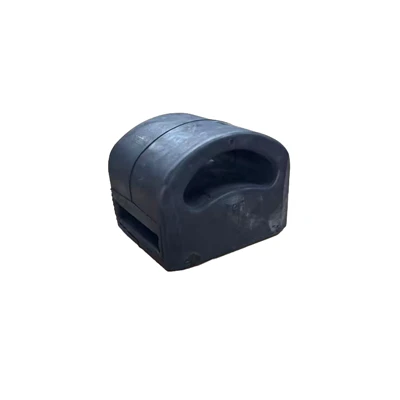
If you’re in need of marine rubber seals, or you’re looking to upgrade your current seal solutions to reduce downtime and improve compliance, feel free to reach out to discuss your specific requirements. We can walk you through material selection, testing, and custom manufacturing to make sure your seals meet every marine industry standard and perform reliably out at sea.
Rubber End Gasket References
- International Maritime Organization (IMO). “Marine Equipment Standards and Regulations.” 2022.
- ASTM International. “Standard Specification for Rubber Seals for Marine Applications.” ASTM F1165-19, 2019.
- The Society of Marine Engineers. “Material Selection for Marine Rubber Components.” 2021.
- National Sanitation Foundation (NSF). “Drinking Water System Components – Health Effects.” NSF/ANSI 61-2020, 2020.
- European Chemicals Agency (ECHA). “REACH Regulation – Restriction of Hazardous Substances.” 2023.
Anhui Anling Rubber & Plastic Co., Ltd.
We are one of the most professional rubber seals manufacturers and suppliers in China, featured by quality products and good service. Please rest assured to wholesale bulk rubber seals in stock here and get quotation from our factory. We also accept customized orders.
Address: 3.9-Square-Kilometer Industrial Park in the Development Zone, Anqing City, Anhui Province
E-mail: anhuianling@126.com
WebSite: https://www.anhuianling.com/
