As a supplier of enameled flat wire, I get asked this question every single day: “What’s the price range I should expect?” It’s not a simple answer—far from it. If you’ve ever shopped for electrical components, you know that the same part can cost wildly different amounts depending on where it’s made, what it’s made of, and who’s buying it. Enameled flat wire is no exception. For over a decade, I’ve worked directly with manufacturers, electric motor builders, and transformer shops across North America, and I’ve seen how pricing shifts with every variable. Let’s break this down like we would in a shop conversation, no fancy jargon, just real numbers and real context. Enameled Flat Wire
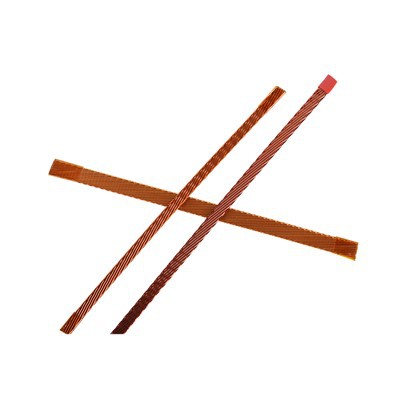
First, let’s ground what we’re talking about: enameled flat wire is a thin, flat copper or aluminum wire coated with a thin insulating enamel layer. It’s used in everything from tiny smartphone vibration motors to large industrial transformers, and its shape (flat instead of round) lets designers pack more copper into a smaller space, which boosts efficiency. That basic function makes it ubiquitous, but its price isn’t.
The first big split in pricing is between copper and aluminum wire. This is non-negotiable, because metals are commodities—their prices swing with global market trends, not just what suppliers charge. Copper is roughly 3 to 4 times more expensive than aluminum right now (as of mid-2024, that’s about $8,500 per ton for copper vs. $2,200 per ton for aluminum, give or take a few hundred dollars depending on delivery). That difference alone sets a baseline. But let’s narrow this to actual per-meter pricing, because that’s what most customers quote.
For small-diameter, low-spec enameled flat wire—think wire that’s 0.5mm thick by 2mm wide, used in small consumer electronics motors—aluminum options start around $0.03 to $0.08 per meter. Copper equivalents for that same size run $0.09 to $0.20 per meter. This is the budget end of the market, often made with thinner enamel coatings, lower-grade raw metal, and produced in large volumes in countries with lower labor costs, like China or Vietnam. These are the wires you’d find in mass-produced air conditioners or budget gaming controllers, and their pricing reflects that scale and lower material quality. The catch here is that they’re not built for heavy use: the thin enamel can scratch easily, and the metal might have higher impurities, which can lead to higher resistance and shorter lifespan.
Mid-range enameled flat wire is where most of our customers fall. This is wire used in medium-sized motors, medical device components, and small-to-medium transformers, with diameters ranging from 1mm to 5mm, enamel coatings that are 0.02mm to 0.05mm thick, and tight dimensional tolerances (so the wire is exactly the size it’s supposed to be, no variance). For aluminum here, prices land between $0.15 and $0.50 per meter. Copper mid-range wire runs $0.40 to $1.20 per meter. What’s driving the jump from budget? First, the enamel: mid-grade wires use polyurethane or polyamide-imide enamel, which is more scratch-resistant and can handle higher temperatures (up to 155°C vs. 120°C for budget wire). Second, the metal is purer: 99.99% copper instead of 99.5%, which means less energy loss when current flows through it. For many customers, this is the sweet spot: it’s reliable enough for industrial and commercial use, without the premium price of aerospace-grade or custom wire.
Then there’s the high-end market, which is where we work for a lot of custom jobs, aerospace projects, and large industrial equipment. This wire is made with ultra-pure copper (often 99.999% oxygen-free copper) or specialty metals like gold-plated copper for high-frequency applications, enamel coatings that can handle up to 220°C (like polyimide enamel), and extremely tight dimensional tolerances—sometimes within 0.001mm of the specified size. Pricing here starts at $1.50 per meter for copper aluminum equivalents are rare here, because aluminum doesn’t hold up to the temperature and conductivity demands of high-end uses. For large-diameter wire (10mm and up, used in power transformers), high-end copper can jump to $5.00 per meter or more, depending on how much custom work is needed. We’ve had orders for prototype electric vehicle motors, for example, that ran up to $7 per meter because the wire had to be rolled to a very specific flat shape without damaging the enamel during processing.
But here’s where the story gets more complicated: price isn’t just about metal and size. There are a dozen other factors that can shift the final cost by 20% or more, and these are the things that most first-time buyers don’t account for. Let’s talk about enamel type, first. If you need a wire that can handle 180°C, not just 155, you’ll pay 15-25% more. If you need a dual-layer enamel (two coats of insulation, for extra safety in high-voltage equipment), that’s another 10%. Specialty enamels, like epoxy-based coatings that resist chemicals in industrial settings, can add 30% or more.
Then there’s order volume. This is the single biggest driver of pricing for most suppliers. If you need 100 meters of custom wire, you’ll pay a premium: we usually charge a 30-40% surcharge for small, prototype orders, because the setup time for our rolling machines is the same whether we make 100 meters or 100,000. But if you’re a manufacturer ordering 100,000 meters a month, we can offer a 20-30% discount per meter, because bulk orders let us run our equipment at full capacity and reduce per-unit labor and material waste. I’ve seen customers come in thinking a small order is a one-time cost, only to be shocked when their bulk order is half the price per meter.
Location and delivery also matter. If you’re based in North America, our domestic production means we don’t have to add import tariffs or shipping costs from overseas, which can add 15-20% to the price of wire made in Asia. For international customers, though, the cost can jump another 10-15% for shipping and customs, unless we can arrange bulk sea freight, which brings costs back down. Some suppliers cut corners here by sourcing budget wire from overseas without disclosing those hidden fees, which leads to customers getting a “low price” but long lead times and unexpected charges.
Quality certifications are another factor. If your application requires UL, IATF, or ISO 9001 certifications (standard for automotive, medical, and aerospace), that adds a small premium—usually 5-10%—but it’s non-negotiable for most regulated industries. Budget wires rarely have these certifications, so using them in a medical device could get your product pulled from the market, making that initial low price a very expensive mistake.
I’ve seen customers get tripped up by confusing “price per meter” with “price per kilogram,” too. Some suppliers will quote a low per-kilogram price for large, heavy wire, which sounds great until you realize that large wire has more metal per meter, so the per-meter price ends up higher. For example, a 10mm thick copper wire might be $8 per kilogram, but at 2.5kg per meter, that’s $20 per meter—way higher than a thin 1mm wire that’s $10 per kilogram and 0.05kg per meter ($0.50 per meter). Always ask for per-meter pricing, not per-kilogram, if you’re working with small to medium orders.
Let me throw in some real examples from our own sales history to make this concrete. Last year, a small medical device company came to us needing 500 meters of 1.2mm x 4mm enameled copper wire for a portable ultrasound probe. They had a budget of $0.75 per meter, and we quoted them $0.85 per meter—mid-range, with polyamide-imide enamel, UL certification, and fast delivery. They went to a overseas supplier who quoted $0.50 per meter, but when the wire arrived, the enamel was too thin and scratched during assembly, leading to 20% of their motors failing. They came back to us, and we ended up making their wire at $0.80 per meter for their next order, after they saw the cost of rework. On the flip side, a large HVAC manufacturer ordered 50,000 meters of 2mm x 6mm aluminum wire last quarter. We quoted them $0.22 per meter, which was a bulk discount, and they saved over $15,000 compared to their previous supplier, who had quoted $0.29 per meter without any volume discount.
Now, what’s the takeaway here? The market for enameled flat wire has a pretty clear range, but it’s not a one-size-fits-all number. Budget-grade aluminum enameled flat wire runs $0.03 to $0.08 per meter; budget copper runs $0.09 to $0.20. Mid-range aluminum is $0.15 to $0.50, mid-range copper is $0.40 to $1.20. High-end custom copper can be $1.50 to $5.00+ per meter. But that range shifts based on your needs: order size, enamel type, certifications, delivery location, and metal purity.
If you’re reading this and trying to figure out what you should budget for your project, don’t just look at the lowest number. Ask questions: what’s the enamel rating? Is the metal certified? What’s the lead time, and are there any hidden fees? As a supplier, I’ve always believed that transparency around pricing is as important as the quality of the wire. Too many suppliers hide variables in their quotes, leading to bad experiences for customers.
Whether you’re a small engineer prototyping a new motor or a large manufacturer needing bulk supply, we can help you get a quote that fits your needs. We work with both small prototype orders and large monthly runs, and we can explain every line item in a quote so you know exactly what you’re paying for. If you have specific requirements for your enameled flat wire, reach out to us to discuss your project and get a personalized price estimate. We’re here to help you find the right balance of quality and cost for your application.
Flat Wire Winding References
- World Steel Association. (2024). Global Copper and Aluminum Market Price Report.
- International Electrotechnical Commission (IEC). (2023). Enameled Wire Technical Specification and Price Benchmark.
- U.S. Department of Commerce. (2024). Electrical Component Import Tariff and Cost Analysis.
- Institute of Electrical and Electronics Engineers (IEEE). (2022). Performance Standards for Enameled Flat Wire in Industrial and Consumer Applications.
- European Copper Institute. (2023. Enameled Wire Manufacturing Cost and Pricing Trends.
Tianjin Jingwei Power Technology Co., Ltd.
As one of the most professional enameled flat wire manufacturers and suppliers in China, we’re featured by quality products and good service. Please rest assured to buy durable enameled flat wire made in China here from our factory. Contact us for more details.
Address: No.1 Chuangxin Rd. Xiaozhan Industrial Park, Jinnan District, Tianjin, China
E-mail: info@jwdc.cn
WebSite: https://www.jw-dcs.com/
