If you’ve ever held a smartphone that withstood three drops onto concrete, cranked up your car’s infotainment system through a rain-soaked highway drive, or noticed how your vehicle’s sensor data still syncs flawlessly after ten years—you’ve relied on automotive connectors. These tiny, often overlooked components are the nervous system of every modern car, carrying power, data, and signals between thousands of parts. As a supplier who’s worked on connector development for 12 years, I’ve lost count of how many times a client has asked: “Why does this $0.02 difference in plating matter?” It’s not a trivial question. Plating on a connector’s contact points is the single biggest factor in how long it lasts, how reliably it performs, and whether it holds up to the brutal conditions under the hood, inside a door panel, or under the chassis. Over the years, I’ve tested dozens of plating types, walked through failure after failure with our engineering team, and sat through more product meetings than I can remember where we debated which plating to use for a new truck line or electric SUV. Let’s cut through the jargon and get real about the differences between the most common contact platings we work with: tin, gold, palladium-nickel, and silver. This isn’t just a list of properties—it’s the stuff I’ve seen make or break a product. Automotive Connector
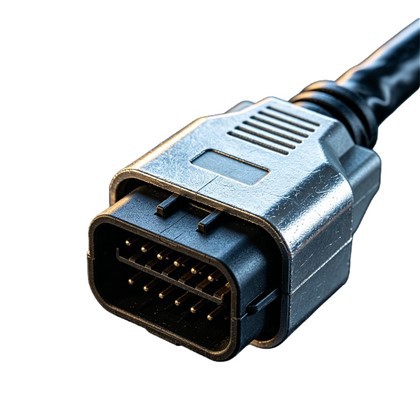
Tin is the workhorse. If you look at a basic, low-cost connector for something like a car’s interior door lock or a basic sensor that doesn’t see high temperatures or moisture, chances are its contacts are plated with tin. When I started in this business, tin was everywhere because it’s cheap, easy to apply, and has good conductivity for low-power signals. But don’t let the low cost fool you—tin has a big flaw: it forms tin whiskers. Those are tiny, hair-like crystals that grow over time, especially when exposed to temperature fluctuations common in automotive environments. I once worked on a contract for a line of compact sedans where we used tin-plated contacts for the dashboard wiring harness. Six months after launch, we started getting complaints from dealerships about intermittent airbag lights. When we pulled the connectors apart, we found tiny tin whiskers bridging the gap between two pins, causing a short circuit. That cost our client $200,000 in field repairs and taught me a lesson: tin is fine for stationary, low-voltage parts that don’t see big temperature swings, but it’s not for critical systems. Another downside is that tin oxidizes. When it reacts with moisture in the air, it forms tin oxide, which has way higher resistance than pure tin. After a few years in a humid environment, that oxide layer makes it harder for the connector to carry power, leading to slow or failed signals. That said, tin is great for parts that are installed once and never touched again—like the wiring for a backup camera that’s hidden under the bumper. It’s reliable for its intended use, as long as you don’t push it too hard.
Gold is the gold standard (pun intended) for high-performance, high-signal applications. If you’ve got a connector for a GPS module, ADAS camera, or any part that carries high-speed data, gold is usually the go-to plating. The reason gold works so well is that it’s inert—it doesn’t oxidize, it doesn’t react with moisture, and it stays conductive no matter what you throw at it. I’ve tested gold-plated connectors in salt spray chambers (simulating years of coastal road exposure) and after 1,000 hours, their resistance barely changed. That’s unheard of with tin. But gold has its own set of problems that you don’t read about in spec sheets. First, it’s expensive. A connector with gold plating can be 10 to 20 times more costly than a tin-plated one, and that adds up quickly when you’re building a car with 500 connectors. Second, gold is soft. It scratches easily, especially when connectors are mated and unmated repeatedly—like in a test lab where technicians plug and unplug connectors hundreds of times to check durability. I once had a client who wanted to use gold plating for the battery terminals in a heavy-duty truck that would get serviced every few months. We warned them that the soft gold would wear down after 50 mating cycles, leading to loose connections. They went with palladium-nickel instead, and they haven’t had a problem in three years. Gold is perfect for parts that need long-term, stable performance in harsh conditions, but it’s overkill for low-stress, low-cost applications. We only use gold when the engineering team signs off that the data integrity is non-negotiable.
Palladium-nickel is the middle child, and it’s become my go-to for most mid-to-high performance applications over the last decade. When the auto industry started moving towards more electric vehicles and advanced driver-assistance systems, we needed a plating that was between tin and gold: cheaper than gold, more durable than tin, and resistant to corrosion. Palladium-nickel checks almost every box. It’s harder than gold, so it can handle mating cycles—usually up to 1,000 times, which is way more than gold’s 50 or so for the same thickness. It’s also corrosion-resistant; we’ve run salt spray tests on palladium-nickel connectors and they held up twice as long as tin ones. And the cost? It’s about 30% of gold, which is a huge selling point for our clients who are trying to keep EV costs down. But palladium-nickel isn’t perfect either. It has a higher contact resistance than gold, which means it’s not ideal for very high-speed data signals where even a tiny resistance can cause data loss. Also, it’s prone to something called “contact transfer” when mated with certain metals—meaning a small amount of palladium transfers to the other contact, which can cause issues if the mating part isn’t matched right. I had a client a couple years back who tried to use palladium-nickel connectors with existing tin-plated mating parts, and we saw intermittent signal drops when the palladium transferred to the tin. We switched them to compatible mating metals, and the problem went away. Overall, though, palladium-nickel is the workhorse of the modern automotive industry. It balances performance and cost better than any other plating, which is why you’ll find it in most EV battery connectors, infotainment systems, and ADAS wiring.
Silver is the underrated dark horse, and it’s used more than most people realize for high-power applications. If you’ve got a connector for an EV’s battery pack, a fast-charging port, or the wiring for a car’s starter motor, chances are the contacts are silver-plated. Silver has the highest electrical conductivity of any metal, even higher than gold or copper. That’s a big deal for high-power parts, where even a small resistance can generate a lot of heat—something you definitely don’t want in a battery pack. The problem with silver is that it’s hyper-corrosive. When it reacts with sulfur in the air (especially in industrial areas or places that use salt on roads in winter), it forms silver sulfide, which has very high resistance. I once worked on a project for a car manufacturer in Michigan, where they were testing EVs in a real-world environment. The silver-plated charging connectors worked great in the lab, but after six months of driving on salted roads, the resistance jumped so high that the charging speed slowed to a crawl. We had to switch them to a silver plating with a thin overcoat of gold, which prevented the sulfidation without adding too much cost. Silver is only good for parts where you can control the environment—like sealed battery connectors that never see moisture or road salt. It’s not for exposed parts, but for high-power, sealed applications, it’s unmatched for conductivity.
Now, let’s talk about how we actually choose a plating for a connector, because it’s not just about performance. As a supplier, we don’t just pick the plating that sounds best—we work with our clients through the entire design process. First, we figure out what the connector will be used for: is it a critical ADAS camera that needs perfect data integrity for 10 years, or is it a low-power sensor under the floor that’s never going to be touched? Next, we look at the environment it will be in. Will it be exposed to salt, moisture, or temperature swings? Will it be mated and unmated repeatedly, like a diagnostic port, or is it installed once and left alone? Cost is always a factor too, especially with EVs where every component’s price adds up. I always tell clients that there’s no “one-size-fits-all” plating. For example, a basic interior light connector that’s only powered when you open the door can use tin-plated contacts—they’ll last the life of the car and cost next to nothing. But a connector for an EV’s battery module, which needs to carry hundreds of amps of power and last 15 years, needs silver with a gold overcoat or palladium-nickel to handle the current and corrosion. ADAS sensors, which need to transmit high-speed video data without dropouts, need gold plating because even a tiny resistance can cause signal loss.
I’ve seen too many cases where engineers try to cut costs by using a cheaper plating for a critical part, and it backfires. A few years ago, we had a new client who wanted to use tin plating for their electric SUV’s charging port to save money. We warned them that the tin would corrode after a few years of exposure to road salt and humidity, leading to charging failures. They ignored us, and two years later, they had a recall of 50,000 SUVs because 12% of the charging ports had failed. That cost them millions, and they came back to us to redesign the ports with palladium-nickel plating. It’s a mistake we try to help clients avoid by being honest about trade-offs, not just selling the most expensive option.
The good news is that over the last few years, plating technology has gotten a lot better. We’ve developed new alloys that combine the best properties of each plating—like palladium-nickel blends that are more corrosion-resistant, or tin plating with additives that prevent whisker growth. For example, we now offer a tin plating with a thin nickel underlayer that stops whiskers from forming, which has let us use tin in a few more applications where we previously would have used a more expensive plating. But even with these advances, the core differences between the platings remain.
At the end of the day, automotive connectors are all about reliability. A car’s owner doesn’t care that a connector’s plating was the cheapest one available—they just care that their infotainment works, their airbag deploys when it needs to, and their EV charges fast. As a supplier, my job is to make sure the plating we use for every connector is the right one for the job, balancing performance, cost, and durability. If you’re working on a new vehicle design, or dealing with a connectivity issue on the production line, I’d be happy to walk through your requirements and help you pick the right plating for your connectors. Don’t waste time guessing—reach out and let’s talk.
Connector Accessories References
- Mattes, R. (2011). Electrical Contacts: Principles and Applications. CRC Press.
- Society of Automotive Engineers (SAE). (2020). Automotive Connector Plating Standards for Corrosion and Durability. SAE International.
- Lewis, G. (2018). Tin Whisker Mitigation in Automotive Electrical Systems. IEEE Transactions on Components, Packaging, and Manufacturing Technology.
- Palladium Alliance International. (2021). Palladium-Nickel Plating for Automotive High-Power Connectors. Industry Technical Report.
Modelon Precision Industry (Suzhou) Co., Ltd.
With abundant experience, we are one of the most professional automotive connector manufacturers and suppliers in China. Welcome to buy customized automotive connector at competitive price from our factory. If you have any enquiry about pricelist, please feel free to email us.
Address: 1st Floor, Building 22, No. 2628 North Gate Road, Kunshan City, Jiangsu Province, P.R.China
E-mail: jessica_huang2025@163.com
WebSite: https://www.modeloncn.com/
