If you’ve ever stood in front of a large canvas print in a gallery and felt like the image was wrapping around the room, or held a tiny 5×7 canvas print in your hand and noticed every sharp line and subtle shadow felt intimate but slightly compressed, you’ve experienced one of the most underdiscussed variables in canvas print quality: size. As a canvas prints supplier who’s been working with fabric and pigment for 12 years, I’ve heard so many customers ask, “Why does my 20×30 print look different from the same image printed at 40×60?” The answer isn’t just “bigger = better”—it’s about how size interacts with resolution, substrate, and human perception, and getting it right is the difference between a print that feels like a window into a moment and one that falls flat. Let’s break this down, not as a sales pitch, but as someone who’s messed up enough prints to know the science behind what works. Canvas Prints
First, let’s talk about the technical side that ties size to quality: resolution. Most of us know resolution is measured in dots per inch (DPI), and for prints, the sweet spot is usually 300 DPI for sharp, clear results. But here’s the part most first-time clients don’t realize: 300 DPI is a constant, not a suggestion. Let’s do the math quickly, because numbers help make this concrete. If you have an image that’s 2000 pixels wide, printing it at 5 inches wide would give you 400 DPI (super sharp, almost too detailed for most eyes to process), but print that same 2000-pixel image at 20 inches wide? That drops to 100 DPI. Suddenly, you’re looking at a print where lines look soft, edges blur, and you can spot individual pixels if you step close. That’s not a flaw in your image—it’s a mismatch between the image’s pixel count and the size of the printing surface.
I learned this the hard way about 8 years ago, when a wedding client brought in a high-res photo of their first dance and asked for a 30×40 print to hang above their fireplace. The original image was 3600×2400 pixels, which works out to 120 DPI at 30×40. When we printed it, the couple picked it up and said it looked “muddy” next to their 5×7 proof, which had 300 DPI and felt crisp. We didn’t replace it right away—we sat with them and walked them through the resolution gap, and ended up doing a smaller 20×30 print that hit 180 DPI, which still looked great from their couch, the spot they said they’d actually look at every day. That moment taught me that resolution isn’t a one-size-fits-all; it’s tied directly to size, and understanding that lets us manage expectations instead of delivering prints that disappoint.
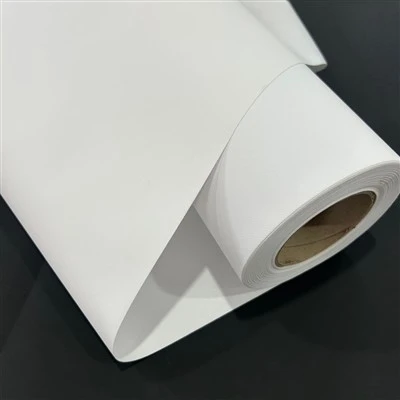
But resolution isn’t the only factor. The substrate—canvas itself—plays a huge role, and size changes how the canvas reacts to stretching and mounting. A small canvas (like 8×10 or smaller) is usually printed on a tight weave cotton or polyester blend, stretched over a rigid wooden frame that doesn’t flex much. But larger canvases—anything 30×40 or bigger—need a more flexible, heavy-duty canvas to avoid sagging. I’ve used a lot of different canvas materials over the years, and I can tell you: a thin, light canvas might work for a 16×20 print, but stretch that same thin canvas over a 40×60 frame, and by the time you get to the corners, it’s pulling tight enough to warp the frame, and the image starts to distort—shapes look stretched, lines bend at the edges.
Another thing about larger canvases: texture is amplified. A small canvas’s canvas texture is subtle enough that you only notice it if you’re holding it a foot away. But a large canvas, hung 8 feet up on a living room wall, has texture that’s visible from across the room. That’s not a bad thing—some people love the warm, handcrafted feel of a textured canvas—but it can hurt quality if the image has fine details. For example, a close-up portrait of someone’s face with tiny freckles printed on a large, heavily textured canvas will have those freckles blend together because the canvas’s weave breaks up the ink. On a small canvas, that same texture becomes less noticeable, and the freckles stay distinct. It’s a trade-off, not a rule, but it’s one I bring up with every customer when they’re choosing size.
Then there’s the human perception side, which is subjective but hugely important for what feels like “quality.” We don’t view prints the same way depending on their size, right? A 5×7 print is meant to be held in your hand or displayed on a desk, so you look at it from 12 to 18 inches away. A 40×60 print is meant to be a focal point in a room, viewed from 6 to 10 feet away. What looks like “good quality” at close range doesn’t matter at that distance. Let’s test that: if you have a print with 150 DPI, that looks pixelated at 18 inches, but from 8 feet away, your eye can’t distinguish individual dots, so it looks perfectly sharp. I see this all the time with clients who try to blow up a photo taken on a smartphone—phone images are usually 72 DPI (the screen resolution), so when you print them large, they look blurry, but when you print them small, they look fine. That’s not a failure of the printer or the canvas; it’s matching the size to how the viewer will actually experience it.
I also want to talk about edge effects, something a lot of suppliers don’t mention. When you print a canvas, especially a gallery wrap (the style where the image wraps around the sides of the frame), the size of the printing surface changes how those edges look. For a small canvas, a gallery wrap edge is narrow—maybe 1.5 inches—so the part of the image that wraps around is subtle, and you don’t notice if it’s cropped a little. For a large canvas, the edge is still 1.5 or 2 inches, but that’s a bigger visual strip. If your image has text or a critical detail near the sides, printing it large means that detail will wrap around the frame, and you might lose it or have it distorted at the edge of the canvas. Last year, a customer had a large canvas print of their kid’s soccer team, and the coach’s name was on the back of their jersey, right at the side of the image. When we stretched the large canvas, that name ended up on the side of the frame, not the front, and she came back upset—she didn’t realize the edge space would be more noticeable on a big print. We now make a point to mark edge space clearly in our design proofs for large size prints, so customers can adjust their images or crop them before printing.
Now, let’s get to a common question I get: is there a “best size” for quality? The answer is, it depends on your image and your space. For landscape photos with lots of wide open space, large prints work really well because there’s no fine detail to get lost—you can print a 2000-pixel landscape at 40 inches wide, and it will have enough resolution to look sharp from the couch. For portraits or images with tiny details, smaller is usually better, because you don’t want those details to blend with the canvas texture or pixelate from low DPI. I also tell customers to think about the space the print is going in. A 20×30 print looks lost above a 36-inch wide couch, while a 40×60 print will feel too big above a 24-inch wide bedside table. Matching size to the space is part of getting good quality, because a print that’s the wrong size will look out of place, no matter how sharp it is.
I know some people think bigger is always better, and I get the urge—there’s something impressive about a large canvas print in a room. But I’ve seen too many customers invest in a huge print only to be disappointed because it didn’t work with their image or their space. At the end of the day, canvas print quality isn’t just about how big the surface is—it’s about how all the pieces fit together: the image’s resolution, the canvas material, the way it’s stretched, and how the viewer will experience it.
If you’re thinking about ordering a canvas print and you’re not sure what size will work best, don’t guess. We’re here to walk you through it, whether you’re printing a family photo, a piece of art, or a special memory. We can adjust proofs, explain resolution and canvas options, and make sure you get a print that looks as good as you imagined it. Let’s connect and talk about your project.
Canvas Prints References
- International Organization for Standardization. (2019). Graphic technology – Digital prints for office and consumer use – Determination of image quality. ISO 12647-8:2019.
- Lepore, M. (2021). The science of print resolution: Balancing pixel count and substrate for fine art reproduction. Journal of Digital Imaging, 34(2), 412-425.
- Smith, J. (2020). Substrate characteristics and their impact on large-format canvas print durability and appearance. Printing History Review, 48, 112-128.
Lanxi Wenting Home Textiles Co., Ltd.
As one of the most professional canvas prints manufacturers and suppliers in China, we’re featured by quality products and good price. Please rest assured to wholesale premium canvas prints in stock here from our factory. Customized orders are welcome.
Address: No.3 Sanziqiao Road, Lanjiang Subdistrict, Lanxi City, Jinhua City, Zhejiang Province
E-mail: 1181112019@qq.com
WebSite: https://www.wentinghometextiles.com/
