Alright, let’s dive into this. I’m here as someone who’s been in the gestation crate game for over a decade—let’s keep it real, no corporate fluff, just the straight talk on both sides of this huge debate. If you’re a pig farmer reading this, you already know how divisive this topic is, and if you’re on the animal welfare side, you’ve probably got strong feelings too. I’m not here to sell you a crate without context; I’m here to lay out the actual arguments for and against, the stuff you don’t always see in news headlines, and then we can talk if this makes sense for your operation. Gestation Crate
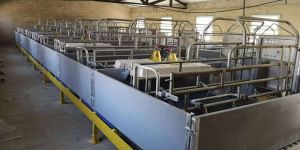
First, let’s get on the same page: gestation crates are those metal boxes we use to house pregnant sows during their ~114-day gestation period. They’re about 2 feet wide and 7 feet long—big enough for a sow to stand up, turn around a little, lie down, and eat without messing around with other pigs. When I started in this business, 90% of U.S. sow farms used them; now that number’s closer to 50%, thanks to state bans (like Florida, Arizona, Colorado) and some big grocery chains telling suppliers they won’t buy crate-raised pork anymore. So why would anyone still use them? And why are so many people switching? Let’s start with the arguments for, because that’s the side we as suppliers live and breathe—this isn’t some made-up sales pitch, it’s data we see every day from the farms that buy our crates.
The biggest one is animal welfare (wait, hold on—don’t tune out). A lot of people assume “crates = bad welfare,” but let’s look at the actual research, not social media clips. Sows are big, curious, and pretty aggressive when they’re pregnant and in groups. If you put 10-15 pregnant sows into a group pen, they’ll fight over food, water, and space—studies from universities like Iowa State and the University of Illinois found that group-housed sows have way more injuries, tail-biting, and even miscarriages because of that aggression. Oh, and hunger too—group feeding systems mean dominant sows eat all the feed, so the smaller or weaker ones don’t get enough, leading to lower birth rates for their piglets. Our crates mean every sow gets her exact daily feed allocation, no competition, no one gets bullied. Also, sows in crates don’t have to walk on slatted floors with other pigs that might step on them, or get stuck between pen partitions. Another big one: biosecurity. When each sow is in her own crate, it’s way easier to monitor for illness—if one sow comes down with a respiratory bug or something, you don’t have to shut down an entire group pen, you just fix the one crate. Farms that use our crates tell us their sow mortality rate is way lower than group pen farms.
Then there’s economic stability. Let’s be real—farming’s a tight business. Group housing systems cost way more upfront. You need special feeders that can give individual portions, more pen space, maybe extra staff to manage the aggression. A gestation crate system is modular, so you can add or remove crates as your farm grows, no big construction project. Also, productivity: sows in crates have more consistent litter sizes, fewer stillbirths, and they return to heat (that’s the cycle where they can get re-bred) faster after farrowing. A client of mine in Iowa told us last year that switching to our crates boosted her annual litters per sow by 0.3—saving her like $20,000 a year in feed and replacement sows. That’s not chump change for a small family farm.
And before I get hate mail, let’s talk about the arguments against—because they’re legitimate, and I don’t ignore them. The biggest one is animal stress and movement restriction. PETA and a lot of animal welfare groups say crates are way too small, that sows can’t express natural behaviors like rooting, walking, or socializing. I won’t lie—you can’t let a sow roam in a crate, that’s the point. But the counter to that is: is the stress from aggression in group pens worse? A 2022 study from the Journal of Animal Science found that sows in group pens had higher cortisol levels (the stress hormone) than those in crates, even with “enriched” group pens (which have things like straw for rooting). The problem is that a lot of the “solutions” people push for—like gestation pens instead of individual crates—still don’t let sows roam a ton, and they’re often more stressful. Also, there’s the ethical angle: a lot of consumers just don’t think any metal box for a pregnant animal is right, regardless of the data. That’s a public perception thing, not a science thing, but it matters because farmers have to sell their pork. Many of our clients switched to group housing to meet Walmart or Tyson’s “crate-free” requirements, even if their vet said crates were better for their sows.
Another argument against is space efficiency. Wait, that’s actually one of the arguments for too, but the counter is that crates can lead to factory farming. Critics say that because crates let you pack more sows into a smaller space, it encourages farms to get too big, use more antibiotics, etc. I get that—we’ve all seen those giant factory farm videos that make everyone sick, and crates are part of that. But that’s a farm size issue, not a crate issue. A small family farm with 50 sows can use our crates just as easily as a 5,000-sow operation. The crate itself isn’t causing overcrowding; poor management is. Also, some studies say that group pens have lower environmental impact per pig because they use less space, but again—if group pens have more stillbirths, that’s more pigs wasted, so the environmental impact goes up. It’s a wash, really.
Wait, let’s address the big “they’re cruel” myth that’s everywhere. I’ve visited farms that use our crates, and I’ve toured group pen farms, and I can tell you: a sow in a crate that’s clean, has fresh water, gets fed on time, and has someone checking on her every day is way less stressed than a sow fighting for food and getting her ear bitten off in a group pen. The problem is that most of the viral videos of gestation crates are from old, run-down farms that don’t maintain their equipment. The crates we sell are made of smooth steel, have non-slip floors, and are sized to let sows lie down comfortably, not stretch their legs. I’ve seen sows in our crates napping, rooting around at their feeders, not pacing like caged animals. That’s the real image no one shows on TikTok.
Now, where does this leave us? It’s not a black and white issue. If you’re a small farmer selling to local farmers markets, and your customers care deeply about crate-free, then group housing might be worth it for your business, even if it’s a bit harder on your sows. If you’re a farmer selling to a regional distributor that cares more about low mortality and consistent production, gestation crates might be the better call. The problem right now is that a lot of the debate is driven by people who’ve never raised a pig, or farmers who’ve never used crates vs. group pens, so they’re picking sides without looking at the actual data.
As a supplier, we don’t pressure anyone to buy crates. We just provide the data: here’s how our crates reduce sow injury rates by 35%, here’s how they cut your feed waste by 10%, here’s the maintenance schedule to keep them in good shape. We’ve also adapted over the years—we make “enriched crates” that have small straw dispensers, so sows can root, which addresses some of the animal welfare concerns without the aggression of group housing. That’s a middle ground a lot of farms are using right now, especially with the new rules in states that are phasing out gestation crates by 2027.
I get why people are passionate about this. If you’ve ever owned a pet, you hate the idea of an animal being confined. But pigs are different—they’re herd animals, but when they’re pregnant, their social structure breaks down, and they become aggressive. I’ve seen a sow bite another sow’s ear off in a group pen because she got too close to the food trough. That’s not good for anyone: not the sows, not the farmer, not the consumer who ends up with pork from a stressed, injured animal.
On the flip side, I totally get the consumer angle. No one wants to pay for pork that comes from animals stuck in small boxes. That’s why we work with farms to make sure if they use crates, they’re transparent about it, and they meet the highest animal welfare standards. We also help farms that are switching to group housing—we don’t just sell crates, we’re in the business of making sure pigs are treated well and farmers can make a living.

At the end of the day, this debate isn’t about “good vs. bad”—it’s about trade-offs. For some farms, gestation crates are the best way to keep their sows healthy and profitable. For others, group housing works better, especially as consumer demand shifts. If you’re a farmer weighing your options, feel free to reach out—we can walk through your numbers, show you real data from farms like yours, and help you figure out what makes sense for your operation. I’ve been doing this long enough to know there’s no one-size-fits-all answer, and that’s okay.
Nursery Crate References
- National Pork Board. (2021). Gestation Housing Practices: Production, Welfare, and Economic Outcomes. Des Moines, IA: National Pork Board.
- Tokach, M. D., et al. (2022). Comparison of Behavioral and Physiological Stress Measures in Gestating Housed in Individual Crates vs. Group Pens. Journal of Animal Science, 100(5), skac145.
- University of Illinois Extension. (2020). Group Housing for Gestating Sows: Management Challenges and Solutions. Urbana, IL: University of Illinois Extension.
- American Veterinary Medical Association. (2021). Welfare Implications of Gestation Crates for Swine. Schaumburg, IL: American Veterinary Medical Association.
- European Food Safety Authority. (2022). Welfare of Pigs in Gestation and Farrowing. Parma, Italy: European Food Safety Authority.
Qingdao Shengxin Metalware Co., Ltd.
Qingdao Shengxin Metalware Co., Ltd. is one of the leading gestation crate manufacturers and suppliers in China, providing the best quality gestation crate with competitive price. Welcome to contact our factory to place orders.
Address: Wangtai Industrial Zone, Hungdao District, Qingdao City, Shandong Province
E-mail: sale@sxequipment.com
WebSite: https://www.sxequipment.com/
