Hey there! I’m a supplier of chain slings and hardware riggings, and I often get asked how to pick the right size of shackles for these setups. It’s super important to get this right because using the wrong size shackle can lead to all sorts of problems, like equipment failure or even safety hazards. So, let me walk you through the steps and factors to consider when selecting shackles for chain slings and hardware riggings. Chain Sling and Hardware Riggings
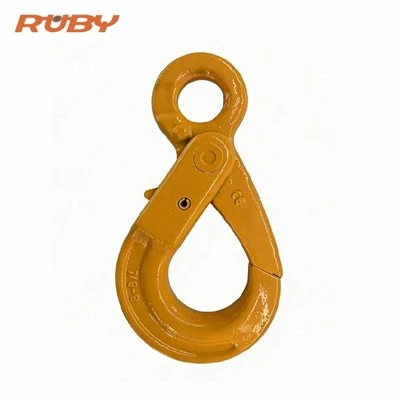
Understanding the Basics of Shackles
First things first, let’s talk about what shackles are. A shackle is a U – shaped piece of metal with a pin or bolt across the opening. It’s like a really strong and reliable clip that’s used to connect different parts of rigging systems, such as chain slings, hooks, and other hardware.
There are different types of shackles, and the two most common ones are screw – pin shackles and bolt – type shackles. Screw – pin shackles are easier to use and quicker to install because you just screw the pin in place. They’re great for applications where you need to make quick connections and disconnections. Bolt – type shackles, on the other hand, are more secure. They use a bolt and nut arrangement, which means they’re less likely to come loose under heavy loads or in high – vibration situations.
Know Your Load Requirements
The most important factor when choosing the right size shackle is the load you’re going to lift. You need to know the weight of the load that the shackle will be supporting. This is usually measured in pounds or kilograms.
Let’s say you’re working on a construction site and you need to lift a large steel beam. You’ll have to find out the exact weight of that beam. Once you know the weight, you can determine the Working Load Limit (WLL) of the shackle you need. The WLL is the maximum weight that a shackle can safely lift under normal working conditions.
For example, if your load weighs 500 pounds, you don’t just grab a shackle with a 500 – pound WLL. You should add a safety factor. A common safety factor in the rigging industry is 5:1. So, for a 500 – pound load, you’d want a shackle with a WLL of at least 2500 pounds. This extra margin gives you some leeway in case there are any unexpected forces or stresses during the lifting operation.
Consider the Type of Rigging System
The type of chain sling or hardware rigging you’re using also matters. Different rigging systems have different load – distribution characteristics.
If you’re using a single – leg chain sling, the load is distributed relatively evenly between the shackle and the sling. But if you’re using a multi – leg chain sling, like a 2 – leg or 4 – leg sling, the load distribution gets more complex. In a multi – leg sling, the load can be unevenly distributed depending on the angle between the legs.
Let’s take a 2 – leg chain sling as an example. When the legs are at a small angle (close to vertical), the load on each leg and the shackles is relatively low. But as the angle between the legs increases, the load on each leg and the shackles increases significantly. So, you need to factor in this angle when choosing the right size shackles. There are load – rating charts available that can help you figure out the adjusted WLL based on the angle of the sling legs.
Look at the Shackle’s Dimensions
The physical dimensions of the shackle are crucial. You need to make sure that the shackle fits properly with your chain sling and other hardware.
The inside width of the shackle, known as the bow width, should be wide enough to accommodate the chain or other components. If the bow width is too narrow, the chain won’t fit properly, which can cause stress concentrations and lead to premature failure. On the other hand, if the bow width is too wide, the chain may move around too much, also creating safety issues.
The diameter of the shackle pin is another important dimension. The pin needs to be strong enough to handle the load. If the pin is too thin, it can shear under heavy loads. So, you have to match the pin diameter to the overall size and strength requirements of the shackle.
Check the Quality and Certification
In the world of rigging, quality and certification are non – negotiable. You want to make sure that the shackles you’re buying meet the industry standards.
Look for shackles that are made from high – quality materials, like alloy steel. Alloy steel shackles are strong, durable, and can withstand high loads. They’re also more resistant to corrosion, which is important if the rigging equipment is going to be used outdoors or in harsh environments.
Certification is a key indicator of quality. Good shackles should be certified by recognized organizations, such as the American Society of Mechanical Engineers (ASME) or the International Organization for Standardization (ISO). These certifications ensure that the shackles have been tested and meet certain quality and safety criteria.
Consider the Application Environment
The environment where the rigging will be used also affects the shackle selection. If you’re working in a corrosive environment, such as a marine or chemical plant setting, you’ll need shackles that are resistant to corrosion. Stainless – steel shackles are a great choice in these situations because they have a high resistance to rust and chemical damage.
On the other hand, if you’re working in a high – temperature environment, like a foundry or a furnace area, you’ll need shackles that can withstand the heat. Some special – alloy shackles are designed to maintain their strength and integrity at high temperatures.
Get Expert Advice if Needed
If you’re still not sure which size of shackles to choose, don’t hesitate to get some expert advice. As a chain sling and hardware rigging supplier, I’ve got a lot of experience in this area. I can help you evaluate your specific needs, look at the load requirements, the type of rigging system, and the application environment to recommend the right shackle size.
There are also rigging professionals and engineers who can provide detailed calculations and guidance. They can use advanced software and engineering principles to analyze the load distribution and determine the most suitable shackles for your project.
Conclusion
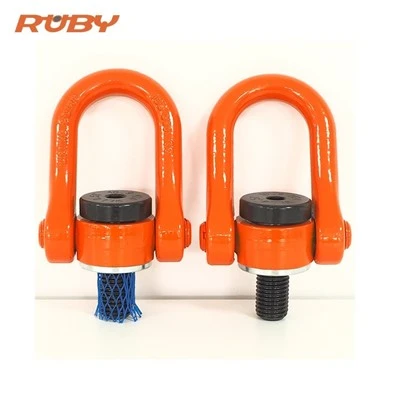
Selecting the right size of shackles for chain slings and hardware riggings is not a one – size – fits – all situation. You need to consider the load requirements, the type of rigging system, the dimensions of the shackles, the quality and certification, and the application environment.
Weldable Lifting Lugs If you’re in the market for chain slings and hardware riggings or need more information on choosing the right shackles, feel free to reach out. We’re here to help you make the best choices for your rigging needs. Whether you’re a small – scale contractor or a large industrial company, we’ve got the products and expertise to support your projects.
References
- ASME B30.26 – Slings.
- ISO 16545 – Lifting appliances — Termsvgeneral.
Hangzhou Ruby Imp. & Exp. Co., Ltd.
As one of the most experienced chain sling and hardware riggings manufacturers and suppliers in China, we offer a wide range of products with superior quality. We warmly welcome you to wholesale custom made chain sling and hardware riggings at competitive price from our factory.
Address: Taoyuan Industrial Park, Puyang Town, Xiaoshan, Hangzhou, Zhejiang, China.
E-mail: Sales5@z2lifting.com
WebSite: https://www.rubylifting.com/
