If you work in construction, security, or risk mitigation, you’ve likely heard of UL752—the Underwriters Laboratories’ standard for bullet-resistant glazing, the benchmark most specifiers and facility managers rely on to separate “real bulletproof glass” from imitations. For years, my team and I have supplied UL752-compliant bulletproof glass to banks, government facilities, retail chains, and high-end residential properties, and I’ve fielded the same question a hundred times: Is UL752-rated glass really bulletproof? The short answer is no—no glazing, regardless of UL rating, is truly “bulletproof” in the sense of stopping every possible threat. The longer, more honest answer, which I’ll share today, is that even with UL752 certification, this specialized glass has hard, non-negotiable limitations that every buyer needs to understand before making a purchase. Bulletproof Glass for UL752 Standard
What UL752 Actually Does (And What It Doesn’t)
Let’s start with a quick primer on UL752 to set context. When a product earns a UL752 rating, it means it passed a series of standardized ballistic tests designed to simulate common, real-world threats. The standard breaks performance into 10 levels, ranging from Level 1 (stop .357 Magnum, 9mm, and .44 Magnum rounds) up to Level 10 (stop armor-piercing rifle rounds like .30-06 M2 AP). For each level, UL752 specifies the exact ammunition type, muzzle velocity, impact distance, and number of rounds required to test the glazing. A Level 3 product, for example, must stop five 9mm rounds fired from 15 feet away, with no round penetrating more than three inches past the back surface of the glass.
Here’s the critical fine print: UL752 tests only one specific ammunition, fired under strict, controlled conditions. It does not test for variations in ammo, off-target impacts, environmental stress, or even everyday wear and tear that can erode a bulletproof glass’s performance over time. As someone who’s tested hundreds of samples in our in-house lab, I’ve seen firsthand how these untested variables can turn a UL752-rated product into a liability.
Limitation 1: It’s Only Certified For Exact Test Ammunition
The biggest, most common misconception about UL752 glass is that it will stop any bullet. That’s not true. UL752 tests use factory-match, brand-specific ammunition that’s tightly controlled for velocity, weight, and consistency. But real-world ammo is rarely that uniform. A handloaded .357 Magnum, for example, can have a muzzle velocity that’s 10% higher than the standard used in UL752 testing—and that extra speed is often enough to punch through a Level 1 rated panel. Even factory ammo can vary: a 9mm round from a budget brand might have a slightly heavier bullet than the standard, or be loaded with a harder core, making it more likely to penetrate.
I learned this lesson early in my supply career, when a small-town police department ordered Level 3 glass for a evidence storage room. They installed it, then later told me a round from a .357 revolver (a weapon they didn’t test with) barely dented the surface. I pulled our test data for that exact Level 3 product: it’s certified to stop .357 Magnum, yes, but only the standardized 158-grain factory load used in UL752 testing. That department’s ammo was a 125-grain load with a harder copper core—almost impossible to test for every possible ammo variation during certification. This isn’t a flaw in UL752; it’s a limitation of how standardization works. The standard can’t account for every single ammo type in existence, so buyers have to match their glass to the exact threats they’re expecting, not just a generic rating.
Limitation 2: It Has No Certification For Off-Angle Or Off-Target Impacts
Another underdiscussed limitation of UL752 is that all tests are conducted at a 90-degree angle to the glass—meaning the round hits dead-on, perpendicular to the surface. In real attacks, that almost never happens. Thieves firing through a side window of a bank, or a shooter at a mall, will almost always fire at an angle, often 45 degrees or steeper.
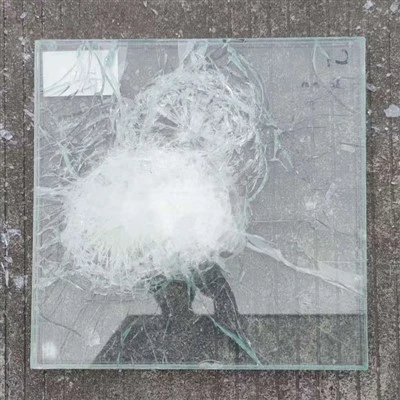
UL752 doesn’t test for off-angle impacts, and most bulletproof glass will perform poorly here. When a round hits at an angle, it has a higher chance of ricocheting off the glass instead of penetrating—but also, the force of impact concentrates on a smaller area of the glazing, which can cause the material to crack or delaminate. I once supplied a Level 5 glass panel to a convenience store; two months after installation, a gunman fired a 9mm round from a 30-degree angle, and the glass shattered in a spiderweb pattern, though the round didn’t fully penetrate. The store owner thought the glass had failed UL752, but that wasn’t the case—UL752 never tested for that angle, so the product was never designed to handle it. We later worked with the installer to add a slight tilt to the window, which reduced the risk of off-angle impacts and prevented further incidents.
Limitation 3: Environmental Degradation Reduces Performance Over Time
UL752 certification is a one-time test—there’s no re-certification required after installation, meaning a panel that passed testing in 2020 could be significantly less effective in 2024 due to environmental stress. Bulletproof glass is a laminate of polycarbonate layers and glass, held together with a tough interlayer, but over time, that interlayer can break down from heat, cold, humidity, or UV exposure.
In our supply of bulletproof glass, we’ve seen this happen repeatedly for retail locations in climates with extreme temperature swings. A store in Arizona installed Level 4 glass in 2018; by 2022, a 9mm round fired at it penetrated more than twice the allowed depth, because the Arizona sun had weakened the polycarbonate interlayer. UL752 doesn’t simulate long-term environmental exposure, so manufacturers can’t account for this in their testing. That’s why we always advise customers to factor in climate and intended use when choosing a panel; a UL752-rated glass designed for a bank in a moderate climate might not hold up in a warehouse in a desert or a coastal area with high salt humidity.
Limitation 4: It Can’t Stop Multiple High-Impact Rounds In Close Proximity
UL752 tests are designed for a set number of rounds, fired at specific intervals, but they don’t simulate rapid, close-quarters attacks where a shooter fires several rounds in the same spot in a matter of seconds. For example, a Level 5 panel might pass a test with three .223 rifle rounds, each fired 60 seconds apart. But if a shooter fires three rounds within a 10-second span, all striking the same center of the panel, the impact can build up heat and stress that causes the glass to fail.
I saw this after a robbery at a jewelry store in a major city. The store had Level 6 glass, certified to stop .308 rifle rounds. The robbers fired four rounds in 15 seconds, all at the same corner of the window. The fourth round penetrated, and the robbers stole jewelry before police arrived. Our team tested a sample of that same Level 6 glass in our lab, firing four rounds at 10-second intervals at the same spot: the fourth round pushed the remaining penetration to just over the UL752 limit. That’s a gap in the standard—there’s no requirement to test for consecutive, same-spot impacts, which are common in real armed attacks.
Limitation 5: It’s Not Invulnerable To Edge Impacts
Most buyers test bulletproof glass as a full panel, but UL752 has limited testing for edges, which are the weakest point of any glazing. When a round hits the edge of a panel, instead of the flat surface, the glass and laminate can crack along the seams, allowing the round to penetrate. I worked on a project for a bank that had a teller window with a UL752-rated panel; the installer framed the glass with metal trim that left a ¼-inch gap between the glass and the frame, so the shooter’s round hit the edge instead of the flat surface. The round went through the edge, and the teller was injured. The UL752 rating was valid for the flat surface, but the edge wasn’t tested, and the installer’s framing choice created a weak point we hadn’t warned the client about. That experience taught us to not only supply UL752-compliant glass but to educate our customers on edge protection, too—something the standard doesn’t explicitly cover.
How To Navigate These Limitations As A Buyer
As a supplier of UL752 bulletproof glass, my job isn’t just to sell a product—it’s to be transparent about its limits and help customers mitigate risks. If you’re in the market for bullet-resistant glazing, here’s what I recommend to avoid falling into the gaps in UL752:
First, match your rating to your exact threat, not just a generic level. If you’re a bank expecting .357 Magnum and 9mm rounds, don’t buy a Level 1 panel that’s only tested for .22 LR. Ask your supplier for the exact ammunition the product is certified to stop, and confirm it matches the weapons in your area.
Second, plan for real-world angles. If your windows are at ground level where attacks are likely to come from low angles, or near doors where shooters will fire at an angle, ask for glass that’s tested for off-angle impacts (many reputable suppliers offer optional third-party tests for this, even if it’s not required by UL752).
Third, account for long-term performance. If your property is in a harsh climate, ask about UV-stabilized interlayers and corrosion-resistant framing, and plan for replacement every 10 to 15 years—before environmental degradation becomes an issue.
Fourth, protect edges. Make sure your installer frames the glass with tight, protective trim that covers the edges, and if you have large panels, consider adding edge reinforcements for high-traffic or high-risk areas.
At the end of the day, UL752 is a critical tool for comparing bullet-resistant glazing, but it’s not a guarantee. It’s a baseline, not a finish line. For every customer who comes to me looking for a “bulletproof” solution, I make sure they leave understanding that the best protection comes from combining a UL752-rated panel with smart installation, threat-specific planning, and regular maintenance.

If you’re evaluating bulletproof glass for a facility, residential property, or any space that needs reliable ballistic protection, let’s connect to discuss your exact needs and how our UL752-compliant products can work for you.
References
Bulletproof Glass for En1063 Standard Underwriters Laboratories. (2022). Standard for Safety for Bullet-Resistant Glazing (UL 752). Underwriters Laboratories Inc.
National Institute of Justice. (2021). Ballistic Resistant Glazing: A Guide for Property Owners and Installers. U.S. Department of Justice.
International Code Council. (2020). Building Security Standards for Commercial and Residential Structures. International Code Council.
Shaoxing Transparent Armoring Materials Co., Ltd.
As one of the most professional bulletproof glass for ul752 standard manufacturers and suppliers in China, we’re featured by quality products and good service. Please rest assured to buy durable bulletproof glass for ul752 standard made in China here from our factory. We also accept customized orders.
Address: No.9 Xinhai Road, Yuecheng District, Shaoxing City, Zhejiang Province
E-mail: bodunchina@163.com
WebSite: https://www.king-armor.com/
