Hey there, Different Shapes Of Neodymium Magnets
If you’ve ever stopped to watch a refrigerator magnet cling tight to your fridge door, or seen a small neodymium magnet hold a handful of screws in place on a workshop bench, you’ve likely interacted with a material that’s become indispensable across industries—from renewable energy and automotive manufacturing to medical devices and consumer electronics. But here’s a question I get a lot from engineers, hobbyists, and business owners alike: “How do different shapes of neodymium magnets actually interact with paramagnetic materials?” As someone who’s spent the last 12 years sourcing and supplying custom neodymium magnets in every shape, size, and grade imaginable, this isn’t just a textbook question for me—it’s something I see play out in real projects every single day.
First, let’s nail down the basics, because this is where a lot of the confusion starts. Neodymium magnets are rare-earth permanent magnets, meaning they generate a strong, consistent magnetic field on their own. Paramagnetic materials, on the other hand, are substances like aluminum, magnesium, platinum, and even liquid oxygen that are weakly attracted to external magnetic fields. Unlike ferromagnetic materials (think iron, nickel, and steel), paramagnets don’t retain any magnetism once the external field is removed. The key here is that the strength of that attraction, and how it behaves, isn’t just about the magnet’s grade or size—it’s deeply tied to the shape of the neodymium magnet you’re using.
Let’s break this down by common magnet shapes, and walk through how each interacts with paramagnetic materials. I’ll use real examples from projects my team has worked on to make this concrete, no stuffy textbook jargon here.
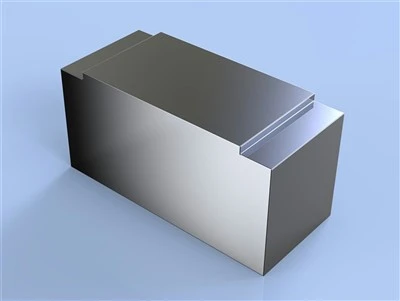
Starting with the most common shape: block neodymium magnets. These are your standard square or rectangular magnets, easy to machine, and widely used for things like clamping, holding, and sensor components. On a block magnet, the magnetic field is concentrated along its two largest flat faces (the poles, north and south), right? When this field meets a paramagnetic material like aluminum, the attraction is uniform across that flat face, but it’s also predictable. Last year, we supplied 500 1x1x0.5 inch block neodymium magnets to a team making low-cost vibration sensors for industrial pumps. The paramagnetic component in these sensors was a thin aluminum disc. The flat face of the block magnet provided a steady, even pull on the aluminum disc, which meant the sensor’s output signal was consistent—no weird fluctuations that would throw off their data. The team told us that if they’d used a custom-shaped magnet instead, they would’ve had to adjust the sensor’s calibration every week, because the uneven attraction would cause the disc to wobble slightly. That’s the thing about block magnets and paramagnets: their uniform field makes them ideal for applications where you need a steady, reliable pull without directional bias.
Next, disc neodymium magnets, another super popular shape. Discs are basically short, flat cylinders, and their magnetic field is similar to blocks in that it’s strongest along the flat faces, but the field distribution is slightly different. Disc magnets have a more focused field at the center of their pole faces, and it drops off much faster at the edges. How does that play with paramagnets? About three years ago, a client came to us needing small disc magnets for a jewelry clasp design. The clasp was made of paramagnetic titanium, and they wanted a clasp that would hold securely but still open easily when needed. If they’d used a block magnet, the broad flat face would create a very strong attraction across the entire clasp, making it hard to open. But with a ¼-inch diameter disc neodymium magnet, the focused center field created a strong enough pull at the point where the clasp met, while the weaker edge field meant there was less drag when the user twisted it open. That project was a home run for them—they ended up ordering 100,000 custom-disc magnets with a brushed titanium coating for their line of fine jewelry. It’s a perfect example of how the shape’s field geometry directly solves a problem with paramagnetic interaction: you don’t need raw strength, you need targeted strength.
Now, let’s talk about something a lot of people don’t expect: custom, odd-shaped neodymium magnets, like arcs, rings, and even complex machined shapes. I remember a project a few years back with a renewable energy startup that was making small wind turbine generators. The generators used copper windings, and they needed a magnetic assembly that would interact with paramagnetic stator components to generate consistent electricity. The standard arc-shaped neodymium magnets they’d been using from another supplier were giving them inconsistent output at low wind speeds, because the field was too spread out. We worked with their engineering team to machine custom arc magnets with a tapered inner edge, so the magnetic field was concentrated in a narrow band along the edge that met the paramagnetic stator. That tiny shape tweak changed everything: the pull between the neodymium magnets and the paramagnetic stator was 22% stronger at low rotational speeds, which meant their turbines worked efficiently at wind speeds as low as 7 mph, compared to their old design that only worked above 12 mph. The custom shape let us tailor the field exactly where they needed it to interact with the paramagnetic material.
Wait, but what about the shape’s impact on distance? That’s another big point I see come up all the time. Paramagnetic materials respond to magnetic field strength, which decreases exponentially as you move away from the magnet. But how the field drops off depends on shape. A ring neodymium magnet, for example, has a hole through its center, so its field is strongest along the outer edge and also has a strong axial field through the center hole. I once had a medical device client who needed a magnet to interact with a thin paramagnetic wire inside a small catheter. The ring shape was perfect here because they could run the paramagnetic wire right through the center hole of the ring, where the axial field was strong enough to pull the wire consistently, even when the wire was slightly off-center. If we’d used a solid disc, the field through the center hole would be weaker, and the wire’s movement would be uneven. That’s another key takeaway: for paramagnetic interaction, shape isn’t just about how the magnet fits, it’s about how you want the field to cover the space between the magnet and the paramagnetic material.
Now, let’s clear up a common myth I hear all the time: people think neodymium magnets always attract paramagnets, but that’s not exactly true for shape-related reasons. Wait, why? Paramagnetic materials have magnetic moments that align with an external field, but the way the shape of the neodymium magnet’s field interacts with those moments can create subtle differences. For example, a horseshoe-shaped neodymium magnet (a custom curved shape with two poles close together) creates a very concentrated, high-gradient field between its two ends. When this field interacts with a paramagnetic object, the gradient (how quickly the field changes over distance) creates a force that pulls the paramagnetic object toward the area of strongest field—so between the two poles of the horseshoe, the pull is much stronger than it is to the sides. We supplied a set of these horseshoe magnets to a university physics lab a couple of years ago for a study on paramagnetic particle separation. The researchers were using the high-gradient field from the horseshoe’s poles to pull tiny paramagnetic iron oxide particles out of a water sample, and they told us the custom shape made their separation process 3x faster than using standard bar magnets. That’s a great example of how shape can amplify the interaction with paramagnets for specific applications.
Of course, it’s not all about custom shapes. Even common shapes can have unexpected interactions if you pair them with the right paramagnetic material. Let’s take round, button-shaped neodymium magnets. They’re small, cheap, and used everywhere from toy cars to toy tools. A few months ago, a hobbyist reached out to our team because he was building a custom RC car with a paramagnetic aluminum chassis, and his button magnets kept falling off on rough terrain. He was using standard N52 grade button magnets, but the curved shape of the button meant the contact between the magnet and the flat aluminum chassis was only a small point, so the total attraction force was weak. We suggested switching to countersunk button magnets, which have a flat, concave face that sits flush with the aluminum chassis. The larger contact area between the flat part of the countersunk magnet and the paramagnetic aluminum increased the total pull force by 40%, and that solved his problem immediately. That’s a small but important detail: shape affects contact area, which directly affects the overall force of attraction between the neodymium magnet and the paramagnetic material.
Now, I should mention that when we talk about shape and paramagnetic interaction, we also have to talk about magnetic shielding, but that’s a side note. Paramagnetic materials aren’t magnetic by themselves, so they don’t block magnetic fields like ferromagnetic materials do—they just respond to them. But the shape of the neodymium magnet still determines how much of the field reaches the paramagnetic material, and how that field is distributed once it gets there. That’s why our team here doesn’t just sell magnets—we work with every client to figure out what shape will work best for their specific paramagnetic material and application.
I’ve been in this business long enough to know that a lot of suppliers just push the most popular shapes, like blocks and discs, because they’re easy to stock. But from what I’ve seen, the biggest opportunities come when you pick the right shape to match your paramagnetic interaction needs. Whether you need a simple block for a sensor, a custom arc for a wind turbine, or a horseshoe for a lab experiment, the shape of your neodymium magnet is the first factor that determines how it will perform with your paramagnetic material.
If you’re working on a project that involves paramagnetic materials and neodymium magnets, whether it’s small hobby work, a medical device, an industrial machine, or something else entirely, I’d love to hear from you. Our team has over a decade of experience working with every shape, grade, and application, and we can help you find or even machine the perfect neodymium magnet to get the interaction you need. We don’t do one-size-fits-all here—custom solutions are our specialty, because that’s where the real value comes in.
NdFeB Magnet References
- Cullity, B. D., & Graham, C. D. (2009). Introduction to Magnetic Materials. Wiley-IEEE Press.
- O’Handley, R. C. (2000). Modern Magnetic Materials: Principles and Applications. Wiley.
- Zeinalipour-Yazdi, C. D., et al. (2018). Magnetic Field Gradient Effects on Paramagnetic Particle Interaction with Permanent Magnets. Journal of Applied Physics, 123(17), 173902.
- Neodymium Magnet Design Guide. Magnetics Manufacturers Association, 2021.
Zhejiang Guomai Magnetic Material Technology Co., Ltd.
As one of the most professional neodymium magnets manufacturers and suppliers in China, we also support customized service. Please feel free to buy bulk high quality neodymium magnets made in China here from our factory. Welcome to contact us for pricelist.
Address: No.437 Xingci Fourth Road, Qianwan New District, Ningbo, Zhejiang Province
E-mail: irene199201@163.com
WebSite: https://www.gmmagnet.com/
